Plinko Casino UK: Games, Rules and Payments
 Available in GB
Plinko’s format, real-money play and demo options sit alongside questions about casino licensing, bonus costs and payment routes.

- How Plinko Fits into the UK Online Casino Market
- Plinko as a Casino Game: Categories and Format
- Real-Money Plinko: Stakes, Outcomes and the House Edge
- Free Play and the Cost of Casino Bonuses
- UK Rules That Shape Plinko Casino Access
- Plinko Casino Sites: UK-Licensed and Offshore Models
- Assessing a Plinko Slot Without a Shortlist
- Plinko Demo and Slot-Demo Searches
- What Plinko Casino Means for Deposits and Withdrawals
- Crypto Payments at Plinko Casinos
How Plinko Fits into the UK Online Casino Market
Plinko sits within a broader category: online casino games. The distinction matters because a game and the market offering it are not the same thing. A game describes the activity available to play; the market describes the operators, platforms and regulatory settings through which that activity is offered. Searching for an online casino with Plinko in the UK therefore raises two separate questions: what kind of game is being sought, and what kind of casino is providing access to it.
Casino games are offered through online casinos where the law permits them. That does not make every site using casino language part of the same regulated market. In Britain, the relevant landscape is often described as having a UKGC-regulated strand and an offshore strand outside that system. A specialist review has characterised the 2026 market in those parallel terms. The description is a useful way to distinguish platform types, not proof that every site in either strand offers Plinko.
For a player looking for Plinko online, the game’s presence in a casino catalogue is only one part of the picture. The platform’s regulatory status is a separate matter. A listing or promotional reference to a Plinko casino game does not, by itself, establish that the operator is licensed for the British market. Equally, the fact that a platform is offshore does not establish that it has a UKGC licence. Those labels describe different positions in the market and should not be treated as interchangeable.
When choosing a UK Plinko casino, payout speed is one practical detail to consider alongside the rest of your research. This list gives you the stated withdrawal timing for each operator.
Payout speed: 1-3 business days Britsino lists a payout speed of 1–3 business days.
Payout speed: 1-3 business days NightLuck lists a payout speed of 1–3 business days.
Payout speed: 1-3 business days Chanze lists a payout speed of 1–3 business days.
Payout speed: 1-3 business days SpinFormula lists a payout speed of 1–3 business days.
Payout speed: 1-3 business days Amunbet lists a payout speed of 1–3 business days.
Payout speed: 1-3 business days Zombillion lists a payout speed of 1–3 business days.
Payout speed: 1-3 business days WinBeast lists a payout speed of 1–3 business days.
Payout speed: 1-3 business days BeOnBet lists a payout speed of 1–3 business days.
Payout speed: 1-3 business days EvoSpin lists a payout speed of 1–3 business days.
Payout speed: 1-3 business days Jetsetspins lists a payout speed of 1–3 business days.
The UKGC space is the regulated strand for operators serving the British market. Offshore platforms operate outside that UKGC system, even when they accept UK players. This distinction is more useful than treating every website accessible from Britain as an equivalent UK casino. Online access is a technical feature; regulatory status is a separate question. A site appearing in a search or loading from a British connection does not settle which category it belongs to.
That context also limits what can be concluded from a general request for the best online Plinko casino in the UK. A game name does not identify an operator, and an operator’s presence in a broad casino market does not confirm that its current catalogue contains that game. Nor does the phrase “UK casino” necessarily tell the whole story about a platform’s regulatory position. These are separate claims, and each requires its own basis.
The same distinction applies to searches for Plinko casino games or a Plinko game online at a casino. Such wording points towards a game being sought within an online casino setting; it does not establish that the game is available at every casino, or that the casino belongs to the UKGC-regulated strand. The market contains different platform models, while individual catalogues and regulatory positions are not identical.
This is why the UK context should be read before treating a game listing as a complete description. “Online” says where access takes place. “Casino” identifies the broader kind of gambling service. “Plinko” identifies the game name in the request. None of those terms alone confirms the operator’s status or the precise conditions under which the game may be offered.
For British readers, the practical distinction is between a casino operating within the UKGC framework and an offshore platform outside it. Both may be discussed in connection with UK players, but they do not occupy the same regulatory position. An online Plinko casino in Britain is therefore not a single, uniform category: the game reference and the platform’s place in the market need to be considered separately.
The point is not that every Plinko listing belongs to one side or the other. It is that the game cannot answer the market question. A casino catalogue can indicate what a platform presents, while the platform’s regulatory status determines which market strand it occupies. Keeping those two subjects apart prevents a game name from being mistaken for a statement about the operator behind it.
Plinko as a Casino Game: Categories and Format
The label “Plinko” identifies a game concept, but it does not by itself settle how a casino classifies the game. The useful distinction is between the way a game is presented and the way it is operated. A Plinko-themed casino game may be encountered as a digital, machine-style game; the name alone does not make it a table game, nor does it establish the precise mechanics of a particular version.
Plinko is a game concept that can be presented in various digital formats; the name alone does not determine if a game is a table game or a machine-style experience.
Casino games are commonly grouped by their format. Gambling machines are generally designed for one player at a time and can be played without a casino employee taking part. Table games, by contrast, are conducted by a croupier or dealer and involve players competing against the casino rather than against one another. These categories describe how play is organised, not simply how a game looks on a screen.
That distinction matters when assessing a Plinko game. A digital interface may show a board-like layout or other visual features associated with the name, but those visuals do not turn it into a traditional table game. If the game runs as an individual computer-based experience without a dealer, it is closer in format to a gambling machine than to a staffed table. The presentation can borrow the appearance of physical play while the underlying format remains electronic.
This is a classification point, not a claim that every game bearing the Plinko name works identically. The name may be applied across different digital presentations, and details such as controls, animations and the sequence of play depend on the particular game. A description that treats “Plinko” as one fixed format risks confusing a familiar label with a verified account of a specific title. The category is best identified from how the game is operated: whether play is managed by software or conducted at a table by a dealer.

Machine-style play and table games
Machine-style casino games are built around a self-contained playing interface. The player interacts with the game, while the equipment or software manages the play. No casino employee needs to deal cards, operate a wheel or oversee each individual turn. This is why an electronic Plinko presentation can sit more naturally alongside machine-style games than with conventional table games, provided it is operated in that self-contained way.
A table game has a different structure. The dealer or croupier conducts the game, and the players’ relationship is with the casino rather than with one another. The presence of a board-shaped image does not establish this structure. A digital game can depict a surface associated with a physical activity without being a live or dealer-led table game. Format follows the organisation of play, not the artwork.
There is also a distinction between games in which participants compete against the house and games in which they do not. Poker is an example of the latter: the casino can earn revenue through a commission, known as a rake, rather than by competing against players as the opponent. That contrast helps explain why “casino game” covers more than one format. It does not, however, make every game with a casino-style interface a table game or a player-versus-player activity.
Where random-number generation fits
A further category concerns how outcomes are generated. Random-number games use numbers selected by a computer or other gaming equipment. This describes a method of generating outcomes; it is separate from whether the game is visually styled as a machine, a table or something else. A digital game can therefore be understood along two axes: its playing format and the method used to produce its outcomes.
Concerns whether the game is a self-contained machine-style interface or a dealer-led table game.
Concerns the method used to produce results, such as the use of random-number generation by a computer.
For a Plinko casino game, those axes should not be collapsed into one. The machine-style question is about whether a person plays through a self-contained interface without a casino employee conducting the session. The random-number question is about whether a computer or other equipment generates selected numbers for the game. Knowing one does not automatically answer the other, and the game’s visual design cannot confirm either point on its own.
This matters when a game is described as a slot, a machine game or a random-number game. Those terms refer to categories that may overlap in ordinary casino language, but they are not interchangeable descriptions of every feature. “Machine-style” concerns the mode of play; “random-number” concerns outcome generation. The label “slot” should not be inferred solely from a Plinko-like appearance, just as a digital board does not prove that a live dealer is involved.
For the same reason, a Plinko casino game review should separate observable format from assumed mechanics. It can identify whether the interface appears self-contained and software-led, but a name or animation alone is not evidence of how the game’s outcome system is constructed. The relevant categories provide a clear framework without requiring the game to be forced into a familiar label. Machine-style play, table play and computer-generated random-number games describe different aspects of casino games; a Plinko presentation is understood most accurately by keeping those aspects distinct.
Real-Money Plinko: Stakes, Outcomes and the House Edge
Real-money Plinko means that cash, or chips representing cash, is put at risk on possible outcomes. A result can return a gain, reduce the amount staked, or leave the stake lost, depending on the game’s rules. The essential financial point is that the outcome is uncertain while the stake is real: a game balance is not merely a score when it represents money that can be won or lost.


The same distinction applies whether a platform describes the product as a Plinko game, a Plinko slot or a casino game. The label does not change the underlying transaction. Money is committed to an uncertain result, and any return depends on the outcome and the game’s payout rules. Without those rules, a name alone cannot establish what a particular result pays or how likely it is.
A winning round is possible. That is the short-term side of casino gambling: an individual outcome can favour the player, and a gain may exceed the amount staked. But a possible win is not a reliable way to make money. The existence of winning outcomes does not mean that the game is profitable across repeated play, nor does a recent run of gains establish what the next result will be.
The house edge describes the opposite, longer-term side. Casino games typically give the casino a predictable advantage over time while leaving players with the possibility of short-term gains. Those statements are compatible. A player can come out ahead over a short spell even though the game’s overall structure favours the casino over longer play. The edge is not a promise that every player will lose in every session; it is the reason that isolated wins do not overturn the financial character of the game.
For Plinko specifically, no exact return, probability or house-edge figure can be inferred from the name alone. Such a figure would require the rules and payout structure of the particular version. A broad description of the game is not enough to calculate expected results. Treating an unspecified Plinko product as if it had one universal rate would turn a missing term into a false certainty.
Financial Risk
Real-money Plinko involves staking actual cash on uncertain outcomes, and the casino typically maintains a predictable long-term advantage over the player.
The practical calculation starts with exposure, not with a hoped-for win. Each stake is money placed at risk. Repeating stakes increases the total amount exposed, even if each individual round appears small. A sequence of gains may leave a player ahead temporarily; later losses may reduce or remove that balance. Conversely, a losing spell does not make a future win due. Random outcomes do not acquire an obligation to correct earlier results.
This is why “how to win” has no dependable answer in the form of a system. A player may win a particular outcome, but no staking pattern can be claimed to guarantee profit on the information available about the game. Increasing a stake changes the amount exposed; it does not, by itself, change the casino’s long-term advantage. Chasing losses can therefore enlarge the financial downside without converting uncertainty into certainty.
A sensible reading of any real-money Plinko description separates three things: the amount committed, the possible outcomes, and the stated returns for those outcomes. The first is a direct cash exposure. The second is uncertain. The third must be tied to the specific game rules, rather than assumed from the word “Plinko”. If those details are not clear, the financial result cannot be calculated accurately.
A real-money Plinko game is real in the financial sense when actual cash or cash-equivalent chips are staked on outcomes. That does not make a win assured, or make the game a source of dependable income. Short-term gains remain possible; the casino’s predictable long-term advantage remains the central cost of play.

Free Play and the Cost of Casino Bonuses
A search for Plinko free play points to a different arrangement from placing a cash stake. In free play, no money is put at risk on each game outcome. A no-deposit bonus is different: it is promotional casino credit awarded without first spending money. That removes the initial payment condition, but it does not make the bonus equivalent to cash already available for withdrawal.
The distinction is in what happens after the credit is awarded. Bonus terms can require wagering before bonus funds, or winnings derived from them, become withdrawable. The amount shown in an account is therefore not necessarily the amount that can be taken out. A Plinko-themed promotion, if offered, would need to be assessed by its own conditions; a free-play label alone does not state whether cash is involved or what withdrawal rules apply.
The key calculation is the wagering requirement: the required total stakes are found by multiplying the bonus amount by the stated wagering multiple. A specialist review of the incentive rules reports that, from 19 January 2026, wagering attached to bonus funds cannot exceed 10 times those funds. On that basis, a £20 bonus at the maximum permitted multiple requires £200 in total stakes before the wagering condition is met. That £200 is turnover, not a fee or an amount guaranteed to be returned. Individual bets can produce wins or losses, so meeting the turnover figure does not itself establish a cash balance available to withdraw.
Bonus Wagering Calculation
Determine the amount of the no-deposit bonus awarded (e.g., £20).
Multiply the bonus amount by the wagering requirement (e.g., £20 × 10).
Determine the total stakes required before funds become withdrawable (e.g., £200).
This is why “free” needs to be read narrowly. A no-deposit offer means no purchase is needed to receive the bonus; it does not mean there are no conditions, nor that a bonus balance can be withdrawn immediately. The stated wagering cap limits the multiplier, but it does not turn wagering into a promise of profit. The difference between bonus credit and cash remains material even when the required turnover is calculable.
Free-play searches can also describe an interest in trying a game without staking money, rather than an interest in a promotional balance. Those are not interchangeable meanings. A no-cost game session and a no-deposit bonus may both involve no initial payment, but only the latter is an incentive with bonus terms attached. The amount and conditions of an offer need to be read together; the word “free” does not supply either.
A separate issue is whether a promotion combines different gambling products. Under the stated incentive rules, a single offer cannot require gambling across product types, such as casino games and betting, to unlock its reward. That matters when calculating the actual cost of a bonus: the relevant requirement is not just a headline amount, but the activity the terms require and the balance to which the multiplier applies.
For a Plinko casino promotion, the useful comparison is therefore between the cash needed to qualify, the bonus awarded, the wagering multiple, and the resulting turnover. Where no cash deposit is required, the initial outlay may be absent, but the bonus still carries conditions. Where a promotion describes itself as free play, that wording alone does not establish that it is a no-deposit bonus or that any winnings are withdrawable. The arithmetic is simple; the terms determine what the arithmetic buys.

UK Rules That Shape Plinko Casino Access
The legal question around a Plinko casino in the UK is not decided by the game’s name or format. The key issue is whether the operator is authorised to take bets from people in Britain. The Gambling (Licensing and Advertising) Act 2014 established a licensing requirement for operators seeking to accept bets from British residents. For real-money gambling in England, Scotland and Wales, the operator must hold a licence from the UK Gambling Commission (UKGC).
That requirement applies to the operator, not just to a particular casino game. Calling a product Plinko, presenting it through a casino account or describing it as a slot does not, by itself, establish that the site is authorised to offer real-money gambling in Great Britain. The relevant check is the operator’s licensing position. The game’s branding is not a substitute for it.
This distinction matters because a site can make a game accessible without that access answering the legal question. For customers in England, Scotland and Wales, real-money gambling must be offered by an operator holding the relevant UKGC licence. The licensing rule is not a recommendation about which platform might be preferable; it sets the legal condition for operators taking those bets.
The same principle applies when the game is reached through a Plinko casino account rather than through a page labelled specifically for Plinko. A different product name or route into the game does not remove the operator’s obligation. The licence relates to the business offering gambling to customers, so the legal context cannot be inferred from the game screen alone.
Attention: A site’s branding or the availability of a Plinko game does not confirm that the operator holds the required UKGC licence for real-money gambling in Great Britain.
The Act’s relevance is also broader than one game. It concerns operators taking bets from British residents, while the UKGC requirement applies specifically to real-money gambling in England, Scotland and Wales. That is why the phrase “UK Plinko casino” can describe a game or a site’s intended audience, but does not itself confirm that the operator holds the required authorisation. A UK-facing label and a UKGC licence are different things.
For Plinko, then, the practical legal distinction is straightforward: the game title does not create an exception to the licensing rule. Where real money is being gambled by customers in England, Scotland or Wales, the operator must hold a UKGC licence. That is the starting point for understanding lawful access; whether a particular game is available or how it plays is a separate matter.
Plinko Casino Sites: UK-Licensed and Offshore Models
Plinko casino sites fall into two broad groups: operators within the UKGC system and offshore platforms that accept players from the UK. The distinction is about regulatory status, not the game’s name or appearance. A Plinko game does not make the site offering it a UK-licensed operator.
A site serving customers in England, Scotland or Wales for real-money gambling needs a UKGC licence. That licence places the operator within the British regulatory framework. Offshore casinos accepting UK players sit outside that system and do not hold a UKGC licence. Their availability to UK players does not change their regulatory category.
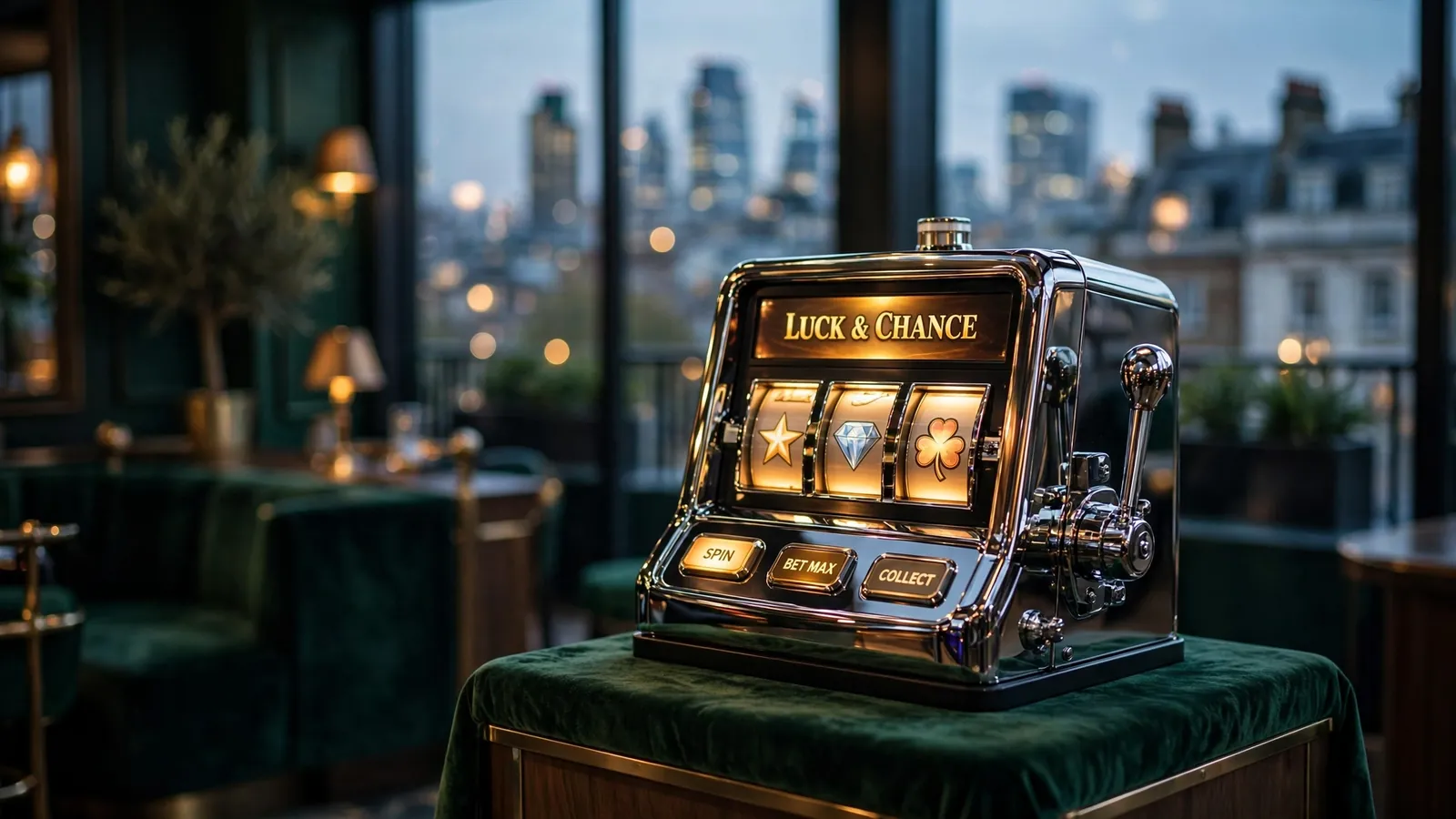
Some platforms outside the UKGC space may operate under licences from Curaçao, Malta or Gibraltar. Those jurisdictions are possible alternatives for non-traditional gaming platforms, but a licence from one of them is not a UKGC licence. The jurisdiction named on a site therefore matters: it indicates which regulator, if any, oversees the operator, and whether the operator belongs to the British licensing framework.
“Legit” can refer to different things, so it is not a useful standalone verdict. A platform may identify an overseas licence while still being outside UKGC regulation. For real-money play, those are separate facts. A claim of being licensed abroad does not establish that the site is authorised to serve the British market under UK rules.
The same distinction applies whether the page promotes Plinko as a casino game, a slot-style product or a wider gambling offer. The product label does not settle the status of the operator. Nor does the fact that a platform accepts UK players place it inside the UKGC system. The relevant comparison is between a UKGC-licensed operator and an offshore site operating beyond that framework.
Accordingly, “Plinko casino” describes the game or product being offered; it does not describe the site’s regulatory standing. A UKGC licence and an overseas licence are not interchangeable credentials. Any assessment of a site’s status should keep the operator’s licensing jurisdiction separate from the game it advertises.
Assessing a Plinko Slot Without a Shortlist
The phrase “best Plinko slot” suggests that one game can be judged as a clear winner. In practice, a label does not settle whether a game is favourable to the player. Casino games can produce short-term gains, but their structure typically gives the casino a predictable advantage over the long term. A winning session is possible; it does not reverse that underlying balance.
- Distinguish between short-term gains and long-term house edge
- Evaluate the specific rules and payouts of a particular title
- Assume a “best” label indicates a financial advantage
- Mistake a game’s popularity for better winning prospects
The same distinction applies when comparing Plinko casinos in the UK. The site and the game are separate parts of the decision: a platform may offer access to a Plinko-style title, but that alone says nothing about the financial result of playing it. Nor does a game’s popularity establish that it offers better prospects. A confident ranking can make these separate questions look like one answer. It cannot change the expected direction of the game’s advantage.
“Plinko slot” is also a convenient description, not a guarantee that every title carrying the name has identical rules or outcomes. The name may identify a broad style of game; the actual experience depends on the particular game being offered. A comparison therefore needs to concern the game itself, rather than relying on the word “best” as if it were a measurable feature.
For anyone assessing a title, the useful distinction is between a result that can occur in a short spell and the advantage built into play over time. Those are not contradictory statements: a player may leave ahead after a brief run, while the casino retains the more predictable long-term position. The possibility of a gain is real, but it is not evidence that the game is a reliable way to make money.
That is the practical limit of a “best Plinko” claim. Without a consistent basis for comparing the actual titles, the label is marketing language, not a financial conclusion. The sounder assessment is to treat any Plinko slot as casino entertainment with a possible short-term return and a long-term edge held by the casino.

Plinko Demo and Slot-Demo Searches
A request to try Plinko without staking cash is different from a request to play for money. The word “demo” signals an interest in a non-cash version, but it does not establish that a particular casino offers one, or what that version includes. Availability and features depend on the specific game and platform.
The same distinction applies when Plinko is described as a slot. That label in a game’s title or description does not confirm that a playable demonstration exists. Nor does the word “free” settle the question: free play and a promotional bonus are not interchangeable. A bonus is an incentive with conditions attached; a demo, if offered, is a separate way to access a game without making a cash stake.
That difference matters when comparing what each option provides. A cash game involves money placed on possible outcomes. A bonus may involve funds that remain subject to wagering requirements before they can be withdrawn. A demo, by contrast, should not be treated as cash winnings or as a route to withdrawable funds. Its precise setup cannot be assumed from the label alone.
A page describing a Plinko demonstration should therefore be read for the specific terms it states: whether the game can actually be opened without a deposit, whether any balance is only for play, and whether the mode has restrictions. Those details should not be inferred from a general reference to a “slot demo” or from the presence of a demo option for other games.
For a UK player, the central point is scope. An offer to view a game without cash staking is not evidence of a real-money version, a bonus, or a promise that any result can be converted into money. Each is a distinct arrangement. The name “Plinko” alone establishes none of them.
A game demo is a non-cash version for trial purposes and should not be confused with a promotional bonus or a route to withdrawable funds.
What Plinko Casino Means for Deposits and Withdrawals
A Plinko casino is an online casino offering a game in which cash or chips can be staked on possible outcomes. The game label does not determine how money enters or leaves an account: those steps depend on the casino’s available payment methods and its processing arrangements.
For deposits, Open Banking and Faster Payments have reduced friction in moving funds to online casinos. These payment rails can make the transfer process more direct, but that does not establish a single processing time for every platform. A deposit may be credited promptly, while the specific route and account conditions still matter.
Withdrawals are a separate stage. A request has to be processed by the platform before funds reach the chosen payment method, so the time reported for one casino should not be treated as a standard applying to all. A specialist review reports that many platforms provide instant deposits and complete withdrawals within hours rather than days. That is a description of the platforms covered by that review, not a universal promise for every Plinko casino.

The distinction matters when interpreting a “Plinko casino withdrawal” claim. A short stated timeframe may refer to the casino’s handling of a request, rather than the entire journey of money back to an account. The payment method and the platform’s own process can affect the result; a headline speed alone does not specify both.
For casinos offering Plinko in the UK, the practical comparison is therefore between the advertised payment route and the actual terms attached to deposits and withdrawals. Open Banking and Faster Payments have reduced transfer friction, while platform-specific timing remains variable. A claim of an instant deposit says nothing by itself about withdrawal speed, and a reported withdrawal completed within hours should not be read as a guaranteed deadline.
The useful meaning of “Plinko casino” in a payment context is straightforward: it is the casino account through which funds are deposited and withdrawn, not a separate payment system. The game and the money movement are connected through the account, but they are distinct processes.
Crypto Payments at Plinko Casinos
Cryptocurrency can be one payment route on alternative platforms offering Plinko-style casino games, but it is not a feature that can be assumed across every site. A specialist review reports that some such platforms may accept Bitcoin, Ethereum and Litecoin. The same account notes conventional cards and e-wallets as possible alternatives. Those options describe a reported platform model, not a standard set of payment methods attached to Plinko.
The currency accepted matters less than the terms attached to its use. A payment option does not establish that a particular game is available, that a transaction will be processed on a particular timetable or that funds can be withdrawn under any specific conditions. Those details depend on the individual platform and its stated terms; they should not be inferred from the presence of a crypto logo or a general description of its payment methods.
For UK players, payment availability also does not establish UKGC authorisation. Offshore platforms may operate outside the UKGC system, while remote operators serving the British market must hold the relevant licence. A cryptocurrency route does not change that distinction. Nor does it make an unlicensed platform equivalent to a UKGC-licensed casino.

Conventional card availability needs a further qualification. UK-licensed gambling operators cannot accept credit-card payments for gambling, including credit-card funding routed through a money service business. A reference to cards on an alternative platform should therefore not be read as permission to fund gambling by credit card at a UK-licensed site. E-wallets may also be subject to restrictions where they allow credit-card funds to be used for gambling.
The practical comparison is consequently between payment methods actually offered and the conditions governing them, not between crypto and cash as if either guaranteed a better outcome. Bitcoin, Ethereum and Litecoin are possibilities reported for some alternative platforms; conventional cards and e-wallets may also appear. None of these options alone establishes the platform’s regulatory status or the terms applying to a Plinko game.
Written by the editors at Winstler Casino.