Fast payout online casinos in the UK and Keno
 Available in GB
Keno returns depend on the selected spots, caught numbers and paytable, while withdrawal timing is a separate matter.

- How Keno Wins Are Calculated
- Payout Speed and Keno Payout Terms Are Different Questions
- What Happens During an Online Keno Draw
- Keno Cards, Number Picks and Game Variations
- Same-Day Withdrawal Claims Do Not Describe Keno Payouts
- Manual Picks, Random Picks and Repeat Bets
- Side Bets and Zero-Match Payouts
- Keno House Edge and the Limits of Number Strategies
- Video Keno, Slot Comparisons and Return Figures
- Check the Rules Before Betting on Any Keno Platform
How Keno Wins Are Calculated
A keno result is calculated by comparing the spots selected for a game with the spots that appear in its draw. The number selected and the number caught determine which outcome applies. That outcome is then matched to the game’s paytable, which sets the return for the relevant selection-and-match combination.
This makes a headline payout claim incomplete. A large advertised prize may apply only to a particular combination, while other combinations can return less or nothing. The useful figure is not the biggest number in a promotion; it is the amount the paytable assigns to the result that actually occurs.
From a selection to a result
The calculation has two parts. First, count how many selected spots are caught. Then find that count under the relevant selection in the paytable. The same number of catches can lead to different returns depending on how many spots were selected, because the table is organised around both quantities.
For instance, a result with several catches is not enough on its own to identify a win or its value. The selected-spot count must also be known, and the game’s rules must specify what that combination pays. A paytable may distinguish between selections with the same number of catches; another game may use a different arrangement. There is no single calculation that can be applied to every keno platform.

The table is therefore the working rule, not decorative small print. It translates a game result into a stated return. Without it, a claim that a game offers a high payout says little about the result needed to receive that amount or what other combinations are worth.
Read the return as a game-specific term
A payout rate can be used to compare games only if the figures refer to the same basis. A headline prize describes a possible outcome; it does not, by itself, describe the range of outcomes or the return associated with a particular result. Likewise, a casino-level payout claim does not replace the paytable for an individual keno game.
The distinction matters when assessing claims about the highest-payout casinos in the UK or the highest payout percentage at an online casino. Those phrases can point to different measures. For keno, the relevant terms are the game’s own rules and paytable: they show how a given selection and number of catches are treated. A broad casino figure cannot establish what a specific keno result pays.


A calculation should also be read in relation to the stake. If a table states returns as a multiple of the stake, the stated multiple must be applied to the amount wagered to find the return. If the game presents values differently, its rules determine how to interpret them. No return should be assumed from a headline description alone.
Why the paytable outranks the headline
Two games can use the same basic matching principle and still assign different returns to a result. Keno rules and payouts vary across platforms, so a prize claim from one game cannot safely be carried over to another. Even a familiar label does not establish that the tables are identical.
The paytable lets the figures be checked row by row: the selected-spot count, the number caught, and the corresponding outcome. It also makes clear whether a particular combination produces a return. Where the table does not show a payment for that combination, a general claim about high payouts cannot supply one.
This is a more useful comparison than asking which UK casino has the highest payout in the abstract. A casino may offer multiple games, and a broad rate does not reveal the terms of each one. For a keno decision, the game-specific table is the document that connects the result to its stated value. Claims about high-payout slots are a separate comparison and do not establish keno terms.
What the calculation does not promise
A paytable describes how outcomes are paid; it does not make any particular outcome more likely. Nor does a top prize establish that ordinary results have comparable value. The payout attached to a result and the chance of achieving it are separate parts of the assessment.
Keno can have a house edge of 25% or more. That means the game’s terms are not equivalent to a promise that the stake will be returned over play. The paytable should be considered alongside the game’s rules and odds before wagering, rather than treated as proof that a high advertised prize makes the overall terms favourable.
House Edge
Keno can have a house edge of 25% or more, meaning the game’s terms are not a promise that the stake will be returned over play.
The practical calculation remains straightforward, even when the table is not: identify the number of spots selected, count those caught, and read the matching entry in that game’s paytable. The value is specific to that platform and game. Any comparison of payout claims that skips those conditions is comparing packaging, not the amount due for a defined keno result.
Payout Speed and Keno Payout Terms Are Different Questions
The word “payout” can describe two separate events. In keno, it means the amount awarded under the game’s rules after a result. At casino level, it can mean money being withdrawn from an account. A game’s prize rules do not, by themselves, say how quickly an account withdrawal is processed. Treating the two as one measure makes a comparison less useful, not more precise.
Keno winnings are determined by the game’s paytable: the number of spots selected and how many are caught affect the prize. The table sets the amount associated with each result, and rules can differ between platforms. A prominent top prize is therefore not a complete description of a game’s payouts. It describes one possible outcome, while the paytable shows the range of outcomes that the game recognises.
Withdrawal speed concerns a different set of terms: the casino’s process for moving a balance out of the account. It is not a feature of the keno draw, nor does a keno prize table establish a processing timetable. A casino may describe a game as having a particular payout structure without that description answering a question about withdrawals. Conversely, a withdrawal claim says nothing about the prizes attached to keno results.

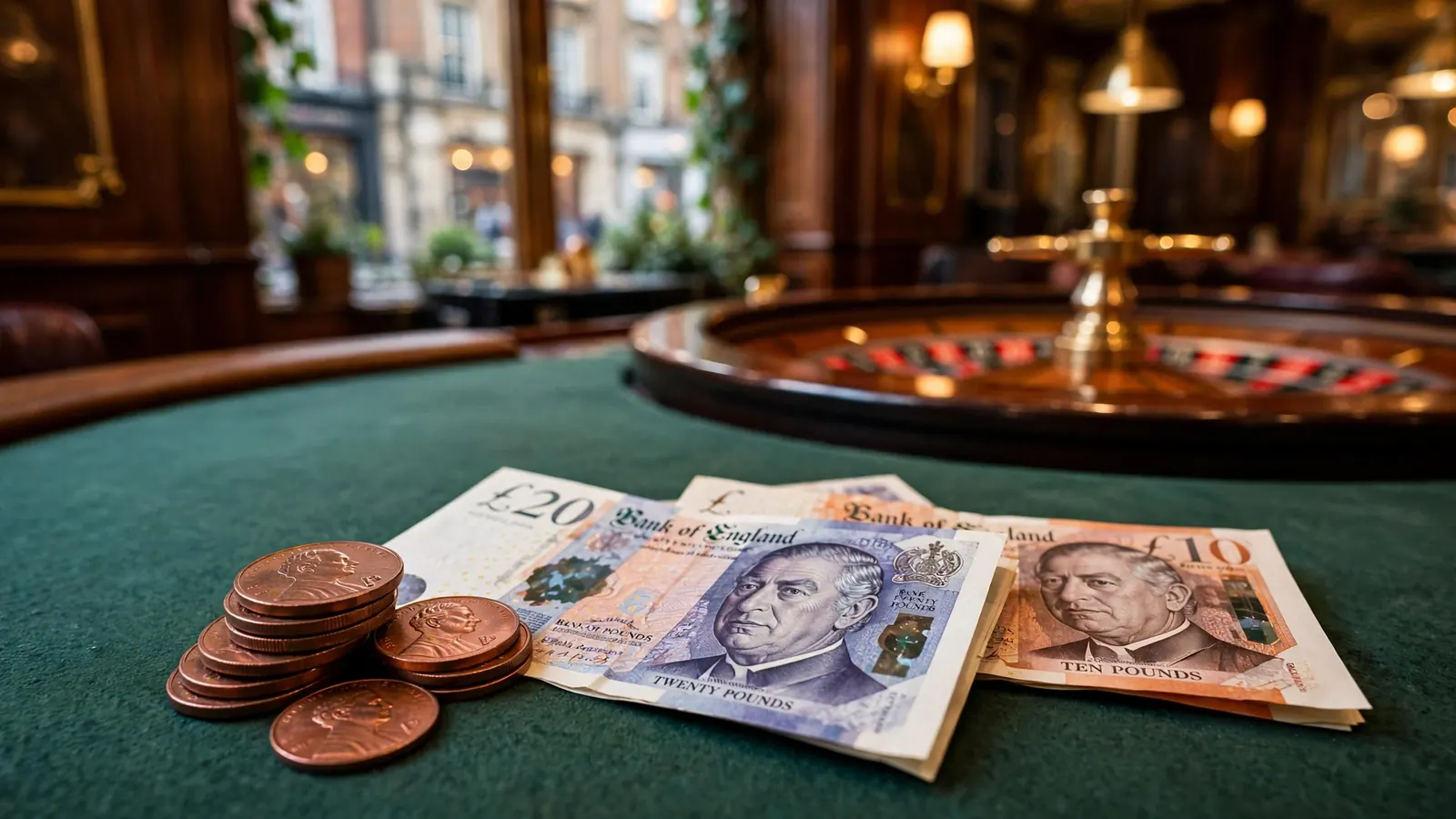
That distinction matters when comparing an online casino advertised as a fast-payout option in the UK. A useful comparison separates the two measures rather than allowing “payout” to stand in for both. The keno side calls for the game rules, odds and paytable. The account side calls for the operator’s withdrawal terms and the conditions that apply to a payment request. A single label cannot substitute for both sets of information.
For keno, the practical financial question is what a given result pays under the specific game’s table. The same number of catches need not have identical value across different games or platforms, because betting and payout structures vary. The stake also matters to the amount at issue. A stated prize should therefore be read alongside the selection rules and paytable, rather than treated as a standalone measure of value.
For withdrawals, the relevant question is how the operator defines its own payment process and what conditions apply. Those terms belong to the casino account, not to the keno rules. The available information should be read as written: an account withdrawal term is not a game return, and a game payout is not a withdrawal promise. A careful comparison keeps the amounts and processes in separate columns, even when an operator uses the same word for both.
The UK regulatory frame also belongs to the account and operator side of the comparison. Remote gambling operators serving the British market must hold the relevant UK Gambling Commission licence, regardless of where they are based. That licence requirement is not a guarantee of a particular withdrawal speed. It identifies the regulatory status of the operator; it does not change the keno paytable or turn a game-level prize into a banking timetable.
- Check the game-specific paytable for prizes
- Review the operator’s withdrawal terms for speed
- Identify the game’s odds or house edge
- Use a broad casino payout rate to judge keno
- Confuse a keno prize with withdrawal speed
- Infer game value from a headline top prize
There is another cost measure that should not be confused with either of these uses of “payout”: the house edge. Keno outcomes are random, and the house edge varies by casino. A specialist review reports a range from 5% to 40%, while online games may have a larger edge. The range is broad enough that the operative warning is straightforward: keno can carry a house edge of 25% or more. A fast withdrawal would not reduce that edge, just as a generous-looking top prize would not establish the game’s overall value.
A sound comparison therefore records three different things: the keno paytable, the operator’s withdrawal terms, and the game’s odds or house edge. Each answers a different financial question. The first sets game-level prizes; the second concerns access to funds outside the game; the third describes the cost built into play over time. None can be inferred reliably from either of the others.
For anyone weighing fast-payout casinos in the UK, the word “fast” needs to refer to a stated withdrawal process, not to the speed of a keno round or the timing of a prize calculation. Likewise, “payout” in a keno description should be read as a game award unless the context clearly concerns account withdrawals. Checking the specific game’s paytable, rules and odds before wagering keeps the distinction intact. The numbers may share a page, but they do not share a calculation.

What Happens During an Online Keno Draw
An online keno round begins with a random-number generator selecting the draw results. The generator, rather than a player’s chosen spots, determines which numbers appear. The draw can produce as many as 20 numbers, although some versions use fewer. The exact result count therefore depends on the game being played.
That process is separate from choosing spots on a card. The draw is the event that produces the numbers against which a completed selection is later assessed; it does not decide which spots a player has marked. Keeping those stages distinct makes the sequence easier to follow: the game generates its results at random, and the player’s selection is compared with them under that game’s rules.
A round does not have to use the maximum draw size. In a version that draws fewer numbers, the result contains fewer drawn numbers; in a version using the full draw, it contains up to 20. That difference is part of the game’s format, not evidence that one particular result is more favourable. The number of results alone cannot establish what a player will receive, because the outcome also depends on the spots selected and the applicable paytable.
The random-number generator is the mechanism used online to produce the draw. A displayed result is therefore not a forecast, nor a record of what is likely to happen in the next round. A previous result does not determine the next one. The draw process is random, and a sequence that appears patterned or unusual does not provide a dependable way to predict later results.
The random-number generator determines the draw results independently of the player’s chosen spots, and previous results do not influence future draws.
This matters when a game presents its draw as an animation. The visual presentation may show numbers appearing one at a time, but that display should not be confused with a player influencing the selection. The relevant fact is that the online game uses a random-number generator to select drawn numbers. How the result is visually revealed does not change the underlying role of that generator.
Draw size can also affect how the round appears without making it a different kind of event. A game with fewer drawn numbers still uses a random selection; it simply produces a smaller set of results. A round with the full draw produces more results, but neither format makes a particular spot more likely because it has appeared before. The mechanics establish what gets drawn, while the game’s own rules establish how that result is treated.
For comparison between online keno games, the practical details to identify are the draw method and how many results that version produces. “Keno” alone does not establish that every game will draw the same number of results. Some versions reach 20; others draw fewer. A description that omits this distinction leaves out a material part of the round’s mechanics.
The draw can be understood as a bounded random selection: a generator chooses the results, and the game may produce no more than 20 drawn numbers, with certain variants using a smaller draw. That is enough to describe the mechanism without treating an animation, a past sequence or a headline about speed as evidence about the numbers that will appear.

Keno Cards, Number Picks and Game Variations
A keno card presents a numbered field from 1 to 80. The player’s task is to mark spots on that field before the game begins, but the number of spots permitted is not fixed across all versions of keno. One game may set a smaller selection limit, while another may allow a broader set of picks. The card’s visible range therefore does not, by itself, tell how many spots can be chosen.
The distinction matters when comparing game formats. A card may show the same numbered range as another, yet the rules can allow a different number of selections. Depending on the game, a selection limit may be 10, 15 or 20 spots. These figures describe possible limits, not a promise that every game offers all of them. The particular game’s rules determine which selection range applies.
The number field and the permitted picks are separate parts of the format. The field defines the spots available on the card; the selection limit defines how many of those spots may be marked for a game. A larger field does not necessarily mean a player can select more spots. Nor does a familiar-looking card establish that two versions use identical rules. The limit needs to be read in the game information, rather than inferred from the layout.
This is useful when a game is described simply as keno. That label does not specify the selection limit. A version allowing a smaller set of picks offers a different playable format from one allowing a larger set, even when both display numbers from 1 to 80. The difference is in the permitted choice, not in the basic appearance of the card.
Keno Card Variations
A keno card typically features a numbered field from 1 to 80, but the selection limit varies by game. Depending on the rules, a player may be permitted to mark 10, 15, or 20 spots.
The card format also should not be confused with casino payment language. A site’s payout rates or withdrawal times do not define how many spots a keno game allows. Those are separate terms. A card with a wider selection allowance is not, on that basis alone, evidence of a better casino payout rate or faster access to withdrawn funds. The format answers a narrower question: how many spots can be marked in that particular game?
Before wagering, the game’s rules, odds and paytable should be checked for the specific version in use. Keno payouts vary across platforms, so a selection limit cannot stand in for those terms. The same card design may accompany different rules, and the game information is the controlling reference. This is a practical check, not fine print to leave until after a bet has been placed.
The card’s numbered range is straightforward; the permitted selection range is where variations appear. A player comparing games should identify both: the numbers displayed and the maximum number of spots the rules allow. If the selection cap is unclear, the format has not been established well enough to compare. It is not necessary to guess from the number of squares on screen.
Keno carries a house edge of 25% or more. That risk does not change because the card allows more or fewer spots, and the selection limit should not be treated as a measure of value. For a sound comparison, keep the card layout, pick limit and financial terms in separate columns. The first describes what is displayed; the second describes the permitted selection; the third belongs to the game’s own payout information. A neat card is not a set of terms.

Same-Day Withdrawal Claims Do Not Describe Keno Payouts
A same-day withdrawal claim concerns how quickly a casino processes a request to take money out. It says nothing about the rules that decide whether a keno round wins or how much it pays. Those are separate terms, even when a page uses “payout” for both.
For someone comparing same-day payout casinos in the UK, the distinction matters. A casino may describe a withdrawal timetable, while the keno game has its own rules for awarding winnings. Neither statement verifies the other. A fast withdrawal claim cannot establish that a keno game offers favourable returns, and a generous-looking game payout does not show when a withdrawal will reach an account.
The draw itself is also separate from both. Each online keno round draws 20 numbers. The resulting game payout is determined under that game’s rules; a casino’s withdrawal process applies only after funds are available to withdraw. Treating these as one promise makes the wording sound more precise than it is.
“Same day” needs to be read as a claim about the operator’s withdrawal service, not as a guaranteed outcome for every request. The wording alone does not set out the conditions, and no keno rule establishes a withdrawal deadline. Claims about same-day casino payments therefore need to be assessed against the operator’s own terms rather than inferred from the game.
Attention A same-day withdrawal claim refers to the operator’s processing speed and does not establish the fairness or payout probability of the keno game itself.
Keno payouts vary across platforms, and the house edge is at least 25%. That is a material cost of play, regardless of how quickly a casino says it handles withdrawals. A withdrawal speed claim should not distract from the game’s financial terms or be treated as evidence that a player is more likely to win.
In Great Britain, real-money operators serving customers must hold the relevant UK Gambling Commission licence. That status concerns the operator’s legal permission to offer gambling; it does not certify a particular keno payout or turn a processing claim into a promise of receipt by a set time.
The practical comparison is therefore two-part: assess the casino’s withdrawal terms separately from the keno game’s rules and payout information. The first concerns access to funds after a withdrawal request; the second concerns what happens within the game. A page combining both under a broad “payout” label has not made them equivalent.
Manual Picks, Random Picks and Repeat Bets
Payout speed is an important factor when choosing an online casino. This list gives you a quick reference to the stated withdrawal timeframe for each operator.
Payout speed: 1-3 business days Britsino lists a payout speed of 1–3 business days.
Payout speed: 1-3 business days NightLuck lists a payout speed of 1–3 business days.
Payout speed: 1-3 business days Chanze lists a payout speed of 1–3 business days.
Payout speed: 1-3 business days SpinFormula lists a payout speed of 1–3 business days.
Payout speed: 1-3 business days Amunbet lists a payout speed of 1–3 business days.
Payout speed: 1-3 business days Zombillion lists a payout speed of 1–3 business days.
Payout speed: 1-3 business days WinBeast lists a payout speed of 1–3 business days.
Payout speed: 1-3 business days BeOnBet lists a payout speed of 1–3 business days.
Payout speed: 1-3 business days EvoSpin lists a payout speed of 1–3 business days.
Payout speed: 1-3 business days Jetsetspins lists a payout speed of 1–3 business days.
Before a keno round begins, the number spots can be chosen manually or generated by the game’s random-selection option. The choice changes how the selection is made, not the basis on which a result is settled. A randomly generated card is not a prediction, and a hand-picked set does not gain an advantage because its numbers feel familiar.
Manual selection gives control over which spots appear on the card. Random selection removes that decision and supplies a selection automatically. Neither method makes particular spots more likely to be drawn in a legitimate game. Past results and personal patterns do not turn a chosen set into a more reliable one.
The bet size is a separate decision. Players can select the amount staked on a game, while the return for a winning result depends on the game’s own terms. Increasing the stake changes the amount at risk and may change the amount paid for a result; it does not improve the chance that selected spots will be caught. The arithmetic is straightforward: a larger stake increases exposure as well as any corresponding return.
Some games allow the same number selection to be used across multiple games. This can reduce the need to enter the selection again, but repeat play is not a way to improve the odds of an individual round. Each additional game is another wager, so the total spend grows with the stake and the number of rounds played. A repeated selection is a convenience, not a protective feature.

A fixed selection can also make the cost of repeat betting easier to overlook. The same card may feel like one continuing choice, but each game still carries its own stake and outcome. A budget set before play should therefore account for every round, rather than treating a sequence of games as a single bet. Chasing losses by extending that sequence changes the amount spent, not the underlying chance of a win.
Keno carries a house edge of 25% or more, so neither manual picks, random picks nor repeat bets remove the mathematical disadvantage. The specific game’s paytable, rules and odds should be checked before wagering; payouts vary across platforms. Those terms—not the selection method—determine what a matching result pays.
Side Bets and Zero-Match Payouts
Some keno games add optional side bets, including multiplier features. A specialist review describes these as available in certain games, not as a standard feature across keno. The effect depends on the rules attached to that particular bet: a multiplier can change the payout calculation, but its presence alone does not show how much a winning result pays or which results qualify.
Zero-match results may qualify for prizes in some variants, but only if the player has selected more than a specific number of spots as defined by the paytable.
A zero-match result can also be treated as a winning outcome in many keno variants, but only when the player has selected more than a specified number of spots. That condition matters. A ticket with no catches is not automatically a winner; the game must include a zero-match award, and the selection must meet its threshold. The applicable threshold and award belong to the individual game’s paytable.
These features change the set of outcomes that may receive a prize. They do not make a result more predictable, and a multiplier does not turn a losing combination into a winning one unless the game’s rules say it qualifies. The practical value of an added feature therefore cannot be judged from its label. The stake, qualifying result, and stated return all have to be read together.
Keno payouts vary between platforms, so a side bet or zero-match rule found in one game should not be assumed to apply elsewhere. Before wagering, the specific game’s paytable, rules and odds need to be checked, including whether the feature is optional and what conditions trigger payment. A headline multiplier without its qualifying conditions is incomplete information.
The distinction is financial, not cosmetic: an optional feature may affect the amount staked or the payment attached to an eligible result, while zero-match rules determine whether a particular result can qualify at all. Neither tells how quickly casino funds can be withdrawn. Keno can carry a house edge of 25% or more, so a special payout feature should not be read as evidence that the game is favourable overall.

Keno House Edge and the Limits of Number Strategies
Keno’s house edge is the portion of wagers that the game is structured to retain over time. It is not a forecast of what happens in a single round: an individual result can be a win or a loss, while the edge describes the game’s longer-term financial balance. A keno game can carry a house edge of 25% or more, so the risk is material even when a round appears simple.
A specialist review gives a possible keno house-edge range of 5% to 40%, with the figure depending on the casino. That range should not be treated as a promise about any particular game. The payout rules and odds vary between platforms, and the relevant figure is the one attached to the specific game being considered. A headline payout percentage without its game rules is not enough to establish the likely return.
Number selection does not change the underlying probability in a legitimate random keno game. Choosing spots that have appeared often, or avoiding spots that seem overdue, does not give those numbers a better chance of being drawn. Previous outcomes do not make a particular selection more favourable in the next round. A strategy may change which outcomes a player is hoping for, but it cannot control the draw.
That distinction matters when judging claims of a reliable system. No number pattern or betting approach guarantees a win, and a sequence of successful rounds does not remove the house edge. A system that increases stakes after losses changes the amount exposed; it does not improve the chance that chosen spots will be drawn.
Before wagering, check the specific game’s paytable, rules and odds, including its stated return or house edge where provided. Keno payouts vary across platforms, so a figure from one game cannot be transferred to another. The calculation is straightforward: the edge affects the expected cost of play over time, while each round remains random. Treating number choice as a way to overcome that cost adds confidence, not probability.
Check Before Wagering
- Review the specific game’s paytable
- Check the rules for the chosen keno version
- Verify the stated return or house edge
- Ensure the stake fits within your set bankroll
- Confirm the operator holds a UK Gambling Commission licence
Video Keno, Slot Comparisons and Return Figures
Video keno and slot machines can both produce a long run of losing play, and the stated odds for video keno are about as unfavourable as those for slots. That comparison is a broad warning, not a claim that every game has the same return. A slot’s payout figure applies to that particular game; it does not establish what a keno game will return.
A historical snapshot gives some context. A specialist review reported that a survey of live keno games in Las Vegas in 2001 found returns between 65% and 80%. The figures belong to that survey, market and period. They are not a current measure of online keno in the UK, nor a forecast for a particular game. Applying them to a present-day casino would turn an old observation into a pricing term it cannot support.
Return percentages also need to be read as game-level figures, rather than as a promise about an individual session. They do not specify when a player will win, how much a particular ticket will pay, or whether a short run will resemble the reported result. The same caution applies when comparing keno with slot games: a high advertised return, where one is stated, does not make the games interchangeable or establish the best option for a given budget.
Keno can carry a house edge of 25% or more, so the retained share can be substantial. The edge and payout terms vary between games and platforms; a comparison based only on a headline percentage leaves out the conditions that determine how a stake is treated. The specific game’s paytable, rules and odds therefore matter more than a general ranking of slots or a historical keno return.
Claims about the best-paying slot or the fastest-paying site answer different questions. A game’s return concerns its payout structure; a casino’s withdrawal speed concerns processing funds after play. Neither figure can stand in for the other. For a sound comparison, the relevant terms must be checked separately, without treating a historical live-game survey as evidence of current online returns.

Check the Rules Before Betting on Any Keno Platform
Keno terms are not interchangeable between casinos. A specialist review notes that platforms can set different betting and payout structures, so a headline prize figure is not enough to compare the cost or potential return of a game. The paytable, rules and odds for the specific game should be checked before wagering.
The paytable shows which results qualify for a prize and what each result pays. Rules explain how the game applies those terms. Odds put the chance of a result in context. Read them together: a possible prize without the conditions attached says little about the value of a bet. Keno payouts vary across platforms, so a figure from one game should not be treated as applying to another.
The house edge is a material cost of play. Keno has a house edge of 25% or more, and the actual terms depend on the casino and game. No choice of spots removes that edge or guarantees a return. The calculation should therefore begin with the amount at risk, not with the largest prize shown.

Set a bankroll before choosing a game, then check that its available bets fit within that budget. If the required stake sits outside the planned range, the game is a poor fit regardless of its advertised payout. A suitable bet is one that can be repeated without exceeding the amount set aside for play; increasing it to recover losses changes the budget rather than improving the terms.
For real-money play in Great Britain, the operator must hold a current UK Gambling Commission licence. Operators must verify age before accepting a deposit, and UK-licensed casinos must provide responsible gambling tools, including self-exclusion. These are separate checks from the keno paytable, but both affect whether the platform and game terms are acceptable.
What is the house edge in Keno?
The house edge can range from 5% to 40%, and online games usually have a higher edge. Check the specific game’s rules and paytable.
How important is it to pick the right Keno game?
It matters because rules and payouts vary between games. Compare the game’s paytable and odds, and choose one with bets that fit your budget.
How do I choose a line and place a bet?
Select your numbers manually or use an automated random selection, then choose your bet size. After the draw, your return depends on how many selected numbers match and the game’s paytable.
How much does it cost?
Minimum stakes start at £1. You choose your bet size, so set a budget before playing.
Are there different versions of Keno?
Yes. Rules and payouts vary between games, and some versions draw fewer than 20 numbers. Check the specific game’s rules and paytable before playing.
How is Keno betting done?
Choose numbers from the card, set your stake, and play the draw. You can select numbers yourself or use a random selection; winnings depend on how many of your picks match the drawn numbers.
How many numbers can I choose in Keno?
The number of picks depends on the game; commonly, players can choose up to 10–15 numbers, while some games allow up to 20.
Written by the editors at Winstler Casino.