Non-UK Regulated Casinos: Rules for UK Players
 Available in GB
The operator’s location, the market it serves and its licence all affect how an online casino is regulated.

- What a UK Gambling Commission Licence Covers
- The Legal Position for UK Players
- What “Unregulated” Means in This Context
- Non-UK Casinos and the Limits of GamStop
- The 2026 Terms That Change the Real Cost
- Licences Outside the UK: What Jurisdiction Changes
- How Slot-Machine Regulation Depends on the Operator
- Crypto and Other Payment Routes at Offshore Casinos
- The UK Gambling Commission’s Role—and Its Boundary
- Checking an Overseas Licence and Complaint Route
What a UK Gambling Commission Licence Covers
For an online casino, the relevant question is not simply where its company is based. The key issue is whether it offers gambling services to customers in Great Britain. An operator doing so must hold a licence from the UK Gambling Commission, even if its headquarters, owners or other operations are elsewhere.
That rule sets the basic meaning of a UK-regulated online casino: the operator supplying the service to the British market is licensed by the national regulator. A company cannot avoid that requirement merely by locating its business outside the country. The location of the operator and the market it serves are separate considerations; the former does not remove the licensing obligation created by the latter.
This distinction matters because “online casino” describes the service, while “UK-regulated” describes the operator’s regulatory status in relation to that service. A site’s branding, website address or presentation may not answer whether the operator holds the required UK licence. Nor does a company’s presence in Britain, by itself, establish that its casino operation is licensed. The licensing baseline is tied to supplying gambling services to customers in Great Britain.
When exploring non-UK-regulated casinos in 2026, payout information is one practical detail to consider. This list gives a concise reference point for the operators shown.
Payout speed: 1-3 business days Britsino lists a payout speed of 1–3 business days.
Payout speed: 1-3 business days NightLuck lists a payout speed of 1–3 business days.
Payout speed: 1-3 business days Chanze lists a payout speed of 1–3 business days.
Payout speed: 1-3 business days SpinFormula lists a payout speed of 1–3 business days.
Payout speed: 1-3 business days Amunbet lists a payout speed of 1–3 business days.
Payout speed: 1-3 business days Zombillion lists a payout speed of 1–3 business days.
Payout speed: 1-3 business days WinBeast lists a payout speed of 1–3 business days.
Payout speed: 1-3 business days BeOnBet lists a payout speed of 1–3 business days.
Payout speed: 1-3 business days EvoSpin lists a payout speed of 1–3 business days.
Payout speed: 1-3 business days Jetsetspins lists a payout speed of 1–3 business days.
The requirement also helps make the phrase “licensed and regulated” more precise. In this context, it is not enough for an operator to say that it has some form of authorisation somewhere. The relevant status for serving the British market is a UK Gambling Commission licence. A licence issued elsewhere does not, solely by virtue of being a licence, satisfy that requirement.
This does not mean every online casino that can be found on the internet is a UK-regulated casino. The category depends on the operator’s licence for the service it provides to Great Britain. If a site is described as regulated, the useful follow-up is: regulated by whom, and for which market? Without that distinction, the word can give an incomplete impression of the operator’s position.
The same test applies whether the operator is a familiar domestic business or a company based abroad. A foreign address is not an exemption, and a British address is not a substitute for the required authorisation. The licensing question follows the service into the market it is offered in; it does not stop at the company’s registered location.

For readers comparing online casinos, this provides a practical starting point rather than a quality ranking. “Regulated” is not a synonym for “best”, and the licensing requirement alone does not establish that one casino offers better terms, games or payment arrangements than another. It identifies a particular regulatory status: the operator serving customers in Great Britain holds a licence from the UK Gambling Commission.
The distinction is useful when a casino uses broad claims such as “licensed”, “internationally regulated” or “trusted”. Those labels may refer to matters other than UK authorisation. The claim that matters for the British market is whether the operator has the UK Gambling Commission licence required to supply gambling services there. A licence elsewhere may be relevant to the operator’s position in another jurisdiction, but it does not change the UK licensing threshold.
Nor should regulation be inferred from the appearance of a website or from the fact that an operator accepts customers from a particular place. A clear assessment separates the operator’s location from the market served and then considers the licence relevant to that market. This avoids treating a foreign base as a loophole or treating the word “licensed” as a complete answer.
The baseline is therefore straightforward: an online casino serving Great Britain must be operated under a UK Gambling Commission licence, wherever the operator itself is located. That is what makes it a UK-regulated casino in the relevant sense. Other descriptions may be accurate in their own context, but they do not replace this requirement when the service is directed at the British market.
The Legal Position for UK Players
The legal distinction is between supplying gambling services to the British market and an individual using a service based elsewhere. The Gambling Act 2005 places its focus on operators: a company offering gambling to customers in the UK is subject to the rules that govern the market. That is not the same as a rule making the player’s act of placing a bet a criminal offence.
UK law contains no express ban on British citizens using gambling services licensed in another country, although this does not mean such sites are authorized to serve the British market.
For British citizens, UK law contains no express ban on using gambling services licensed in another country. Equally, that point should not be turned into a general approval of every overseas site that accepts a UK customer. The operator’s obligations and the player’s position are separate questions, and the absence of a stated offence for the player does not establish that an operator is authorised to serve the British market.
The practical distinction matters when considering non-UK-regulated casinos for UK players. A casino may hold permission from a foreign jurisdiction, but that fact alone does not settle whether it has the UK authorisation required to offer gambling services in Great Britain. A foreign licence describes the operator’s status under another system; it does not replace the UK requirement for an operator serving this market.
There is a narrower point about unlicensed sites. A player who gambles with an operator that lacks a licence does not, on that basis alone, commit a criminal offence under UK law. This is a statement about the player’s criminal liability; it is not a finding that the site is lawful to operate, properly supervised, or safe to use. Those are different questions. Treating them as interchangeable would turn a limited legal distinction into a much broader assurance than it supports.
The same care is needed with the phrase “licensed offshore casino”. It can mean that an overseas authority has issued a licence, but it does not mean that the casino holds a UK Gambling Commission licence. Nor does the player’s ability to reach a website determine the operator’s regulatory status. For a UK customer, access and authorisation are not synonyms.

This distinction also prevents a common misreading of the position for non-UK-regulated casinos accepting UK players. If a site takes customers from Britain, the operator’s location does not remove the UK licensing requirement. The customer’s lack of criminal liability does not transfer that requirement from the operator to the customer, and it does not cure the absence of the required permission. The two propositions can coexist: the operator may be acting outside the local licensing framework, while the player is not committing a criminal offence simply by using the service.
“Not explicitly prohibited” is also narrower than “expressly permitted”. The former describes the absence of a specific prohibition on British citizens using gambling services licensed elsewhere. It does not amount to a positive guarantee about every service, every operator or every circumstance. In particular, it cannot establish that a foreign licence is recognised as a substitute for local authorisation. A legal conclusion about the operator should not be inferred from the player’s position.
For a person weighing up a foreign-licensed service, the relevant questions should remain distinct: what rules apply to the operator serving the British market, and what legal consequence does UK law attach to the player’s use of that service? It does not turn the site into a fully regulated UK casino, or make its operation compliant with the requirements imposed on operators serving Great Britain.
The position is therefore not a blanket endorsement of offshore play. UK law’s focus on operators does not eliminate the operator’s licensing obligation, while the absence of a player offence does not establish wider protections or resolve every question that might arise. Individual responsibility remains relevant: the legal position should be understood in light of the applicable rules, rather than inferred from the fact that a site is accessible or holds a licence abroad.
Legal Position
Using a non-UK-regulated casino may mean you lack the legal protections and oversight provided by the UK Gambling Commission.
What “Unregulated” Means in This Context
“Unregulated” is a relative term here. It describes an online casino that operates without oversight from the UK Gambling Commission; it does not necessarily mean that the site has no licence at all. A casino may hold permission from an overseas jurisdiction while remaining outside the UK regulator’s system. The distinction is between being licensed somewhere and being regulated for the UK market.
That matters because a licence is tied to the authority that issued it. A site’s claim to be licensed internationally does not, by itself, make it a UK-regulated casino. Nor does a foreign licence turn into UK oversight simply because a website is accessible from Britain. In practical terms, “internationally licensed” identifies a claimed licensing location; it does not answer whether the UK Gambling Commission regulates the operator.
The label covers different licensing locations
Non-UK-regulated casinos are commonly associated with jurisdictions such as Malta, Curaçao, Gibraltar and Anjouan. These places can license online gambling operators, but the location named in a site’s licence claim is not a substitute for a UK Gambling Commission licence. The broad label therefore covers casinos with different licensing backgrounds, rather than one uniform category governed by the same rules.

The word “unregulated” can be misleading if read as “unlicensed everywhere”. Some operators may be licensed outside the UK, while others may not have a licence from a recognised gambling authority. The useful question is not simply whether a casino calls itself licensed, but which authority it says issued the licence and whether that authority’s oversight is relevant to the operator’s UK status.
A regulated casino is not defined by the appearance of a badge on its homepage. The badge may refer to an overseas licence, and the site may use the word “regulated” without explaining the limits of that regulation. A more precise description separates the two points: the operator may have an overseas licence, but it is not UK-regulated unless it falls under UK Gambling Commission oversight.
This is also why “unregulated casinos in the UK” is an imprecise phrase. It can refer to sites available to people in Britain that are not overseen by the UK regulator, not necessarily businesses physically located in Britain. The operator’s base and the regulator named on its licence are separate facts. Neither should be inferred from the site’s branding, currency options or the language of its pages.
Who regulates a crypto casino?
Cryptocurrency does not determine a casino’s regulator. A crypto casino’s regulatory position depends on the operator and the licence it holds, if any—not on whether deposits or withdrawals use digital assets. A site accepting cryptocurrency may be licensed in one of the jurisdictions named above, or it may lack a licence. The payment method alone cannot establish which is true.
The same distinction applies to other online gambling services: a game format or funding route does not create a regulatory authority. “Crypto casino” describes a payment or product feature, not a licensing category. To understand who oversees the operator, the relevant information is the company behind the site and the jurisdiction it identifies as its licensing base.
Common jurisdictions that license online gambling operators outside the UK regulatory system.
A jurisdiction where licenses do not authorize operation in the UK and lack mandatory fund segregation.
Services where regulatory status depends on the operator’s license, regardless of the use of digital assets.
Why the distinction matters
Calling a site “unregulated” without qualification can suggest that no rules apply anywhere. Calling it “internationally licensed” can imply more reassurance than the wording supports. Both descriptions can obscure the central point: an overseas licence and UK Gambling Commission oversight are not interchangeable.
That difference is the starting point for assessing the risks of unregulated online casinos. The label alone does not establish how robust an overseas regulator is, what protections its licence requires, or how a dispute would be handled. Those questions vary with the licensing jurisdiction and the operator. A casino’s country of registration, its licence claim and the regulator responsible for it need to be treated as distinct details rather than compressed into a single assurance.
For classification, then, “non-UK-regulated” is the more exact term: it identifies the absence of UK Gambling Commission oversight without making an unsupported claim that the operator is wholly unlicensed. A UK-regulated casino and a casino licensed overseas may both display licensing information, but those statements describe different regulatory relationships.
Non-UK Casinos and the Limits of GamStop
GamStop is the UK Gambling Commission’s self-exclusion scheme. A casino that is not part of it does not receive or apply a player’s GamStop exclusion through that scheme. The practical boundary matters: self-exclusion registered with GamStop does not create a block at a non-GamStop site.
That distinction is especially important when a person is relying on exclusion to prevent access to gambling. A site outside the scheme may remain available even while the person’s GamStop exclusion is active. Its own account controls, if offered, operate separately; GamStop cannot be treated as a substitute for checking what those controls cover.
Safeguards do not transfer with the player
Non-UK-regulated casinos may apply less stringent responsible-gambling and data-protection rules than operators regulated by the UK Gambling Commission. The exact protections depend on the individual operator, but the UK scheme’s requirements should not be assumed to follow a player onto a site that is outside it.
A casino may describe tools such as account limits or self-exclusion, but their existence, scope and operation are matters of that operator’s own policy. A site-level exclusion is not the same as a shared national scheme: it may apply only to that account or operator. Where no comparable tool is available, there may be no equivalent control to rely on.
Data protection is a separate part of the same risk assessment. Less stringent rules can mean a different standard of oversight for how personal information is handled. This does not establish that a particular casino will misuse data; it does mean the protections available under UK-regulated arrangements cannot simply be presumed.
Complaint routes and practical recourse
Players using offshore casinos also lose access to the UK’s Financial Ombudsman Service and to mandatory responsible-gambling tools. If a dispute arises, the familiar UK routes are therefore not available on the same basis. A casino’s own complaints channel may still exist, but that is not equivalent to an independent UK service.
Players using offshore casinos lose access to the UK’s Financial Ombudsman Service and mandatory responsible-gambling tools.
The distinction is not merely administrative. If a player’s account is restricted, a withdrawal is disputed or a self-exclusion request is not handled as expected, the available route depends on the operator and the system governing it. Neither GamStop nor the Financial Ombudsman Service can be assumed to intervene for a customer of a casino outside their remit.
“Casinos not on GamStop” describes a gap in scheme coverage, not a separate form of protection. The site may have its own safeguards, but those need to be assessed on their stated terms, and their presence does not restore access to UK services. A label or a promise of responsible gambling is not a substitute for knowing which controls actually apply.
For someone relying on self-exclusion, the central calculation is straightforward: GamStop covers participating casinos, not every site where gambling may be available. An account at a non-GamStop casino sits outside that shared exclusion mechanism, while UK complaint and protection routes are also reduced. The resulting exposure is not corrected by the fact that the site offers a different licence or its own account settings.


The 2026 Terms That Change the Real Cost
A welcome bonus is not cash at face value. Its practical value depends on what must be wagered before winnings can be withdrawn, which funds the requirement applies to, and whether a cap limits the final payout. For a non-UK-regulated casino, those conditions need to be read as part of the offer, not as small print that can be assessed later.
A specialist review has reported offshore welcome offers with wagering requirements of 35x or more. Another reported a 40x requirement, which may apply to the bonus alone, the deposit and bonus combined, or the bonus and free spins together. These are not interchangeable calculations. If the multiplier applies to a bonus alone, the required wagering is calculated from that bonus; if it applies to the combined deposit and bonus, the base is larger. The offer’s wording determines which calculation applies.
The useful comparison is therefore between the advertised reward and the amount of wagering needed to release it. A headline bonus cannot be valued independently of its base, multiplier and withdrawal conditions. If any of those terms is unclear, the potential payout cannot be calculated reliably.
Free spins: winnings are not the same as withdrawable cash
Free-spin offers have their own conditions. A specialist review has described winnings subject to wagering requirements of 30–50 times those winnings, alongside withdrawal caps of £5–£50. The cap can matter more than the apparent win: where a maximum withdrawal applies, completing the wagering requirement does not make the excess payable.
The calculation has two stages. First, determine how much wagering the winnings trigger under the stated multiplier. Then check the maximum amount that can be withdrawn from the offer. A large theoretical win can produce a much smaller eligible payout if the cap is low. The offer’s expiry condition also matters; a specialist review has reported free-spin packages expiring within 24–72 hours. Those reported terms are not a fixed market rule, so the current offer must be assessed on its own wording.
Calculating Bonus Value
Identify if the multiplier applies to the bonus alone or the combined deposit and bonus.
Calculate the total amount that must be wagered based on the specified multiplier (e.g., 35x or 40x).
Verify if a maximum payout limit (e.g., £5–£50) applies to the winnings before they can be withdrawn.
Withdrawal conditions can add a separate cost
A balance shown in an account is not necessarily money that can be collected without further steps. A specialist review has reported operators requesting notarised documents or video calls before processing withdrawals. Such requirements can add time, effort and expense, particularly if they appear only after a payout is requested. The review describes them as deliberately onerous; that should be treated as a reported practice, not a universal condition.
Before assigning value to an offer, the relevant figures are the wagering base, multiplier, payout cap and any verification steps tied to withdrawal. The bonus headline is only the starting amount. The final value is what remains eligible for withdrawal after every applicable condition has been met.
Licences Outside the UK: What Jurisdiction Changes
A licence issued overseas describes the regulatory framework attached to an operator; it does not transfer UK oversight to the issuing authority. For casinos regulated outside the UK, the key distinction is therefore not simply whether a licence is displayed, but which jurisdiction issued it and what that jurisdiction requires. An overseas licence is not a substitute for permission to operate in a market where a separate local licence is required.
Anjouan illustrates the difference. Its licence does not authorise a casino to operate in the United Kingdom or in other markets listed as restricted. A casino’s claim to hold an Anjouan casino licence therefore cannot, by itself, establish that it is authorised to serve customers in Britain. Licence location and market permission answer different questions.
The financial protections can also differ. Under Anjouan’s framework, casinos are not required to keep player funds separate from operating funds. If an operator fails, players are unsecured creditors rather than holders of funds guaranteed to be ring-fenced. That changes the position of a balance on an account: it may be a claim against the failed business, not money protected in a separate pool.
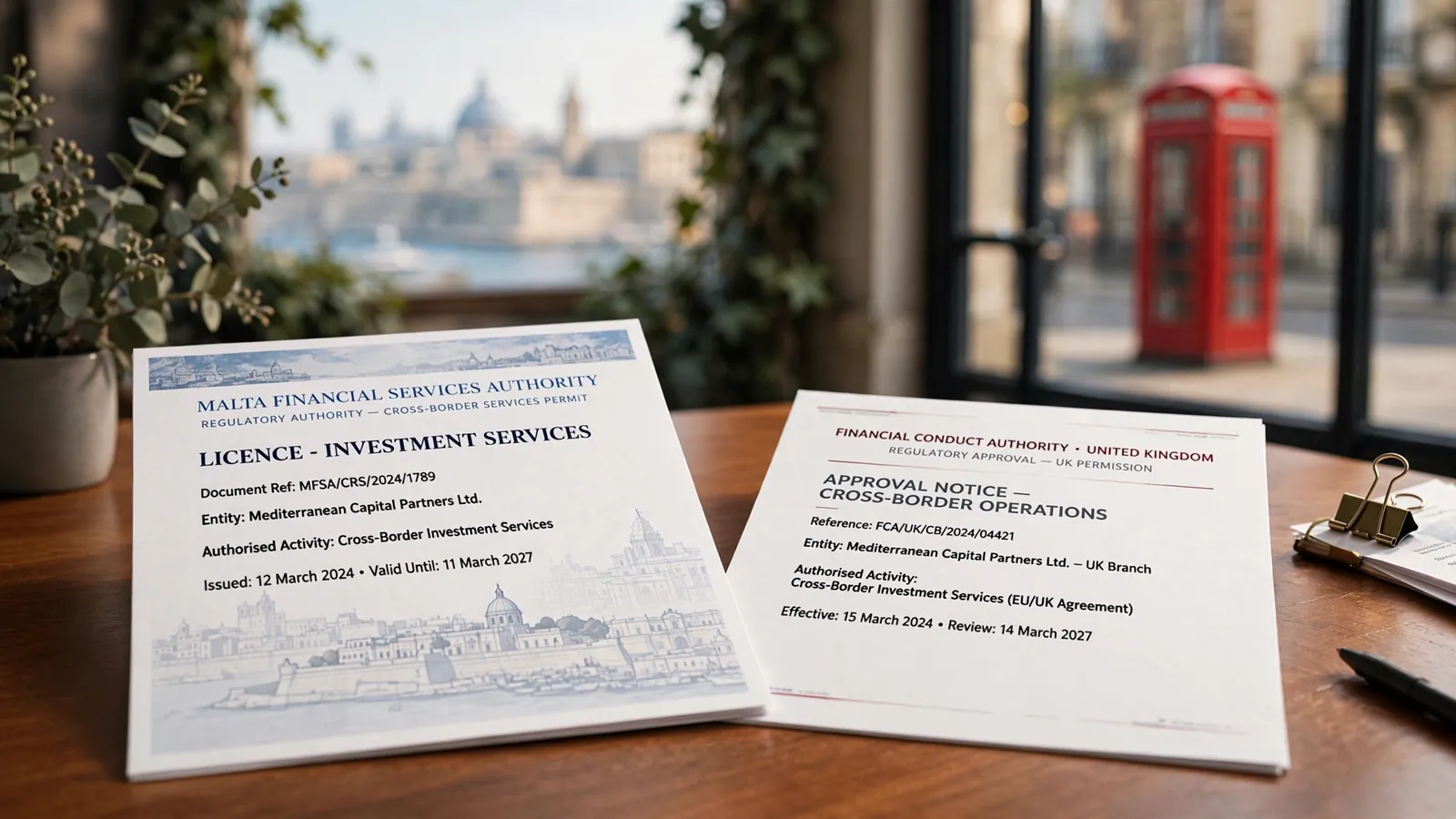
Testing and audit requirements are another jurisdiction-specific point. Anjouan’s framework does not require random-number-generator testing or audits, and it does not mandate segregation of player funds. A licence from that authority therefore does not establish that a casino’s games have undergone those checks or that its finances have been independently audited. The licence label alone cannot supply protections that the framework does not require.
This is why “licensed outside the UK” is too broad to serve as a measure of protection. Different authorities impose different conditions, and the word “licensed” does not tell a customer what those conditions cover. The relevant comparison is between the actual obligations attached to the licence and the protections expected from UK oversight. With Anjouan, the stated framework leaves specific gaps in fund separation and mandatory testing; those are concrete differences, not a general judgement about every overseas jurisdiction.
A foreign licence may still identify the authority under which an operator claims to function. Its value depends on the rules behind it, and it does not make the operator’s status interchangeable across countries. In practical terms, a licence is jurisdiction-bound: it cannot be read as a universal authorisation or as proof of safeguards that the issuing framework does not require.
How Slot-Machine Regulation Depends on the Operator
For online slots, the central regulatory question is not simply where a game was developed or what licence appears beside its name. It is whether the operator providing gambling services to customers in Great Britain holds a UK Gambling Commission licence. That requirement applies regardless of where the operator is based.
Slot Regulation
Whether slot machines are regulated depends on whether the operator supplying the service holds a UK Gambling Commission licence.
This is the practical answer to whether slot machines are regulated: the relevant rule concerns the business supplying the gambling service. A company located abroad does not avoid the UK licensing requirement by hosting its website elsewhere or offering familiar slot titles. If it serves customers in Great Britain, it needs the relevant Commission licence.
The distinction matters when assessing claims about UK-regulated slot casinos. A game’s presence on a site, or a label attached to the game, does not by itself establish that the operator is authorised to serve the British market. Regulation should be considered at the operator level: who runs the casino and supplies the gambling service to the customer.
That does not mean an operator’s licence alone answers every question about an individual slot. The licensing point establishes who must be authorised to provide the service in Great Britain; it should not be stretched into a claim that every game has been separately tested or approved under a particular process. Those are different propositions.
The same test applies across online casino games, including slots: identify the operator behind the service and whether it holds the required UK Gambling Commission licence for Great Britain. The operator’s physical location does not change that requirement. A site’s branding, game catalogue or payment options cannot substitute for the relevant licence status.
Accordingly, “regulated slots” is most useful as shorthand for slots supplied by a properly licensed operator, rather than as a standalone description of a game. The distinction keeps the assessment focused on the party responsible for offering gambling in the market, without implying that a game title carries its own UK authorisation.

Crypto and Other Payment Routes at Offshore Casinos
A non-UK-regulated casino may offer several ways to fund an account: credit cards, e-wallets, bank transfers and cryptocurrencies. Payments may be routed through alternative processors, so the name shown on a transaction can differ from the casino’s brand. The available route depends on the operator and its payment arrangements; a method appearing on a cashier page is not evidence that every transaction will be handled in the same way.
The distinction matters particularly for cards. UK rules prohibit gambling payments funded by credit cards. Some non-UK-regulated casinos accept card deposits through processing arrangements outside the usual UK route, while cryptocurrency can bypass the UK credit-card-funded gambling ban. That describes how the payment is made, not the status of the casino: using crypto does not turn an overseas operator into a UK-licensed one, or provide the protections attached to UK regulation.
E-wallets and bank transfers are separate funding routes, with their own provider and account requirements. A casino may support a deposit method without that alone establishing that the same route will be available for withdrawals. Payment compatibility is therefore a practical detail, not a measure of regulatory standing.
There are also occasional claims that deposits can be charged to a mobile phone bill or taken from a prepaid balance. A specialist review has described these options, but that is not enough to treat them as a settled feature of the market. Their availability can depend on the operator, processor and payment service.
- Identify the specific entity processing the payment
- Check if the payment route is clearly identified
- Assess the suitability of the method for the transaction
- Assume a cashier page option is always available for withdrawals
- Equate the use of cryptocurrency with UK regulatory protection
- Assume payment choice changes the casino’s licensing position
The useful comparison is not simply whether a casino accepts a preferred method. It is whether the payment route is clearly identified, what entity processes it, and whether the method is suitable for the transaction in question. A crypto deposit, for instance, avoids a card-funded payment; it does not change the operator’s licensing position. Payment choice changes the funding channel, not the regulatory framework around the casino.
The UK Gambling Commission’s Role—and Its Boundary
The UK Gambling Commission sets the licensing boundary for gambling operators serving customers in Great Britain. An operator must hold the relevant Commission licence whether it is based in Britain or elsewhere. A casino’s overseas location therefore does not remove that requirement when it supplies gambling services to the British market.
A UK Gambling Commission-regulated casino sits within the Commission’s oversight. That status is not simply a description of where the company is registered: it indicates that the operator holds the licence required to serve Great Britain. A foreign location alone neither establishes nor replaces that permission.

The boundary matters when a site operates outside the UKGC system. Customers using an offshore casino do not receive UKGC protections through the Commission merely because they are in Britain or can access the site. They also forfeit access to the UK’s Financial Ombudsman Service and to mandatory responsible-gambling tools available through the regulated system.
That difference has practical value. A licence is not decorative paperwork; it determines which regulator’s framework applies to the operator and which protections are available to customers. Where the UKGC does not regulate the casino, its oversight cannot be treated as a backstop for a dispute or a substitute for responsible-gambling measures.
The distinction is therefore between a casino authorised to serve Great Britain under a UKGC licence and one operating beyond that framework. The Commission’s role has a defined reach: it sets and enforces the licensing requirement for operators serving the market, but its protections do not extend to customers who choose services outside its regulatory system. A claim that a casino is regulated somewhere else does not make it a UK Gambling Commission-regulated casino.

Checking an Overseas Licence and Complaint Route
A licence claim is only useful when it can be matched to the company operating the casino. Check the regulator’s public register, rather than relying on a logo or a number displayed on the site. The registered company name should match the operator’s legal details, and the entry should show a current licence status and an expiry date that has not passed.
For an online casino claiming UKGC approval, look up the operator on the UK Gambling Commission’s register and compare the listed business and licence status with the casino’s own disclosures. A licence held by a different company is not confirmation that the site itself is covered. The same identity check applies to an overseas licence: confirm the casino’s legal operator against the relevant regulator’s entry.
An Anjouan casino licence should not be read as permission to serve the UK market. Anjouan’s terms exclude the United Kingdom, along with other restricted markets. A register entry therefore cannot establish that the operator is authorised to serve British customers; it establishes only the status of the licence recorded there.

The complaint route also needs checking before a dispute arises. Anjouan’s authority does not investigate, mediate or decide individual player complaints. Its framework requires the operator to respond to a complaint within 30 calendar days, but that is not an independent decision on the dispute. Anjouan-licensed casinos are not required to offer an independent alternative dispute resolution service comparable to those approved under UKGC arrangements, nor must they connect to GAMSTOP. A UKGC complaint procedure should not be assumed to apply to a casino operating under an overseas licence.
The practical check is therefore two-part: confirm the company and current licence entry with the claimed regulator, then identify who can actually resolve a complaint. A regulator’s name on a page is not a substitute for either.
Are non-UK-regulated casinos legal for UK players to use?
UK law does not explicitly prohibit British citizens from using gambling services licensed in other countries, and a player does not commit a criminal offence simply by gambling on an unlicensed site. However, operators serving customers in Great Britain need a UK Gambling Commission licence; a foreign licence does not replace it.
Are sites that are not on GamStop legal for players in the UK to access?
UK law does not explicitly prohibit British citizens from using gambling services licensed in other countries, but operators serving customers in Great Britain require a UK Gambling Commission licence. A casino not on GamStop is outside that self-exclusion scheme; that fact alone does not establish that the operator is authorised to serve the UK.
Are Anjouan casinos connected to the GamStop self-exclusion scheme?
No. Anjouan-licensed casinos are not required to integrate GAMSTOP.
Written by the editors at Winstler Casino.