Casino Without a Swedish Licence: UK Rules Explained
 Available in GB
Foreign authorisation does not replace UK permission and can leave key player protections outside UKGC oversight.

- What “Without a UK Licence” Means for British Players
- GamStop Exclusion Does Not Extend to Every Casino
- A Swedish Licence Is Not a UK Licence
- What UKGC Oversight Is Missing
- Bonus Terms: The Wagering Calculation Comes First
- Payment Options Do Not Settle Withdrawal Terms
- New Offshore Casinos: Verification Can Become a Cost
- The Safeguards Non-GamStop Players Give Up
- Overseas Casino Withdrawals: Timing and Limits
- Anjouan Licensing: What the Licence Does Not Guarantee
What “Without a UK Licence” Means for British Players
A casino described as operating without a UK licence sits outside the regulatory system run by the UK Gambling Commission (UKGC). That is a statement about the operator’s regulatory status, not necessarily about where its company is based. A business can be located overseas and still need a UKGC licence if it supplies remote gambling to customers in Great Britain.
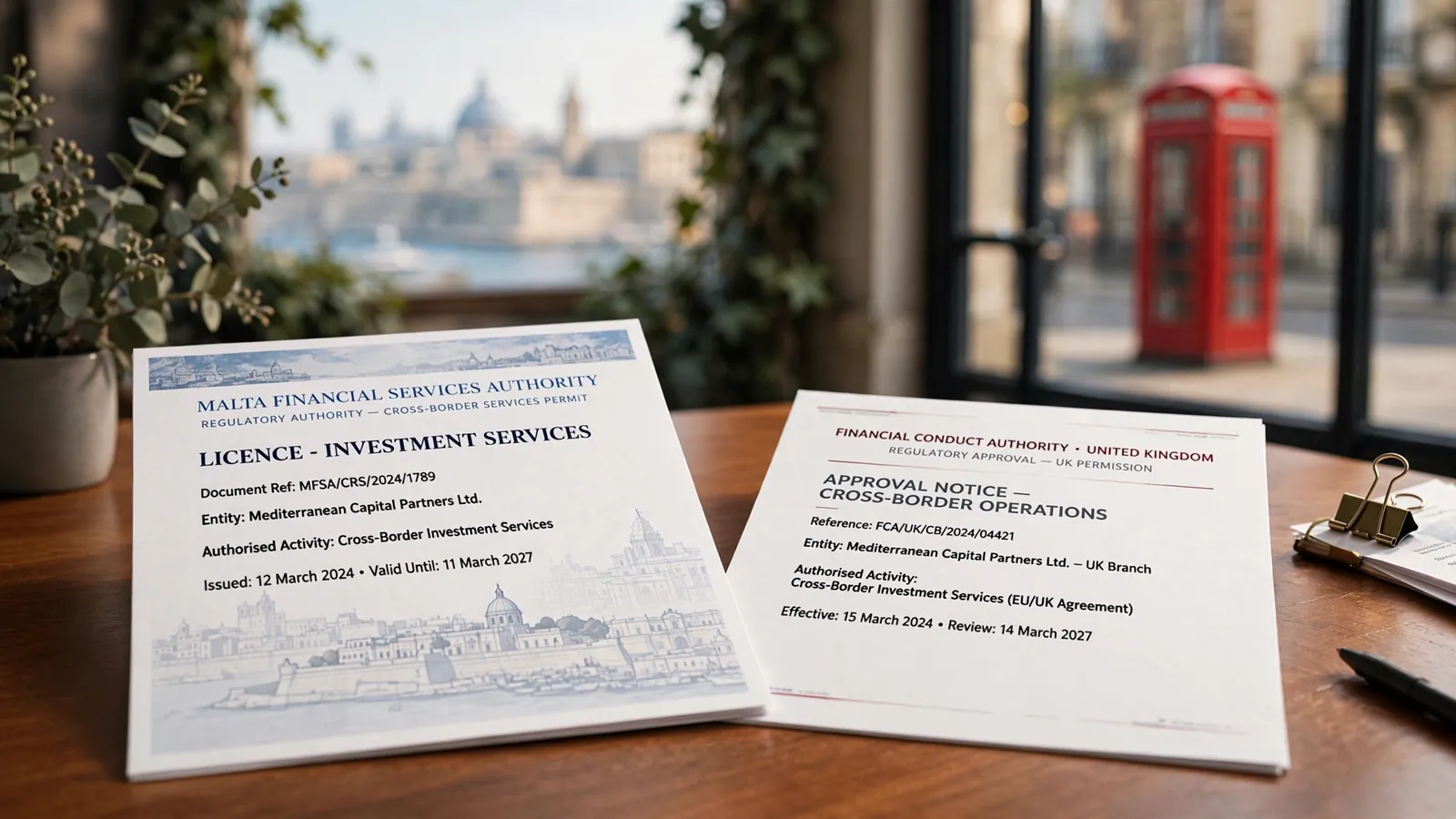
The distinction matters because a licence issued elsewhere does not replace UK permission. Non-UK-regulated casinos may hold authorisation from a jurisdiction such as Malta, Curaçao, Gibraltar or Anjouan. That authorisation is issued under another jurisdiction’s rules. It does not make the casino a UKGC-licensed operator, nor does it establish that the operator is authorised to serve the British market.
The practical test is therefore not simply whether a casino displays a licence or names a regulator. The relevant question is which authority issued it and whether the operator holds the UKGC licence required to provide gambling services in Great Britain. A foreign licence and a UK licence are different permissions, with different territorial reach.
When looking at casinos without a Swedish licence in 2026, check whether the available details suit your priorities and circumstances. This list gives a brief, factual point of reference for each operator.
Payout speed: 1-3 business days Britsino lists a payout speed of 1–3 business days.
Payout speed: 1-3 business days NightLuck lists a payout speed of 1–3 business days.
Payout speed: 1-3 business days Chanze lists a payout speed of 1–3 business days.
Payout speed: 1-3 business days SpinFormula lists a payout speed of 1–3 business days.
Payout speed: 1-3 business days Amunbet lists a payout speed of 1–3 business days.
Payout speed: 1-3 business days Zombillion lists a payout speed of 1–3 business days.
Payout speed: 1-3 business days WinBeast lists a payout speed of 1–3 business days.
Payout speed: 1-3 business days BeOnBet lists a payout speed of 1–3 business days.
Payout speed: 1-3 business days EvoSpin lists a payout speed of 1–3 business days.
Payout speed: 1-3 business days Jetsetspins lists a payout speed of 1–3 business days.
Operator status and player liability are separate questions
The Gambling Act 2005 places its focus on operators supplying gambling services into the UK market. It is not framed as a criminal offence committed by an individual simply for placing a bet with an unlicensed site. A British player who gambles on a site without a UK licence does not, on that basis, commit a criminal offence under UK law.
That does not make the operator’s position equivalent to that of a UKGC-licensed casino. Remote gambling businesses serving Great Britain are required to hold the relevant UKGC licence, irrespective of where they are based. Online gambling in the UK is legal through sites that are licensed and regulated; an overseas authorisation does not satisfy that local requirement.
For players, the legal distinction is narrow but important: the licensing obligation falls on the business supplying the service, while the player’s use of an unlicensed site is not itself criminalised under UK law. These points can coexist. The absence of a player offence does not turn an unlicensed operator into a UK-authorised one, and it does not give the operator the status of a regulated UK casino.
“Overseas” describes location, not permission
Terms such as “foreign casino” or “international casino” are often used loosely. They may describe where a business is based, but location alone does not answer whether it has permission to serve customers in Great Britain. A company abroad can be subject to the UK licensing requirement when it supplies gambling services into the British market. Conversely, a licence from another jurisdiction remains a foreign licence even if the casino accepts British customers.

This is why “casino without a UK gambling licence” can refer to more than one situation in casual use. It may mean a site based abroad with a licence from another jurisdiction, or a site with no relevant local authorisation. In either case, the phrase identifies the absence of UKGC oversight; it does not itself establish the operator’s complete legal status in the country that issued any other licence.
The word “licensed” should not be treated as a universal quality mark. It identifies permission within a particular regulatory system. A Malta, Curaçao, Gibraltar or Anjouan authorisation is not a UKGC licence, just as a UKGC licence is not an authorisation issued by those other jurisdictions. The regulator named and the market it governs are material details, not decorative wording.
The boundary of the description
“Without a UK licence” is a useful description of a casino’s relationship with the UKGC, but it should not be mistaken for a full legal assessment of every operator or every transaction. The central distinction is that UKGC-regulated sites hold the permission required for remote gambling services supplied in Great Britain, whereas non-UK-regulated casinos operate outside that UKGC system. The player’s position is different: UK law does not make the act of gambling on an unlicensed site a criminal offence.
A British player who gambles on a site without a UK licence does not, on that basis, commit a criminal offence under UK law. However, this does not make the unlicensed operator a regulated UK casino.
The Gambling Act 2005 governs gambling in England, Wales and Scotland, but not Northern Ireland. That territorial scope is another reason not to use “British players” as though every part of the United Kingdom were governed by precisely the same statutory framework. The core distinction in this discussion concerns the UKGC regime and services supplied into Great Britain.
In short, a casino can have an overseas licence without holding a UKGC licence, and a player’s lack of criminal liability does not supply the missing operator permission. The two questions—whether the business is authorised to serve the market and whether a player commits an offence by using it—must remain separate.
GamStop Exclusion Does Not Extend to Every Casino
GamStop is the UK Gambling Commission’s self-exclusion scheme. A casino that is not part of GamStop does not participate in that scheme. The practical distinction is narrow but important: registering with GamStop does not mean that every gambling website will be included in the exclusion.
The phrase “casino not on GamStop” describes a casino’s relationship with the scheme. It does not, by itself, establish whether the casino holds a UK Gambling Commission licence, which company operates it, or what other rules apply. Those are separate questions. A site’s absence from GamStop should not be treated as evidence of its licensing status or as a substitute for checking that status.
This also works in reverse. A casino’s licensing description does not, on its own, establish whether it participates in GamStop. A Malta-licensed or Curaçao-licensed site, for instance, cannot be classified as part of or outside the scheme solely from the jurisdiction named in its promotional material. The relevant fact is participation in GamStop, not the label attached to a licence.

That distinction matters because search terms such as “non-GamStop casino” can group together sites with different operators and regulatory arrangements. The shared description says only that the casino is outside the self-exclusion scheme. It does not create a single category with common terms, safeguards or oversight. “Best” is therefore not a meaningful conclusion from GamStop status alone: that status provides no measure of payout terms, customer service or reliability.
What the exclusion does and does not establish
GamStop exclusion is a boundary around participating gambling services, not a universal block on every website offering casino games. Casinos outside the scheme are not included in its self-exclusion arrangement. Consequently, an exclusion through GamStop should not be understood as confirmation that access to all online gambling has been prevented.
That is the limit to draw from the scheme’s coverage. It would be inaccurate to say that GamStop blocks a casino simply because the site is available to people in Britain, or that a casino is covered merely because it calls itself a UK casino site. The decisive point here is whether it participates in the scheme. Where it does not, the exclusion does not extend to it.
The distinction is also not a workaround to recommend. For someone who has chosen self-exclusion, the fact that a site is outside GamStop identifies a gap in coverage; it does not make that gap financially harmless. The scheme’s reach should not be confused with a guarantee that gambling is unavailable everywhere, and a site’s non-participation should not be presented as a benefit.
For those who have chosen self-exclusion, a site being outside GamStop identifies a gap in coverage rather than a financially harmless option.
A casino may use “not on GamStop” as a description of its status, but that wording is not an independent certification. It does not show that the operator has been assessed by GamStop, nor does it establish what account controls the site provides. The phrase answers one question only: whether the casino is part of the UK self-exclusion scheme. Other questions require separate evidence.
Why licence status is a different test
Self-exclusion participation and licensing answer different questions. GamStop concerns inclusion in a self-exclusion scheme; a gambling licence concerns regulatory permission and oversight. Neither label can safely be inferred from the other. A casino can be outside GamStop without that fact alone revealing its licensing position, and a licence name in an advert does not prove GamStop participation.
This is particularly relevant when a site is described as an MGA or Curaçao casino outside GamStop. Those words combine a claimed licensing jurisdiction with a statement about scheme membership. The second part does not verify the first, and neither part establishes that the casino is authorised to serve the British market. Treating the phrase as a complete compliance check would collapse separate tests into one.
For the same reason, lists of non-GamStop casinos are not lists of equivalent operators. The shared feature may be non-participation, while the company, licence and operating conditions differ. A list or ranking cannot turn that single feature into a judgement about the whole service. The term “best non-GamStop casinos” is especially weak as a decision rule: scheme status alone supplies no basis for ranking.

The useful reading of the label is therefore limited. It indicates that GamStop’s self-exclusion scheme does not cover the casino. It does not show that an existing exclusion will prevent access there, that the site has UK regulatory approval, or that its other terms are suitable. Keeping those conclusions separate avoids treating a narrow statement about scheme membership as broader protection than it provides.
A Swedish Licence Is Not a UK Licence
A licence answers a jurisdictional question: which regulator has authorised an operator, and within what scope? It does not act as a general permit to serve customers everywhere. A casino described as Swedish-licensed is not, on that basis alone, supervised by the UK Gambling Commission or authorised to offer gambling to customers in Great Britain.
The same distinction applies to a Malta Gaming Authority licence. It identifies a regulatory relationship with Malta; it does not replace the UK licence required for operators serving Great Britain. An MGA casino without a UK licence is therefore not a UKGC-licensed casino simply because its overseas licence is genuine. The regulator’s name and the country whose market it covers are separate details, not interchangeable credentials.
For Great Britain, the relevant test is whether the operator holds the required UK Gambling Commission licence. That requirement applies regardless of where the business is based. A company’s registered location, the language of its website and the country named in its licence do not change the licensing condition for serving British customers.
Required for operators providing remote gambling services within Great Britain.
Identifies a regulatory relationship with Malta; does not replace the UK licence.
Authorises operation in Sweden; is not a substitute for UKGC authorisation.
This is the central distinction behind searches for a casino without a Swedish licence or a casino without a UK licence. Those descriptions refer to different jurisdictions. A Swedish licence is not a substitute for UKGC authorisation; nor does the absence of a Swedish licence establish whether a casino is authorised in Britain. The question of British regulatory status must be answered by reference to the UK Gambling Commission, not inferred from another country’s licensing label.
Licence scope is not a passport
Licences should be read as jurisdiction-specific permissions. An operator may hold a licence issued outside Britain, but that document does not automatically extend its authority to Great Britain. Equally, a casino without a UKGC licence should not be described as UK-regulated merely because it displays a foreign regulator’s seal.
That distinction matters when comparing Malta-licensed sites with casinos licensed elsewhere. The word “licensed” is incomplete unless the issuing authority and the scope of that licence are clear. It says that some regulatory permission exists; it does not identify which market the permission covers. A Swedish, Maltese or other overseas licence cannot be treated as a UK Gambling Commission licence by shorthand.
The reverse also holds: “without a UK licence” does not mean “without any licence”. Some non-UK-regulated casinos hold permissions from other jurisdictions. That may be relevant to the operator’s status in the issuing jurisdiction, but it does not establish permission to serve Great Britain. These are separate conclusions, and combining them produces an inaccurate description of the service.

What an Anjouan licence establishes
An Anjouan casino licence needs the same jurisdictional reading, with an important limit: it does not authorise operation in the United Kingdom or in other markets designated as restricted. It cannot therefore be presented as a route around the UK licensing requirement. An operator’s Anjouan paperwork does not make the service UKGC-licensed, and it does not demonstrate authorisation to serve British customers.
This is not a claim that every foreign licence has identical terms or provides identical oversight. Malta, Sweden and Anjouan are different jurisdictions. Their regulators and licensing arrangements should not be collapsed into a single category. The narrower point is that none of those names, simply by appearing on a website, proves that the operator holds the separate licence required for Great Britain.
For a new casino without a UK licence, launch date is no answer to the jurisdictional question either. A recently opened site may display an overseas licence, but being new does not turn that licence into UKGC authorisation. The same applies to a casino promoted as one of the best without a UK licence: a ranking or marketing description cannot alter the licence’s territorial scope. “Best” is not a regulatory status.
A practical description should keep the categories distinct: the operator may have an overseas licence; it may not hold a UK Gambling Commission licence; and those statements concern different regulatory relationships. Where a site’s licence is unclear, its logo alone is not evidence of UK authorisation. A claim of a Swedish, MGA or Anjouan connection should not be read as a claim of UKGC oversight.
Licensing Limits
An Anjouan casino licence has an explicit territorial limit that includes the United Kingdom and cannot be used to bypass UK licensing requirements.
The dividing line is therefore not whether a casino has some licence, but whether it holds the licence required for the market it serves. For Great Britain, overseas licensing does not replace UK Gambling Commission authorisation. An Anjouan casino licence has an explicit territorial limit that includes the United Kingdom; a Swedish or Malta licence likewise cannot be treated as UK permission.
What UKGC Oversight Is Missing
A UKGC-licensed casino operates under conditions set and supervised by the Gambling Commission. A non-UK-regulated casino does not sit within that system, so the protections attached to a UKGC-regulated service cannot be assumed to apply. The difference is practical: it affects which safeguards must be offered and which routes exist if a dispute cannot be resolved directly with the operator.
For a customer of a UKGC-licensed operator, mandatory responsible-gambling tools form part of the regulatory framework. At a non-UK-regulated casino, those requirements do not apply in the same way. A site may display tools or publish responsible-gambling policies, but their presence does not make them equivalent to UK-mandated protections. The distinction is between a feature an operator chooses to provide and a requirement imposed through UK regulation.
That difference matters when account controls are needed. If a tool is unavailable, difficult to use or does not work as expected, there is no UKGC oversight to require the operator to address the failure. A written policy is not the same as enforceable supervision. The terms of the particular site therefore carry more weight, while the external UK regulatory route is absent.

The complaints position changes as well. A player using a non-UK-regulated casino cannot take the case through the UK Gambling Commission’s complaints process, because the Commission does not regulate that service. Access to the UK’s Financial Ombudsman Service is also forfeited. These are not alternative names for the same route: the practical point is that neither UK body provides the customer with its usual oversight or complaint resolution for a dispute with an offshore operator.
That leaves the operator’s own complaints procedure as the immediate route. Its terms should be read for how a complaint is submitted, what records are required and what response process is described. A procedure published by the company is not independent adjudication, and it does not create access to a UK regulator or ombudsman if the response is unsatisfactory. The customer may have fewer effective ways to challenge how a disagreement is handled.
Data protection is another area where the regulatory setting differs. Non-UK-regulated casinos may be subject to less stringent data-protection rules than UKGC-licensed operators. This does not establish that every such site mishandles personal information; it does mean that UKGC standards cannot be treated as the baseline for the service. Account details and identity information are held under the operator’s applicable framework and policies, rather than under UKGC supervision.
The financial comparison is therefore not simply a question of whether a site offers games or accepts an account. It includes the value of protections that cannot be carried across from a UK-licensed service: mandatory responsible-gambling requirements, access to UK complaint routes and the corresponding regulatory oversight. If a dispute or control failure occurs, the route available to a player at a non-UK-regulated casino is narrower, and the operator’s own process becomes more consequential.
Missing UKGC Oversight
- Mandatory responsible-gambling tools are not required.
- Players cannot use the UK Gambling Commission’s complaints process.
- Access to the UK’s Financial Ombudsman Service is forfeited.
- Data protection may follow less stringent rules than UKGC standards.
Bonus Terms: The Wagering Calculation Comes First
A welcome bonus at a casino not on GamStop is not a cash addition with a single price. Its cost depends on what the wagering requirement applies to, which games count and whether the offer limits the amount that can be withdrawn. A no-deposit promotion can still carry these conditions; the absence of an initial payment does not make bonus winnings unrestricted.
The multiplier alone is not enough to calculate the turnover. A specialist review reports that some offshore offers set wagering at 35x or more, while another reported term is 40x. That 40x figure may apply to the bonus alone, the deposit and bonus together, or the bonus and free spins combined. Those bases produce different totals. The offer’s wording must identify the qualifying amount before the multiplier has any useful meaning.
For instance, a requirement on the bonus alone is not equivalent to one on the combined deposit and bonus. If the terms do not define the calculation base clearly, the apparent value of the welcome offer cannot be assessed from its headline alone. Game contribution rules matter too: the stated turnover may not be reduced by every type of play in the same way. The relevant terms are the ones attached to the specific promotion, not a general description of a casino’s bonuses.
Free spins have a separate calculation. A specialist review reports wagering requirements of 30–50 times the winnings, alongside withdrawal caps of £5–£50. These are reported terms, not a universal schedule. A cap can make the maximum payable amount lower than the balance displayed after play, even if the wagering condition has been met. The cap and the definition of eligible winnings therefore belong in the calculation from the outset.

Expiry adds another condition. A specialist review reports that free-spin packages may expire within 24–72 hours. That is a reported range, not a guaranteed deadline for every offer. If spins or resulting winnings expire before the required play is completed, their displayed value does not translate into a withdrawable amount. The promotion’s own expiry wording determines what remains available.
The same discipline applies to a pay-and-play casino not on GamStop: a deposit method or simplified sign-up description says nothing by itself about the bonus’s wagering base, eligible games, cap or expiry. Those terms need to be read separately. A promotion is worth comparing only after its turnover base, deadline and maximum payable winnings are clear. Without those, the advertised bonus figure is packaging; the payable result is still unknown.
Payment Options Do Not Settle Withdrawal Terms
A payment logo on a cashier page establishes, at most, that a deposit route is offered. It does not establish that the same route can be used to receive a withdrawal. This distinction matters at a non-UK-regulated casino, where the listed deposit methods may include credit cards, e-wallets, bank transfers and cryptocurrencies, sometimes handled through payment processors other than the familiar high-street providers.
The route can affect what happens after money leaves the account. A card deposit may be processed through an intermediary; an e-wallet may appear in the cashier but not be available for payout. A bank transfer can be listed as a payment option without confirming that withdrawals will be sent by bank transfer. The deposit menu is not a withdrawal policy.
A deposit menu is not a withdrawal policy; a listed payment option for funding does not guarantee that the same route is available for payouts.
Cryptocurrency requires a separate note. Crypto payments can bypass the UK prohibition on gambling deposits funded by credit cards. That describes a technical route around the card restriction, not a change to the operator’s UK regulatory status or a guarantee that a crypto deposit can later be withdrawn in the same currency. The transaction method and the operator’s permission to serve the British market are different questions.
A specialist review has also reported mobile-phone billing and prepaid balances as possible deposit routes at some offshore sites. That is a report of options encountered, not evidence that these methods are a standard feature across non-UK casinos. Their availability can depend on the operator and payment provider, and a deposit made through a phone bill or prepaid balance does not establish that either route can return winnings.
Before treating a method as usable for a full transaction, the terms need to be read in both directions: which deposit methods are accepted, which withdrawal methods are permitted, and whether the operator requires a different route for cashing out. A restriction may matter even when the initial payment succeeds. The relevant comparison is therefore not simply which buttons appear in the cashier, but whether a stated route covers both funding and repayment.
For non-UK-based online casinos, payment choice is only one part of the transaction. A convenient deposit option cannot settle the separate question of how a withdrawal will be made.

New Offshore Casinos: Verification Can Become a Cost
A new launch date says little about what happens when a withdrawal is requested. The relevant question is not simply whether a site is new, but what its account checks require and how those requirements are applied when money is due. A smooth registration does not establish that cashing out will be equally straightforward.
A specialist review has reported that some offshore operators may ask for notarised documents or a video call before processing a withdrawal. These are not established requirements across all new casinos; they are examples of steps that may arise at a particular operator. Notarisation takes time to arrange, while a video call requires the account holder to be available and complete the requested process. The practical cost can therefore be delay and additional effort, even before any dispute about the withdrawal itself.
That distinction matters when assessing a newly encountered site. A short operating history does not, by itself, show how verification is handled in practice. Nor does an easy deposit or account opening settle what evidence may be requested later. The withdrawal stage is where a condition that seemed remote can become an immediate requirement.
Before depositing, the operator’s terms should be checked for its verification rules, including what documents or other checks it may demand and at what stage. Any wording that leaves the scope of checks unclear is a real uncertainty, not a minor drafting detail. Terms and any changes to them should be kept with the account records, so the stated conditions can be compared with a later request.
- Check verification rules in the terms before depositing.
- Keep records of all stated conditions and changes.
- Ensure verification requests are consistent with published terms.
- Assume a smooth registration means straightforward cashing out.
- Treat notarised documents or video calls as routine for all casinos.
- Assume a new brand will have light withdrawal checks.
If a request for additional verification arrives, the key questions are whether it is clearly explained, consistent with the published terms and limited to what the operator says it needs. A demand for notarised papers or a video call should not be treated as routine for every offshore casino; the available reporting identifies these as possible practices at some operators. Equally, a new brand’s recent arrival is no reason to assume that withdrawal checks will be light.
In financial terms, the exposure is not only the balance in the account. It also includes the time needed to satisfy unfamiliar procedures and the possibility that access to a withdrawal depends on completing them. Registration is the low-friction part; the terms governing verification determine what may follow.
The Safeguards Non-GamStop Players Give Up
The protection gap at a non-UK-regulated casino is wider than whether it participates in a particular exclusion scheme. UKGC-licensed operators must provide responsible-gambling tools required by the British regulatory framework. A casino operating outside that system may not offer equivalent controls, and its rules for handling personal data may be less demanding.
That matters before a gambling session starts. Deposit limits and self-exclusion are among the safeguards that cannot be assumed at an offshore site. Where controls are absent, or offered only on different terms, there may be fewer ways to restrict access to funds or stop an account being used. A control displayed on a website is not necessarily a UK-mandated protection: its scope and operation depend on the operator’s own arrangements.
Data protection is a separate exposure. Less stringent standards can mean less assurance about how account information is collected, stored or used. The relevant question is not simply whether a privacy policy exists, but what protections apply to the operator and what route is available if there is a concern. A UKGC licence brings the site within British regulatory oversight; a foreign licence does not provide the same UK framework.
There is also a clear difference in complaint options. Someone using an offshore casino cannot take a gambling complaint to the UK’s Financial Ombudsman Service on the basis available for a UK-regulated service. If a dispute involves account restrictions or the operator’s conduct, the UK route is not a substitute for the operator’s own process. The practical value of that process depends on the terms the casino sets and whether it responds meaningfully.
This is relevant when comparing established and newly encountered casinos alike. A polished interface, a large game catalogue or the word “licensed” does not establish that British safeguards apply. Nor does a claim of being among the best casinos for British players answer the protection question. The decisive distinction is whether the operator is regulated by the UK Gambling Commission and required to follow its rules.
For a British customer, the trade-off is therefore not only about choice of games or account features. It includes weaker assurance over personal information, no access to mandatory UK responsible-gambling tools, and no Financial Ombudsman Service route for the offshore gambling relationship. Those limits should be treated as part of the cost of using the service, not as fine print that can be corrected after a problem occurs.
Protection Trade-offs
- Absence of mandatory UK responsible-gambling tools.
- Weaker assurance over the protection of personal information.
- No access to the Financial Ombudsman Service for disputes.
- Reliance on the operator’s own internal processes for resolution.
Overseas Casino Withdrawals: Timing and Limits
Published withdrawal estimates for non-UK-regulated casinos are not consistent. Some accounts describe payouts arriving within 24 hours to five business days, with the payment method affecting the timing. Other accounts warn that a withdrawal can take three or four weeks. These are competing descriptions, not a dependable service standard: the longer estimate reflects the possibility of delays, while the shorter one describes faster cases.
The distinction between a casino’s stated processing time and the full wait for funds matters. A payment may remain pending while the operator processes it, then take additional time to reach the chosen method. A fast estimate may refer only to the operator’s handling stage, so the terms should be checked for what the stated timeframe actually covers. Where the operator does not specify the stages, the final arrival date is harder to predict.
There is no UK regulatory clock to enforce a withdrawal deadline at a non-UK-regulated casino. A published estimate therefore does not provide the same assurance as an enforceable local requirement. Delays can leave winnings inaccessible while the operator processes the request or the payment provider completes its part.
Some specialist reviews also report daily, weekly or monthly withdrawal caps at particular sites. These reports should not be treated as a universal policy: the applicable terms vary. Where a cap applies, a large balance may have to be paid in instalments rather than in one transfer, extending the time before the full amount is received. The cap and its calculation are material conditions, not minor payment details.
A useful comparison separates three figures or conditions: the operator’s processing estimate, the time the payment method may add, and any limit on how much can leave the account within a stated period. If any of those terms is unclear, the advertised speed alone says little about when the full balance will be available.

Anjouan Licensing: What the Licence Does Not Guarantee
An Anjouan casino licence identifies a licensing framework; it does not establish the protections available under UK Gambling Commission regulation. For a casino outside UKGC regulation, the practical question is what the licence requires when money, game testing or a complaint is at issue.
Player funds are not guaranteed to be kept separate from the operator’s money. If the business fails, players are unsecured creditors, rather than holders of a guaranteed claim to a ring-fenced balance. The distinction is financial: an account showing a balance does not itself mean that equivalent funds have been reserved for payment.
The framework also does not require independent testing of random number generators or audits. That is not proof that a particular game is unfair; it means the licence does not make those checks mandatory. The licence alone therefore cannot establish that games have undergone independent testing or that the operator’s financial records have been audited.
Complaint routes are limited as well. The Anjouan authority does not handle, mediate or decide player complaints, and an Anjouan casino licence does not provide an independent dispute-resolution service comparable to UKGC-approved ADR. Operators are required to respond to complaints within 30 calendar days, but a response deadline is not the same as independent adjudication. If the operator rejects a complaint, the framework does not supply that equivalent external route.
These limits should be read separately: fund segregation concerns whether money is protected if the operator fails; testing and audits concern independent scrutiny; complaint handling concerns what happens when a disagreement arises. None is established merely by the presence of a licence.
For British players assessing a non-UK-regulated casino, the licence is therefore a narrow piece of information, not a guarantee of protected balances, verified games or an independent remedy. Its value depends on requirements it actually imposes—and on the protections it leaves to the operator.
Is it legal for a UK player to gamble at an Anjouan-licensed casino?
UK law does not make it a criminal offence for a player to gamble on a site licensed in another country. However, an Anjouan licence does not authorise the casino to operate in the UK.
What payment options are available at non-UK casinos?
They may accept credit cards, e-wallets, bank transfers and cryptocurrencies. Some also allow deposits through a mobile phone bill or prepaid balance.
What is the biggest risk of playing at a non-UK-regulated casino?
You may have limited recourse if the casino withholds winnings or fails: Anjouan’s authority does not adjudicate player complaints, and Anjouan rules do not guarantee that player funds are kept separate.
Can I complain to the Anjouan regulator if a casino won’t pay me?
No. The Anjouan authority does not handle or adjudicate player complaints, and Anjouan-licensed casinos do not provide an independent dispute-resolution route comparable to UKGC-approved ADR.
Can UK players legally play at casinos licensed in Anjouan?
UK law does not make a player’s use of a casino licensed in another country a criminal offence. An Anjouan licence does not, however, authorise the casino to operate in the UK.
Are Anjouan casinos connected to the GamStop self-exclusion scheme?
Anjouan-licensed casinos are not required to integrate GamStop, so an Anjouan licence does not mean a casino is part of the scheme. Check the casino’s participation separately.
Published by the Winstler Casino team.