Online Casino Malta MGA Licence in the UK: What It Means
 Available in GB
An MGA licence connects an operator to Malta’s regulator, but does not replace the UKGC permission required to serve customers in Great Britain.
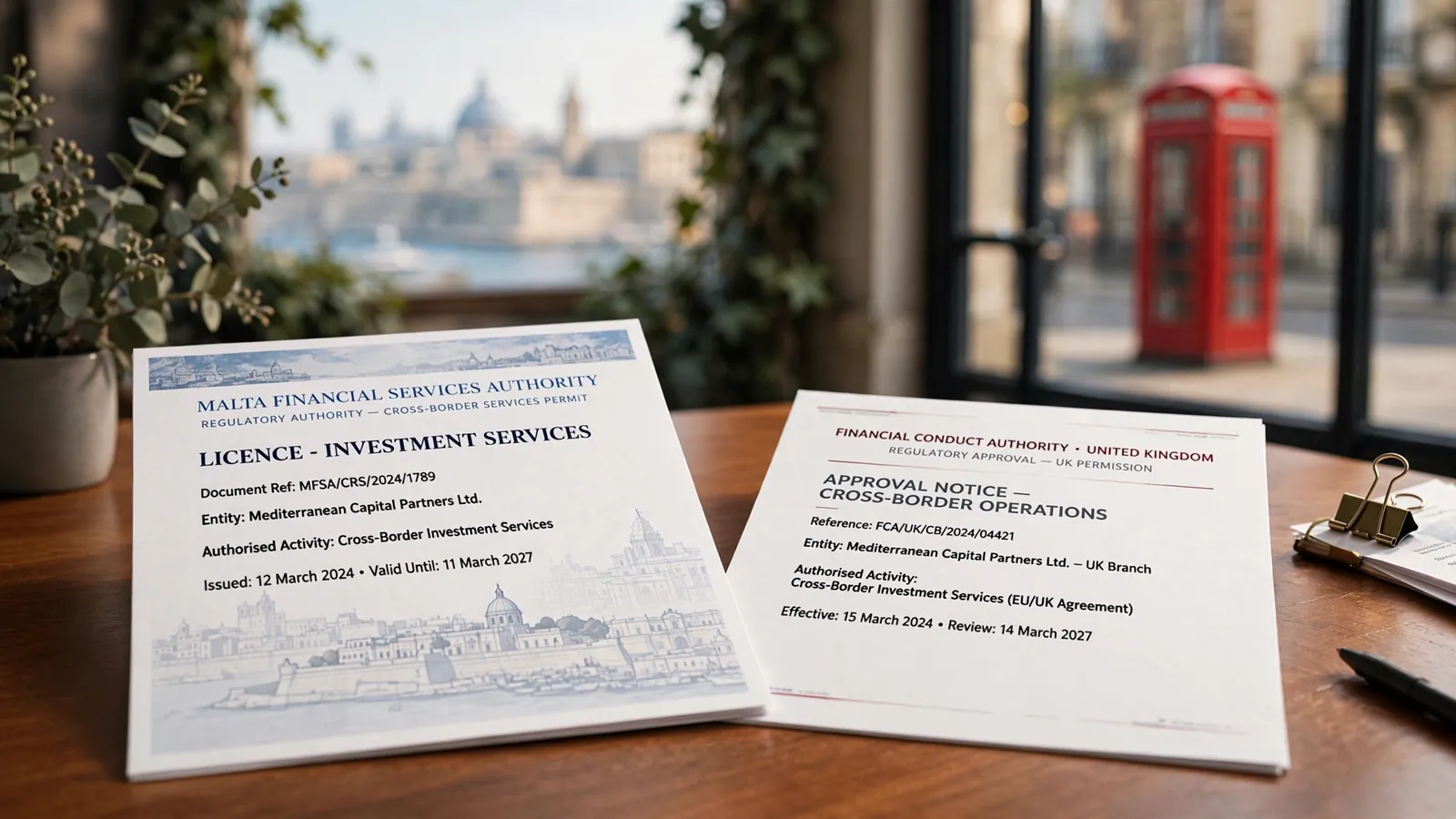
- What a Malta Licence Does—and Does Not—Authorise
- What “Best” Can Mean Under UK Rules
- Checking a Casino Site’s Licence Claims
- Malta-Licensed Sites and GamStop
- Real-Money Play and the Protection of Balances
- Access for Great Britain Players: Location and Age
- Bonus Terms: Turnover Before Withdrawal
- The Malta Gaming Authority and the Limits of Its Role
- New Malta Casino Claims Need the Same Checks
- Malta-Based Operations and Payment Boundaries
What a Malta Licence Does—and Does Not—Authorise
A Malta licence and a UKGC licence belong to separate regulatory systems. A Malta Gaming Authority (MGA) licence does not, by itself, authorise an operator to provide remote gambling to customers in Great Britain. For that market, the relevant permission is a UKGC licence. The operator’s registered office, operational base or other physical location does not alter this requirement.
That distinction matters when a site describes itself as a Malta-licensed casino. The description identifies a regulatory connection with Malta; it does not establish permission to serve customers in England, Scotland or Wales. A licence issued in one jurisdiction cannot be treated as a substitute for the operating licence required in another. The place where the company is based and the place where its customers are located answer different regulatory questions.
The rule applies to remote gambling facilities offered to consumers in Great Britain. Whether an operator is based in Malta, elsewhere in Europe or outside Europe, it must hold a UKGC licence to provide those facilities to the British market. The requirement follows the market being served, not the operator’s address. A Malta-licensed online casino therefore cannot rely on its MGA status alone when offering remote gambling to people in Great Britain.
This is a jurisdictional boundary, not a judgement about the quality of a particular operator or the content of its games. A Malta licence may be relevant to the operator’s position under Maltese regulation, but it does not confer UKGC status. Nor does the fact that an operator holds one licence make the two licences interchangeable. Each permission applies within its own regulatory framework.
The legal consequence is material. An operator offering gambling services to UK consumers without the required UKGC licence acts unlawfully. A foreign licence does not remove that requirement. In practical terms, a casino licence from Malta cannot convert an offer that lacks the necessary British permission into a lawful service for Great Britain. The distinction is the same whether the site calls itself a Malta casino, a Malta-licensed casino or an online casino licensed in Malta.

There is one specific protection associated with MGA licensing that should not be confused with UK authorisation. MGA licensees are required to keep player funds in segregated accounts held at an approved financial institution. That is a condition attached to the MGA’s regulatory framework. It does not mean that the MGA is the regulator responsible for remote gambling supplied to customers in Great Britain, and it does not replace the UKGC licence requirement.
The two issues should therefore remain separate in any account of a site’s status. One concerns whether the operator is licensed by the Maltese authority and subject to the relevant MGA requirements. The other concerns whether the operator holds permission to provide remote gambling to customers in Great Britain. A positive answer to the first does not settle the second. Treating “licensed in Malta” as shorthand for “authorised in the UK” collapses two distinct legal questions into one.
The same point holds if the operator’s business is genuinely based in Malta. Location can explain where a company operates from, but it does not determine which licence is needed to serve a particular market. A company does not avoid the British requirement by running its website from another country, and a Malta licence does not travel with the website as a universal authorisation. For Great Britain-facing remote gambling, the required UKGC permission remains the relevant boundary.
Accordingly, the phrase “Malta licence” should be read narrowly: it describes a licence associated with Malta, not permission to provide gambling to customers everywhere. For a service directed at Great Britain, the decisive regulatory question is whether the operator also holds the required UKGC licence. The Maltese licence and its player-fund condition may be relevant in their own right, but neither changes that requirement.
What “Best” Can Mean Under UK Rules
For UK players considering casinos associated with Malta and MGA licensing, check the applicable licence and terms before choosing. The payout information below offers one practical detail to consider.
Payout speed: 1-3 business days Britsino lists a payout speed of 1–3 business days.
Payout speed: 1-3 business days NightLuck lists a payout speed of 1–3 business days.
Payout speed: 1-3 business days Chanze lists a payout speed of 1–3 business days.
Payout speed: 1-3 business days SpinFormula lists a payout speed of 1–3 business days.
Payout speed: 1-3 business days Amunbet lists a payout speed of 1–3 business days.
Payout speed: 1-3 business days Zombillion lists a payout speed of 1–3 business days.
Payout speed: 1-3 business days WinBeast lists a payout speed of 1–3 business days.
Payout speed: 1-3 business days BeOnBet lists a payout speed of 1–3 business days.
Payout speed: 1-3 business days EvoSpin lists a payout speed of 1–3 business days.
Payout speed: 1-3 business days Jetsetspins lists a payout speed of 1–3 business days.
A Malta-based casino may be described as one of the best in Malta, or appear in a list of Malta Gaming Authority licensees. For a customer in Great Britain, those labels do not establish which regulatory system applies to the service. “Best” needs a local test: whether the operator is subject to UK Gambling Commission oversight and what protections follow from that status. A Malta licence alone cannot answer either point.
The UKGC licenses and oversees gambling in Great Britain. Its role is distinct from that of an overseas regulator: it sets the conditions for operators serving the British market and supervises compliance with them. A ranking based on design, game selection or a Malta licence may describe features of a site, but it does not show that the operator is accountable to the UKGC.
That distinction matters because the word “licensed” is incomplete without the jurisdiction. A licence issued by one authority does not become a UKGC licence by appearing on a casino’s website, nor does it make the two regulators interchangeable. The UKGC does not approve offshore licences, maintain reciprocal agreements with offshore regulators, or handle complaints about operators licensed outside the UK. An MGA casino list, therefore, is not a list of UKGC-approved casinos.
An MGA casino list is not a list of UKGC-approved casinos, as the UKGC does not approve offshore licences or maintain reciprocal agreements with offshore regulators.
A more useful definition of “best”
For a Great Britain-facing service, a meaningful comparison begins with regulatory status, not an unsupported overall score. If an operator holds a UKGC licence for the relevant service, the UKGC’s rules and oversight apply. That status is a verifiable basis for assessing the protections attached to a British-facing operation. A Malta licence may be relevant to the operator’s activity under Maltese regulation, but it does not supply those UK-specific protections.
The distinction is not a claim that every UKGC-licensed site is identical or that a licence guarantees a particular customer experience. It is a limit on what a comparison can reasonably promise. A “best MGA casinos” ranking cannot establish which site offers the strongest recourse under British regulation when the ranking measures Malta licensing or commercial features instead.
There is also a difference between a feature and a safeguard. A casino may advertise a large games catalogue, a welcome offer or polished account tools. Those details do not establish which regulator supervises the service, whether UKGC rules apply, or where a complaint can be taken. The feature may be attractive on its own terms; it is not a substitute for regulatory accountability.
For UKGC licensees, the regulatory framework includes requirements such as access to an approved Alternative Dispute Resolution provider for complaints. The complaint route under that framework is not equivalent to a complaint against an operator licensed only abroad. The UKGC does not take up complaints about operators outside its licensing system. A comparison that calls both arrangements “regulated” without separating them leaves out the detail that determines where accountability sits.

Why rankings can mislead
Lists of “best Malta online casinos” often combine unlike measures: licence jurisdiction, promotional terms, payment claims and editorial ratings. Those measures may be useful for describing a product, but they do not necessarily answer whether a service is governed by UK rules. A high position in a list is an editorial judgement, not regulatory approval. The same applies to a “best Malta casino bonus” label: a promotion’s headline value says nothing by itself about the regulator responsible for the operator.
The word “best” can therefore be retained only with a defined scope. Best for which jurisdiction, under which regulator, and by what measurable criteria? If the comparison is about British consumers, the first distinction is between UKGC oversight and licensing by an authority outside the UK. If the comparison is only about Malta-licensed products, it should not be presented as evidence of UKGC status or as a substitute for it.
- Distinguish between UKGC oversight and licensing by an authority outside the UK
- Define the jurisdiction and measurable criteria when using the word “best”
- Treat a “best MGA casinos” ranking as evidence of the strongest recourse under British regulation
- Use a general “best” label as a substitute for verifying UKGC status
A defensible assessment can describe what is known without turning it into a recommendation. It can identify the regulator relevant to a service and distinguish that regulator’s rules from those of an overseas authority. It should not imply that a Malta licence extends UK protections, or that an offshore regulator’s licence is recognised by the UKGC. Those are different regulatory relationships, not alternative labels for the same approval.
For a reader comparing Malta-branded casino claims from Great Britain, the practical meaning of “best” is consequently narrower than a league table suggests. It is not the site with the most persuasive badge or the most generous headline offer. It is a question of whether the applicable British regulatory framework is in place, and whether the stated protections and complaint route belong to that framework. Without that distinction, “best” is packaging rather than a reliable measure.
Checking a Casino Site’s Licence Claims
A Malta Gaming Authority badge, licence number or statement in a site’s footer is a claim made by the operator, not confirmation that the service is authorised to provide remote gambling in Great Britain. The relevant check is whether the operator holds a UKGC licence for the service being offered. Its physical base does not change that requirement.
Start with the UK Gambling Commission’s public register, reached through the Commission’s official website. Search for the legal business name shown in the site’s terms, rather than relying only on a trading name or logo. Then check that the details relate to the casino site in question. A licence held by a similarly named company, or by another business in the same group, does not by itself establish that the operator serving customers is covered.

The site’s own wording should also be read closely. A reference to Malta, an MGA authorisation or a company address describes a different matter from a UKGC licence. So does a general claim that a site is “regulated”. Those statements do not answer whether the operator has permission to offer remote gambling to customers in Great Britain. Search results and copied descriptions are not substitutes for checking the regulator’s register.
If the operator’s identity is unclear, the licence details do not match, or the site gives no usable information, its claim remains unverified. A logo is easy to display; the legal entity behind a gambling service is the material detail. The same test applies whether the site promotes Malta casino bonuses, online slots or another product: the offer does not establish the operator’s regulatory status.
What an offshore licence means for a Great Britain-facing site
A licence from an offshore regulator does not authorise an operator to provide remote gambling facilities to consumers in Great Britain. Operators must hold a UKGC licence for that service, wherever the business is physically based. A Malta-licensed site without the relevant UKGC licence is therefore not made compliant for Great Britain by its Malta status.
The distinction also affects what can be done if a dispute arises. The UKGC does not approve offshore licences, maintain reciprocal arrangements with offshore regulators or handle complaints about operators licensed outside the UK. A British customer cannot treat an offshore licence as access to the UKGC’s complaint route. Any process offered by the offshore regulator or operator is separate from UKGC oversight.
Legal Requirement
An operator offering gambling services to UK consumers without the required UKGC licence acts unlawfully, regardless of any foreign licence held.
This is why licence claims should be checked before an account is used or money is committed. The question is not simply whether a site displays a regulator’s name, but whether the correct operator holds the required UKGC licence for the service reaching Great Britain. If that cannot be confirmed, the claim should not be treated as proof of UK authorisation.
Malta-Licensed Sites and GamStop
An MGA licence does not place a casino in GamStop. GamStop participation is required of operators holding a UKGC licence; a Malta licence is a separate regulatory status and does not create membership of the UK scheme. As a result, a Malta-licensed site without a UKGC licence is not covered by GamStop, even if it accepts customers from Great Britain.
GamStop is a national self-exclusion scheme for gambling sites licensed by the UK Gambling Commission. A person who registers can exclude themselves from all UKGC-licensed gambling sites for a selected period: six months, one year or five years. The scheme’s reach is defined by those participating operators, not by the country where a casino is incorporated or by the regulator named on its website.
This is why “Malta casino” and “on GamStop” are not interchangeable descriptions. A site may be regulated by the Malta Gaming Authority, but that fact alone says nothing about whether it participates in the UK scheme. Conversely, an operator’s claims about responsible-gambling tools do not establish GamStop participation. The distinction is practical: a self-exclusion registration applies across the UKGC-licensed sites in the scheme, but does not extend to non-UKGC licensed casinos.


For someone relying on GamStop to prevent access to gambling, that boundary matters more than the site’s branding. A non-UKGC licensed casino is outside the scheme, so a GamStop registration does not exclude the person from that site. The MGA licence does not transfer the exclusion to it, nor does it give the Malta regulator’s supervision the same scope as UKGC protections. Separate account controls offered by an individual operator are not a substitute for participation in GamStop.
A site’s own statements should therefore be read precisely. “Self-exclusion available” may describe an account-level facility at that operator; it does not mean that the operator is connected to GamStop. Likewise, displaying an MGA licence does not show that the site is included in the UK scheme. The relevant distinction is the operator’s UKGC status and participation, not whether Malta appears in the licence information.
The reverse also follows: where an operator holds a UKGC licence, participation in GamStop is a requirement, rather than an optional feature chosen by the casino. The scheme allows exclusion from all UKGC-licensed gambling sites for one of its stated periods. That is a defined scope, not a promise that every gambling website will be blocked.
Searches for Malta casinos outside GamStop often blur two separate questions: which regulator licenses a site, and whether that site participates in the UK self-exclusion scheme. The answers should not be inferred from one another. An MGA licence does not make a site part of GamStop; absence from GamStop means the scheme’s exclusion does not cover that site. Neither description should be treated as evidence that UKGC protections apply.
A Malta-licensed site without a UKGC licence is not covered by GamStop, meaning a GamStop registration does not exclude a person from that site.
Real-Money Play and the Protection of Balances
Real-money gambling in England, Scotland and Wales has a defined regulatory basis: an online operator offering it to customers in those nations must hold a UK Gambling Commission licence, commonly called a UKGC licence. The operator’s address does not change that requirement. A Malta-based business offering real-money casino play to customers in Great Britain is still providing a service in a market where the UKGC licence is required.
That distinction matters when assessing a balance held in an online account. A Malta online casino may describe its operation in terms of a Malta or MGA authorisation, but that description does not establish the UK regulatory basis for real-money play in Great Britain. The relevant question for this section is narrower: whether the operator serving those customers holds the required UKGC licence, and what that licence requires it to do with player funds.
UKGC licensees must keep player funds separate from the money used to run the business. This segregation is intended to protect player money if the casino becomes insolvent. Operational cash and customer balances are therefore not meant to sit in one undifferentiated pool available for the same business purposes.
The point is practical, not cosmetic. A balance shown on screen is a claim against an operator; the rules on handling player funds address what happens to that money if the company fails. Separation reduces the risk that customer funds are treated as ordinary operating money in that situation. It does not turn a displayed balance into a promise of instant access under every circumstance, but it establishes a protection that applies to UKGC licensees.

The licence requirement and the fund-segregation requirement answer different questions. The first concerns whether an operator may provide real-money gambling to customers in Great Britain. The second concerns how a UKGC-licensed operator must handle player funds. One cannot substitute for the other: a statement that an operator keeps balances apart does not establish that it is authorised to serve the British market, while a licence claim alone does not explain how customer money is protected.
This is why the term “MGA casino” is not enough to describe the regulatory position of a service used for real-money play in Great Britain. An MGA authorisation and a UKGC licence are not interchangeable labels. For the purposes of British real-money gambling, the applicable requirement is the UKGC licence, with the associated obligation to segregate player funds from operational funds.
In accounting terms, the distinction is straightforward: regulatory permission governs the service; segregation governs the treatment of customer money if the licensed business fails. Both matter to the status of a balance, but neither should be inferred from a casino’s branding or the location named in its marketing.
Access for Great Britain Players: Location and Age
“UK players” can describe more than one legal territory. Great Britain means England, Scotland and Wales. Northern Ireland is not part of that jurisdiction: it has a separate regulatory regime, and the UK Gambling Commission does not regulate remote gambling there in the same way. A site’s availability to someone in one part of the UK therefore does not establish the rules that apply in another.
For online gambling in Great Britain, the age threshold is 18. Operators regulated by the Gambling Commission must verify that a customer is at least 18 before allowing a deposit or play. Age verification is a condition of access, not a formality that can be postponed until a withdrawal. A Malta-based or Malta-licensed site’s own age statement does not establish that it meets the requirements applicable to gambling in Great Britain.
Age and Location Requirements
For online gambling in Great Britain, players must be at least 18 years old, and operators must verify this before any deposit or play. Additionally, a player must be physically located in Great Britain to claim a no-deposit offer.
This distinction matters when assessing claims about Malta casinos accepting UK players. “Accepting” can mean that a website opens, that registration is possible, or that a particular service is lawfully available to a customer in Great Britain. Those are not interchangeable. The relevant facts are the customer’s location, the service being offered and the regulatory rules applying to that service. Northern Ireland should not be treated as though it falls within the Gambling Commission’s Great Britain jurisdiction.
Location also affects promotional access. A player must be physically in Great Britain to claim a no-deposit offer. A UK address, British account details or a site’s general acceptance of UK registrations does not replace that physical-location condition. Someone outside Great Britain cannot rely on eligibility simply because the promotion appears on a page accessible from the UK.
For “Malta online casino free play” claims, the distinction between access to a promotion and eligibility to claim it is material. A free-play or no-deposit label does not remove the location condition where the offer is a no-deposit promotion. Nor does it change the age-check requirement applicable to a Gambling Commission-regulated operator. Promotional wording may describe the offer; it does not decide where it can be claimed or who may participate.
A sensible reading of access claims separates three questions: whether the person is in Great Britain, whether the person meets the age requirement, and which regulatory regime governs the service in that territory. These checks should not be collapsed into a broad label such as “for UK players”. In particular, a page that uses that phrase may be referring to Great Britain, Northern Ireland, or both, despite their different regulatory arrangements.

For customers in England, Scotland and Wales, the applicable age requirement is clear: gambling is for adults aged 18 or over, with verification required before deposit or play by regulated operators. For no-deposit offers, physical presence in Great Britain is an additional condition. Northern Ireland’s separate framework means those Great Britain rules should not be assumed to describe remote gambling there.
Bonus Terms: Turnover Before Withdrawal
A Malta casino bonus is not worth its face value alone. The key figure is the wagering requirement: the amount of qualifying bets that must be placed before bonus funds can become withdrawable. The calculation depends on the stated multiple, the bonus amount and which games count.
A specialist review gives a worked illustration: a £20 bonus with a 35x wagering requirement produces £700 in required qualifying bets. That is turnover, not a £700 deposit or a promise of £700 in cash. The amount is the total value of bets that meet the offer’s rules. Whether any balance remains after that turnover depends on the results of play; completing the requirement does not guarantee a profit.
Game contribution changes the calculation. If a game contributes its full stake, each pound wagered counts as a pound towards the requirement. If it contributes only a fraction, more must be wagered to reach the same qualifying total. Slots commonly count at 100%, while table games may count at 10% or 20%; some table games contribute nothing. A large bet on a game with a low contribution can therefore move the requirement forward far less than its face value suggests.
Bonus Wagering Calculation
Multiply the bonus amount by the wagering requirement (e.g., £20 bonus × 35x = £700 in required qualifying bets).
Adjust the amount based on the game’s weight (e.g., slots at 100% count fully, while table games at 10% require ten times more wagering to reach the same total).
Complete the required turnover to make remaining bonus funds withdrawable, noting that this does not guarantee a profit.
The offer terms determine which games qualify and their contribution rates. They also define whether the requirement applies to bonus funds, a deposit, or both. Those details should be read as part of the calculation, not as small print detached from the advertised amount. A Malta online casino bonus with restricted game weighting can require substantially more actual betting than its headline multiple first suggests.
No-deposit offers follow the same basic arithmetic if they carry wagering conditions: the absence of an initial deposit does not remove the turnover requirement. The relevant figure is still the qualifying-bet total, adjusted for game contribution. For a bitcoin casino or a site advertising an MGA bonus, the currency or label does not change that calculation; the written terms determine what counts.
The useful comparison is therefore not between headline bonus amounts alone. It is between the cash value offered, the qualifying turnover required, and the share of each bet credited by the games allowed. A requirement that cannot be converted into those figures is not yet a usable offer calculation.
The Malta Gaming Authority and the Limits of Its Role
The Malta Gaming Authority (MGA) sets requirements for operators it licenses, including a specific safeguard for player funds: licensees must keep those funds in segregated accounts at an approved financial institution. This separates customer money from the operator’s ordinary business funds. It is a defined financial-control requirement, not evidence that every balance is guaranteed in full or that the MGA provides the same oversight as the UK Gambling Commission (UKGC).


That distinction matters when a Malta Gaming Authority online casino is discussed in relation to customers in Great Britain. An MGA licence describes the operator’s status under Malta’s regulatory system. It does not make the MGA the regulator responsible for a service offered to Great Britain consumers, nor does it give the operator access to UKGC complaint procedures. A Malta gaming authority casino licence and a UKGC licence are separate authorisations, with separate regulators and obligations.
The UKGC does not approve licences issued by offshore regulators, has no reciprocal regulatory arrangements with them, and does not handle complaints about operators licensed outside the UK. A customer should therefore not treat an MGA licence as a route to the UKGC if a dispute arises. The regulator named on a site’s terms is consequential: it determines which regulatory system applies, not merely where the company is based.
For UKGC licensees, the complaint route includes an approved Alternative Dispute Resolution (ADR) provider. The operator must work with such a provider to handle player complaints. That is a UKGC requirement; it should not be assumed to apply to Malta-licensed casinos simply because they describe themselves as regulated. The MGA’s player-fund segregation rule and the UKGC’s complaint framework address different risks.
Searches for Malta Gaming Authority casinos or a list of MGA-licensed casinos can blur those distinctions. A directory, licence badge or reference to Malta’s regulator does not establish that a site is UKGC-licensed, nor does it establish which body would consider a Great Britain customer’s complaint. Likewise, a payment brand or a promotion such as free spins with no deposit does not change the regulator responsible for the operator.
Regulatory Distinctions
- MGA licensing requires player funds to be held in segregated accounts at approved institutions
- UKGC licensing provides access to an approved Alternative Dispute Resolution (ADR) provider for complaints
- One safeguard does not substitute for the other, and the UKGC does not handle complaints for operators licensed only abroad
The practical reading is narrow: MGA licensing carries a specified requirement to hold player funds separately at an approved financial institution. UKGC oversight and access to its required ADR framework are different matters. One safeguard cannot be substituted for the other.
New Malta Casino Claims Need the Same Checks
A recent launch, a new brand name or fresh advertising does not establish which regulator oversees a casino’s service to Great Britain. “New” describes timing or presentation; it says nothing about the operator’s authority to provide remote gambling there.
The relevant question is which legal entity provides the gambling facilities and whether that entity holds a UK Gambling Commission operating licence for Great Britain. The requirement applies regardless of where the operator is physically based. A Malta address, an MGA licence or a newly issued offshore licence does not replace it.
This distinction matters where a site is promoted as a new Malta casino or a new MGA-licensed casino. The label may refer to a brand, a website launch or an operator’s licensing claim; those are not interchangeable. The name on the advertising is not, by itself, proof of which company serves customers or under which jurisdiction it does so. The licensing position needs to be established for the actual service offered to people in England, Scotland and Wales.
A Malta licence should not be read as an endorsement from the UK Gambling Commission. The Commission does not approve offshore licences and has no reciprocal arrangements with offshore regulators. A new site’s marketing cannot create that relationship. Nor does a foreign regulator’s oversight give the UKGC authority over the operator.
The practical consequence is also specific: the UKGC does not handle complaints about operators licensed outside the UK. That leaves a material difference between a Great Britain-facing service operating under a UKGC licence and one relying only on an overseas licence. A new launch does not remove that difference, even if the branding, payment options or promotional material make the site appear locally established.

The same test applies to new Malta online casinos advertised during 2026: identify the operator behind the service and establish whether it holds the required UKGC licence for Great Britain. If the claim points only to an MGA licence, it does not establish UKGC status. Recent launch dates and polished presentation are not regulatory evidence; the licence and the jurisdiction in which the service is provided are the facts that determine the position.
Malta-Based Operations and Payment Boundaries
A casino’s stated base in Malta describes where its business is located; it does not determine whether it may provide remote gambling to customers in Great Britain. That depends on the operating licence held for the service. An operator must have a UK Gambling Commission licence to offer remote gambling facilities to people in Great Britain, regardless of whether its offices or other operations are in Malta or elsewhere.
The distinction matters because “Malta-based” and “licensed to serve Great Britain” describe different things. A company may operate from Malta, but its physical address does not replace the UKGC licence required for its Great Britain-facing service. The same applies to claims about payment options: a card brand appearing on a cashier page does not establish which regulatory rules govern the gambling service.


Credit cards cannot be used for gambling at UK-licensed casinos. This is a boundary on the payment method, not a judgement about where the operator is based. A Malta-based business serving Great Britain under a UKGC licence must follow that restriction for its UK-licensed gambling service. The label “MGA casino” does not create an exception to the UK rule.
Payment references can also be easy to misread. Mastercard is a card network, while Paysafecard is a separate payment method; neither name, on its own, confirms that a particular deposit route is available or permitted for a given service. The relevant point is whether the operator’s Great Britain-facing service is covered by the required UKGC licence and complies with its payment conditions. A Malta address may explain the company’s location, but it cannot answer that regulatory question.
Can I still play at non-UKGC casinos if I’m based in the UK?
A casino without a UKGC licence is not authorised to provide remote gambling to customers in Great Britain, even if it holds an MGA licence. Northern Ireland has a separate regulatory regime.
Are offshore casinos legal for UK players?
An offshore operator must hold a UKGC licence to provide remote gambling to customers in Great Britain; a foreign licence alone is not enough. Northern Ireland is regulated separately.
What tools do UK operators have to provide?
UKGC-licensed operators must offer deposit and loss limits, session limits, time-outs, self-exclusion through GamStop, and reality checks or session time reminders.
Are no-deposit spin offers legal in Great Britain?
Such offers must be provided by an operator licensed by the UKGC to serve Great Britain. Players must be physically located in Great Britain to claim no-deposit offers.
How can you check whether an online casino is legal?
For remote gambling offered to customers in Great Britain, check whether the operator holds a UKGC licence. A Malta or other offshore licence does not replace it.
Published by the Winstler Casino team.