Non-UK Licence Casinos: What the Licence Means
 Available in GB
A foreign licence is not UK authorisation; the regulator and permitted market determine what oversight applies.

- What a Non-UK Casino Licence Does—and Does Not—Mean
- Malta and Other Licensing Jurisdictions
- Assessing Licence Claims Without a Ranked Shortlist
- UK-Licensed Casinos and the Legal Position for Players
- Anjouan Licences: Scope, GAMSTOP and Dispute Routes
- Curaçao-Licensed Casinos and Offshore Payment Options
- What UK Gambling Commission Authorisation Provides
- MGA Licensing: A Foreign Licence, Not UK Authorisation
- No UK Licence: Withdrawal Delays and Verification Risks
- New Casino Offers: Calculate the Wagering Before the Headline
What a Non-UK Casino Licence Does—and Does Not—Mean
A non-UK-regulated casino is an online gambling site that operates without oversight from the UK Gambling Commission (UKGC). It may describe itself as licensed, but that statement alone does not establish that it holds a UK casino licence. The key distinction is which regulator, if any, oversees the operator—and whether the operator holds the authorisation required to serve customers in Great Britain.
A casino licence is not a single, universal permission. A licence is issued within a regulatory system, and its significance depends on the authority behind it and the activity it covers. So “licensed online casino” is incomplete as a description: it identifies neither the regulator nor the market in which the operator is authorised to provide gambling services. A foreign licence and a UKGC licence are not interchangeable labels.
For operators serving customers in Great Britain, the location of the company does not change the requirement: they must hold a UKGC licence. A business does not avoid that requirement by being registered or based elsewhere. The relevant distinction is not simply UK-based versus non-UK-based; it is whether the operator has the authorisation required for the market it serves.
When considering casinos that may not hold a UK licence, check the available details carefully and decide whether the payment timing suits you. This list gives a concise reference point for reviewing the options.
Payout speed: 1-3 business days Britsino lists a payout speed of 1–3 business days.
Payout speed: 1-3 business days NightLuck lists a payout speed of 1–3 business days.
Payout speed: 1-3 business days Chanze lists a payout speed of 1–3 business days.
Payout speed: 1-3 business days SpinFormula lists a payout speed of 1–3 business days.
Payout speed: 1-3 business days Amunbet lists a payout speed of 1–3 business days.
Payout speed: 1-3 business days Zombillion lists a payout speed of 1–3 business days.
Payout speed: 1-3 business days WinBeast lists a payout speed of 1–3 business days.
Payout speed: 1-3 business days BeOnBet lists a payout speed of 1–3 business days.
Payout speed: 1-3 business days EvoSpin lists a payout speed of 1–3 business days.
Payout speed: 1-3 business days Jetsetspins lists a payout speed of 1–3 business days.
That makes the wording on a casino’s website important, but not sufficient by itself. A statement that a site is “licensed” may refer to an authorisation from outside the UK. It should not be read as proof of UKGC oversight. Conversely, a casino’s use of terms such as “international” or “offshore” does not, on its own, explain its regulatory status. The regulator and the scope of the authorisation are what define the claim.
What the licence label establishes
At its most basic, a licence claim says that an operator is authorised under a particular licensing framework. It does not mean the operator holds every licence relevant to every country where its service is accessible. Nor does the word “licensed” convert a non-UK-regulated casino into a UK-regulated one.
This distinction matters because readers can encounter similar-sounding descriptions with different meanings. “Licensed casino online” might mean that some regulator has issued the operator an authorisation. “UK-licensed online casino” specifically points to UKGC authorisation. Without that qualification, the first phrase leaves a material question unanswered: licensed by whom?
The same care applies to claims about a new licensed online casino. “New” describes the site’s presence or launch; it does not identify the regulator or establish UK authorisation. A recently launched operator and a long-established operator face the same basic distinction when serving Great Britain: the required UKGC licence is not replaced by a company’s base of operation or by a licence issued elsewhere.
A casino licence should therefore be understood as a jurisdiction-specific authorisation, not as a general quality mark that travels with the operator. The existence of a licence may be relevant to the site’s status under the issuing framework. It does not answer every separate question about the service, and it does not establish that the operator is authorised in Britain.


The practical dividing line
For a casino serving Great Britain, the dividing line is UKGC authorisation. A site operating without UK Gambling Commission oversight is non-UK-regulated, even if it holds a licence from another jurisdiction. The foreign authorisation may explain how the operator describes its regulatory position, but it does not satisfy the UK requirement.
That is why “casino licence UK” and “online casino licence UK” refer to a narrower matter than simply whether a casino has any licence. The issue is whether the operator holds the UKGC authorisation required for its service to customers in Great Britain. The operator’s address and the wording of its own marketing do not alter that distinction.
The terms should not be collapsed into one category. A foreign-licensed casino can be licensed under a non-UK framework while remaining outside UKGC oversight. A UKGC-licensed casino is subject to the British authorisation requirement. The word “licensed” alone does not tell which description applies.
For any assessment of a casino’s status, the useful starting point is therefore precise: identify the regulator being claimed, then distinguish that licence from UKGC authorisation. A licence from elsewhere may be a real licence; it is simply not a UK casino licence.
Malta and Other Licensing Jurisdictions
A casino’s licensing jurisdiction is the place whose regulator has issued its authorisation. Malta, Curaçao, Gibraltar and Anjouan are among the jurisdictions associated with non-UK-regulated casinos. The label identifies a regulatory home; it does not, by itself, establish that the casino holds permission to serve customers in Great Britain.
A licence from a jurisdiction such as Malta, Curaçao, Gibraltar, or Anjouan identifies a regulatory home but does not establish permission to serve customers in Great Britain.
That distinction matters when a site describes itself as a Malta-licensed online casino or refers to casinos licensed in Malta. The wording concerns a foreign authorisation, not a UK Gambling Commission licence. A Maltese licence and a UK operating licence are different permissions issued within different regulatory systems. One cannot be treated as a substitute for the other.
The same distinction applies to casinos connected with Curaçao, Gibraltar or Anjouan. These names are not interchangeable licence categories, and an operator’s jurisdiction should not be inferred from its branding, payment options or the location of its customers. A site may describe where it is licensed, but that description alone does not establish which markets it is authorised to serve.
For Great Britain, the relevant requirement remains specific: an operator supplying gambling services to customers there must hold a UK Gambling Commission licence, regardless of where the business is based. A foreign jurisdiction’s authorisation does not remove that requirement. Consequently, “licensed” is incomplete information unless the issuing authority and the market covered by the permission are clear.
This also explains why a Malta licence should not be read as a general safety certificate. It tells the reader which jurisdiction is associated with the authorisation; it does not automatically establish that UK regulatory protections apply. The same is true of a licence associated with another jurisdiction. Comparing jurisdictions sensibly starts by separating the issuer from the market in which the casino offers services, rather than treating every licence label as equivalent.
A useful way to read a casino’s licensing statement is to keep three questions separate: which authority is named, what market the operator says it serves, and whether the operator has the authorisation required for that market. These are related questions, but the answer to one does not answer the others. A foreign licence can be genuine without amounting to UK authorisation.
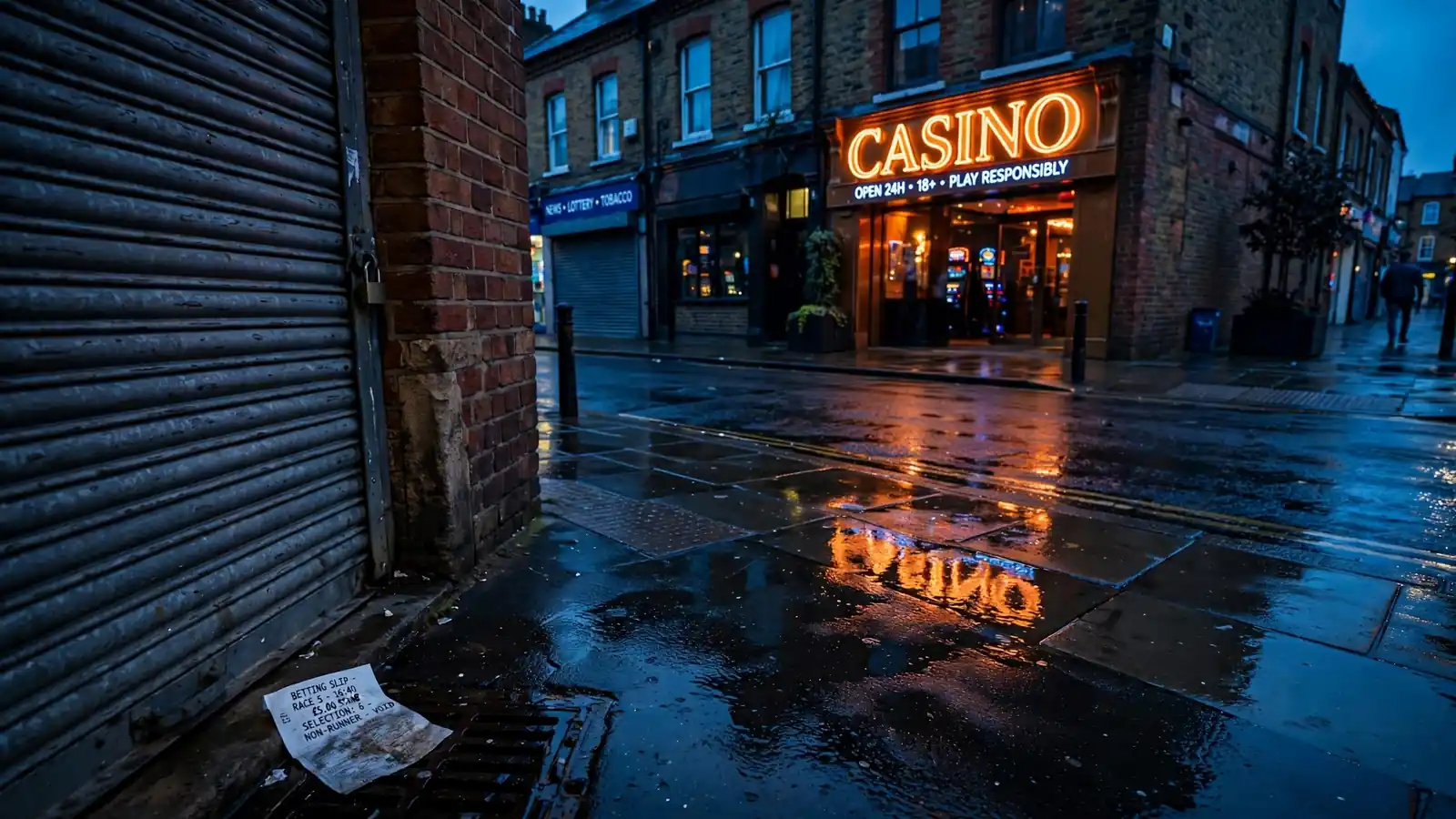
The distinction also clarifies what “licensed online casino” means in different contexts. A casino may be licensed somewhere and still be non-UK-regulated. Conversely, a claim that a site is “international” says nothing by itself about its licence. Jurisdiction is a matter of the named regulator and the scope of the permission, not a marketing description.
Questions such as how to choose a safe licensed casino or how to check whether an online casino is licensed therefore cannot be settled by the word “licensed” alone. The issuing jurisdiction is the starting point, not the conclusion. For a Great Britain-facing service, the relevant UK authorisation remains a separate matter from any licence held elsewhere. This is a distinction of legal scope, not a ranking of Malta, Curaçao, Gibraltar and Anjouan.
Nor does a list of jurisdictions answer how many online casinos are licensed in the UK. That is a separate question about UK authorisations, not a count of casinos associated with Malta or other foreign regulators. Likewise, the general idea of obtaining a remote casino operating licence depends on the jurisdiction and market involved; a licence issued in one place does not confer permission everywhere.
The practical result is simple: Malta, Curaçao, Gibraltar and Anjouan may appear in the licensing details of non-UK-regulated casinos, but none of those names should be mistaken for UK Gambling Commission authorisation. The jurisdiction label describes where a licence comes from. It does not, on its own, settle whether the operator is authorised for Great Britain.
A foreign licensing framework and regulatory home for some non-UK-regulated casinos.
A jurisdiction associated with non-UK-regulated casinos and offshore payment options.
A regulatory jurisdiction that does not substitute for UK Gambling Commission authorisation.
A licensing jurisdiction where operators are not required to integrate GAMSTOP.
Assessing Licence Claims Without a Ranked Shortlist
A casino displaying a foreign licence is making a claim about its regulatory status, not demonstrating that it has the protections attached to a UK Gambling Commission licence. The distinction matters more than the wording on a badge. A licence may identify the jurisdiction under which an operator says it is authorised; it does not, by itself, establish that the operator follows UK rules or provides UK-style safeguards.
That limits what a licence can tell someone comparing the best licensed online casinos. “Licensed” is not a complete quality measure, and a foreign licence should not be treated as interchangeable with UK authorisation. For customers in Great Britain, the relevant question is not simply whether a casino names a regulator, but which regulator it names and what protections apply to that service.
A useful assessment separates three things: the licence claim, the casino’s terms, and the practical protections available if something goes wrong. These are related, but they are not the same. A licence does not make every term favourable, and attractive terms do not establish that a site offers UK safeguards. The label alone cannot settle either point.
What the licence claim establishes
A stated licence can be a starting point for identifying the operator’s claimed regulatory framework. It is not a substitute for reading the conditions that govern deposits, withdrawals, account checks, bonuses and complaints. Those terms determine what the customer has agreed to; the licence badge does not explain them.
The same caution applies to claims about data protection and safer gambling. Non-UK-regulated casinos may apply less stringent responsible-gambling and data-protection rules than operators licensed by the UK Gambling Commission. That is a possibility, not a finding about every individual site. Still, a foreign licence should not be read as proof that UK-level controls are in place.

This is why a single “best” label has little analytical value. The best UK-licensed online casino and a casino licensed elsewhere are not equivalent categories. A site may appear attractive on one feature while offering a different set of safeguards. Comparisons are useful only when the licensing status and the relevant terms are kept visible.
Protections that may not travel with the account
Playing at a non-UK-regulated casino can mean giving up access to protections available through the UK system. In particular, customers at offshore casinos forfeit access to the UK’s Financial Ombudsman Service and to mandatory responsible-gambling tools. A foreign licence does not restore those protections merely because the operator is regulated in another jurisdiction.
That difference affects the value of safeguards, not just the wording of a licence claim. Responsible-gambling tools can place limits on how an account is used; where such tools are not mandatory, their availability and operation should not be assumed to match UK requirements. Data-protection rules may also be less stringent than those applying to UKGC-licensed operators, so the presence of a regulator’s name does not settle how customer information is handled.
No general ranking can account for these differences without examining the specific terms and protections behind each offer. A licence claim is one data point. The terms explain the financial conditions; the safeguards explain what support is available; and the regulatory framework indicates which system governs the operator. Treating those as separate checks produces a more accurate comparison than calling a casino the best licensed option on the strength of its badge alone.
Players at offshore casinos forfeit access to the UK’s Financial Ombudsman Service and mandatory responsible-gambling tools.
UK-Licensed Casinos and the Legal Position for Players
The operator’s obligation
The Gambling Act 2005 places the licensing duty on the business supplying gambling services to the British market. An operator cannot avoid that requirement by locating its company or servers abroad: where it serves customers in Great Britain, it must hold the relevant UK Gambling Commission (UKGC) licence.
That distinction matters when comparing a UK-licensed casino with a site operating under a licence issued elsewhere. A foreign licence is not a substitute for UK authorisation. A casino may describe itself as licensed, but that description alone does not establish that it is permitted to supply gambling services in Great Britain. The relevant question is whether the operator holds the UKGC authorisation required for that market.
The legal test concerns the operator’s activity, not merely the address on its website or the jurisdiction named in its terms. Online casinos licensed in Curaçao or Anjouan, for instance, do not become UK-licensed because British customers can reach their sites. Their overseas licensing status and the UK authorisation requirement are separate matters.
The player’s position
The position for an individual player is different. The Gambling Act is directed at operators providing services into the UK, rather than making the player the target of its licensing requirement. British citizens are not expressly barred by UK law from using gambling services licensed in another country, and playing on a site without a UK licence is not, by itself, a criminal offence for the player.

Those points do not make an unlicensed site a UK-licensed casino, nor do they mean that its service is authorised for the British market. The operator’s obligation remains in place even where the customer faces no criminal charge simply for gambling there. Conflating the two turns a rule about who must obtain permission into a rule about who may be prosecuted; they are not the same proposition.
This is also why “licensed” needs a jurisdiction attached to it. A licence issued abroad may describe the operator’s status under that jurisdiction’s system, while leaving the separate UKGC requirement unanswered. The wording on a site, or the presence of a licence number, cannot by itself show that the operator has the UK authorisation needed to serve Great Britain.
What the distinction means in practice
For the legal position, the useful comparison is not between a licensed casino and an unlicensed one in the abstract. It is between an operator holding the UKGC licence required for the British market and one relying only on permission from elsewhere. That distinction identifies the operator’s regulatory position; it does not turn the player’s lack of criminal liability into approval of the service.
Nor should the absence of a UK licence be read as a guarantee that a foreign site is lawful to operate in Britain. The statutory responsibility rests with the supplier, and an overseas licence does not remove it. At the same time, the stated position for players is not that they commit a criminal offence merely by using such a service.
The result is a two-part assessment: whether the operator is authorised to supply gambling services into Great Britain, and what legal consequences apply to the individual customer. Those questions have different answers. Anyone considering a service licensed outside the UK remains responsible for checking the laws that apply to them and understanding the implications of using it.

Anjouan Licences: Scope, GAMSTOP and Dispute Routes
An Anjouan casino licence is not permission to serve every market. It does not authorise operation in the United Kingdom or in other markets designated as restricted. A licence issued there therefore cannot substitute for the authorisation required to operate in Great Britain. The operator’s location and the jurisdiction named on a licence do not change that distinction.
For a casino presenting an Anjouan licence, the practical question is not only whether the licence is stated on the site. Its scope matters: authorisation for one jurisdiction does not establish permission to offer gambling services in another. Nor does the licence by itself place the operator under UK Gambling Commission oversight. These are separate regulatory arrangements, not interchangeable labels.
GAMSTOP is not assured
Anjouan-licensed casinos are not required to integrate GAMSTOP. A person registered with the UK self-exclusion scheme should not assume that the scheme will block access to an Anjouan-licensed site. The absence of required integration also means that GAMSTOP should not be treated as a safeguard built into the relationship between the operator and its customers.
This is a specific point about Anjouan, not a rule that can be applied automatically to every non-UK licence. Even within this jurisdiction, “not required” does not establish whether an individual operator has chosen to offer any separate controls. It does establish that GAMSTOP participation is not a condition that can be assumed from the licence alone.

Complaint routes have a defined gap
Anjouan’s authority does not take up player complaints, mediate between a customer and an operator, or adjudicate a dispute. An Anjouan-licensed casino also does not have to provide an independent dispute-resolution route comparable to the approved ADR services associated with UKGC-regulated gambling.
That leaves a material difference between submitting a complaint to the casino and having an independent body decide it. An operator may have its own complaint procedure, but that is not the same as independent adjudication. The presence of a licence does not fill this gap, and the Anjouan authority is not an appeal channel for an unresolved player complaint.
Under Anjouan’s framework, operators must respond to complaints within 30 calendar days. A response requirement is narrower than a requirement to resolve the dispute in the customer’s favour, and it does not create an independent decision-maker. The distinction is important: a deadline for an operator to reply is not equivalent to access to an external remedy.
What the licence does not settle
An Anjouan casino licence can identify the jurisdiction under which an operator claims to be licensed. It does not establish UK authorisation, GAMSTOP coverage, or access to UKGC-approved ADR. Each is a separate question. Describing a site as a non-UKGC-licensed casino may be accurate, but that wording says nothing by itself about the quality of its complaint handling or the outcome of a dispute.
For anyone assessing an Anjouan casino, the useful distinction is between the operator’s own response process and an independent route that can review a complaint. The former may exist under the operator’s terms; the latter is not guaranteed by the Anjouan licence.
- Check for independent dispute-resolution routes
- Verify the operator’s own complaint response process
- Assume an Anjouan licence provides GAMSTOP coverage
- Expect the Anjouan authority to adjudicate player disputes
Curaçao-Licensed Casinos and Offshore Payment Options
A Curaçao licence identifies a licensing jurisdiction; it does not determine which payment methods a particular casino accepts. Offshore sites may offer card payments, e-wallets, bank transfers or cryptocurrency, sometimes using payment processors other than the providers familiar from UK-licensed services. Availability can differ by operator and can change, so the payment page and terms for the specific account matter more than a general label such as “Curaçao-licensed”.
The listed deposit method is only one part of the transaction. A method that accepts a deposit does not necessarily support withdrawals, and the casino’s payment terms should be checked for both directions before funds are sent. The name of a payment option alone says nothing about how a later payout will be handled.
Cryptocurrency is sometimes presented as a way to get around the UK restriction on gambling funded by credit cards. In practical terms, a crypto transfer does not use the credit-card payment rail. That does not turn an offshore casino into a UK-authorised service, nor does it remove the financial and regulatory risks of using one. The payment route and the operator’s status are separate questions.
Some specialist reviews have also reported deposits charged to a mobile phone bill or taken from a prepaid balance. These are not established as standard options across the market; their availability depends on the operator and payment arrangement. Any such route should be treated as a specific offer to verify, not as a feature implied by a Curaçao licence.
For each method, the relevant terms include any fees, currency conversion, processing conditions and restrictions on moving funds out. A deposit may be accepted through an alternative processor while the operator applies separate conditions to withdrawals. Payment providers can also have their own rules, so the casino’s description is not a substitute for the provider’s terms.
Using crypto does not create the consumer safeguards attached to a UK Gambling Commission licence. Non-UK-regulated casinos fall outside the UK regulatory system, and disputes or changed terms do not give players access to UK regulators. British players remain responsible for checking the law that applies to them and understanding the implications of using gambling services licensed elsewhere.
What UK Gambling Commission Authorisation Provides
A UK Gambling Commission-authorised casino operates within a framework that includes formal oversight and responsible-gambling safeguards. The licence is more than a badge beside the site name: it identifies an operator subject to UK requirements when providing gambling services to customers in Great Britain.
One practical difference is self-exclusion. Casinos covered by the UK system are part of GamStop, the national scheme that allows people to exclude themselves from participating sites. Casinos not on GamStop sit outside that scheme. An exclusion registered through GamStop therefore does not extend to them, so the boundary of the scheme matters as much as its existence.
UKGC oversight also brings mandatory responsible-gambling tools. At a non-UK-regulated casino, those protections may not be available on the same basis. A site may display its own controls, but that does not make them equivalent to requirements attached to a UK casino operating licence. The distinction is regulatory, not cosmetic.
UKGC Authorisation
- Provides formal oversight and mandatory responsible-gambling tools
- Ensures integration with the national GamStop self-exclusion scheme
- Grants access to the UK’s Financial Ombudsman Service for disputes
- Sets enforceable conditions for operators providing services in Great Britain
The support available when a dispute arises also changes. Players using offshore casinos forfeit access to the UK’s Financial Ombudsman Service and to the mandatory responsible-gambling tools associated with UK-regulated services. If terms change or a complaint remains unresolved, there is no equivalent route through the UK regulator for resolving the dispute. A foreign licence does not transfer the protections of UK authorisation.
This is why a UK Gambling Commission licensed casino is assessed against a different standard from a casino licensed elsewhere. A licence from another jurisdiction may establish that an operator is subject to rules there; it does not provide UKGC supervision, GamStop participation or UK-based complaint protections. Comparing the names of licences without comparing their practical coverage misses the point.
A list of UK Gambling Commission licensed online casinos is useful only if its entries are genuinely authorised and the relevant licence applies to the service being offered. The licence claim should be checked against the Commission’s public register, including the operator identity. A logo or a statement in site terms is not, by itself, proof of current authorisation.

The financial difference is straightforward: UKGC oversight sets enforceable conditions around the service and gives players protections that do not follow them to an unregulated site. For someone enrolled in GamStop, using a casino outside the scheme can also undermine the purpose of that self-exclusion. The safer comparison is therefore not simply which site accepts a deposit, but which protections remain available if gambling needs to stop or a dispute arises.
MGA Licensing: A Foreign Licence, Not UK Authorisation
An MGA-licensed casino is associated with Malta’s licensing system. That is a different regulatory status from authorisation by the UK Gambling Commission (UKGC). The distinction matters because a licence issued in one jurisdiction does not replace the licence required to serve customers in another.
Malta is among the jurisdictions that may license non-UK-regulated casinos, alongside Curaçao, Gibraltar and Anjouan. An MGA licence therefore places an operator within a foreign licensing framework; it does not, by itself, establish that the operator is authorised to supply gambling services in Great Britain.

For operators serving customers in Great Britain, the relevant requirement is a UKGC licence, regardless of where the operator is based. A Malta-licensed casino cannot meet that requirement simply by pointing to its Maltese status. The operator’s location and the regulator named on its licence do not change the rule.
The same distinction applies when gambling is accessed through software. Calling a product a casino app does not make the app’s licence a separate substitute for the operator’s authorisation. The relevant issue remains which regulator licenses the operator and whether it holds the required UKGC licence to serve Great Britain.
Terms such as “MGA licensed” and “Malta licensed” describe a foreign regulatory connection, not UK authorisation. They should not be read as interchangeable with “UKGC licensed”. Nor does a foreign licence alone settle whether a particular service is permitted to serve customers in Great Britain.
The word “small” does not create a different category of UK permission. A small casino licence in the UK is not replaced by an MGA licence: operators serving Great Britain still require the relevant UKGC authorisation, irrespective of scale or base of operation.
The practical distinction is narrow but consequential. Malta licensing identifies a jurisdiction; UKGC licensing is the authorisation relevant to operators serving Great Britain. A claim of MGA oversight should therefore be understood on its own terms, without treating it as evidence of UKGC status.
No UK Licence: Withdrawal Delays and Verification Risks
A withdrawal request is not the same as money received. At a non-UK-regulated casino, the time between approval and payment can vary substantially, and the available figures conflict: one account puts withdrawals as fast as 24 hours to 5 business days, while another says they can take three or four weeks. The difference matters when winnings are needed by a particular date. Without a regulatory clock for enforcement, a stated processing estimate does not provide the same assurance as a deadline backed by UK oversight.

The practical cost of delay depends on how much remains inaccessible and for how long. A balance that appears available on screen cannot cover a bill while a payment is pending. The relevant terms are therefore not just the advertised processing time, but when the operator starts counting it, whether verification pauses the process, and what reasons it can give for holding a request.
A specialist casino review reports that some non-UK-regulated operators set daily, weekly or monthly withdrawal caps. Where those terms apply, a large balance may have to be paid out in instalments rather than as one transfer. That can extend the time before the full amount reaches the player, even if each individual payment is processed promptly. A cap is a cash-flow condition, not a technical footnote.
Verification can add another layer. A specialist casino review also reports cases in which an operator may request notarised documents or a video call before releasing a withdrawal. Such steps should not be assumed to apply at every casino without a UK licence; the point is that they may appear in the operator’s terms or during a payment review. Their effect is to make access to the balance conditional on completing additional checks.
Before depositing, the withdrawal rules need to be read as a set: processing estimates, permitted payment routes, caps, verification requirements and the operator’s discretion to pause a payment. A deposit method does not itself establish that the same route will be available for withdrawals. If a casino without a UK licence changes the practical requirements or a dispute arises, there is no UK regulator to enforce the payment terms. The financial decision is therefore about both the possible balance and the conditions for turning it back into usable funds.

New Casino Offers: Calculate the Wagering Before the Headline
A welcome bonus is not its headline value. Its usable value depends on what must be wagered, which funds count towards that total and whether winnings can be withdrawn under the offer’s terms.
Specialist reviews report offshore welcome offers with wagering requirements of 35 times the relevant amount or more. That figure is not a fixed market standard: the offer’s own terms determine the calculation. A stated 40-times requirement, for instance, may apply to the bonus and deposit together, to the bonus alone, or to the bonus and free-spin winnings. Those bases produce different wagering totals, even when the multiplier is identical.
Before comparing offers, identify the eligible amount and multiply it by the stated requirement. If the deposit is included, the wagering target is larger than when only the bonus counts. A headline bonus therefore cannot be compared sensibly without its calculation basis. A newly launched UK-licensed casino and a newly launched casino with an MGA licence are not interchangeable descriptions: a foreign licence does not itself establish UK authorisation.
Free spins have separate conditions. Specialist reviews report packages with expiry periods of 24–72 hours, while reported wagering on spin winnings ranges from 30 to 50 times those winnings. The same reviews describe withdrawal caps of £5–£50. These are reported offer terms, not guarantees that every promotion uses them; the operator’s current terms control.
The final amount available to withdraw can consequently be constrained twice: wagering determines whether the winnings qualify, and a cap can limit what is paid out. Check expiry, eligible games, the wagering base and any maximum withdrawal together. A large headline figure has little value if the conditions make the resulting balance difficult to convert into withdrawable cash.
Is it legal for a UK player to gamble at an Anjouan-licensed casino?
UK law does not explicitly prohibit individuals from using gambling services licensed abroad, and players do not commit a criminal offence by gambling on an unlicensed site. However, an Anjouan licence does not authorise an operator to serve customers in Great Britain; operators serving them need a UK Gambling Commission licence.
What happens if I have a dispute with an Anjouan-licensed casino as a UK player?
You do not have access to an independent dispute resolution route comparable to UKGC-approved services, and the Anjouan authority does not adjudicate player complaints. The operator must respond to complaints within 30 calendar days.
What is the biggest risk of playing at a non UK regulated casino?
You lose protections available with UKGC-licensed casinos, including access to the UK’s Financial Ombudsman Service and mandatory responsible-gambling tools. With Anjouan-licensed casinos, player funds are not guaranteed to be segregated, so you may be an unsecured creditor if the operator fails.
Are gaming sites not on GamStop permitted for UK players?
A player does not commit a criminal offence under UK law by gambling on an unlicensed site, and UK law does not explicitly prohibit using gambling services licensed abroad. But operators serving customers in Great Britain must hold a UK Gambling Commission licence; not being on GamStop does not provide that authorisation.
Are Anjouan casinos connected to the GamStop self-exclusion scheme?
No. Anjouan-licensed casinos are not required to integrate GAMSTOP.
Published by the Winstler Casino team.