Live Dream Catcher Casino UK: How It Works
 Available in GB
The guide explains the studio-stream format and outlines how to evaluate casino terms, gameplay pace and connection before starting a session.
- How a Live Dream Catcher Table Works Online
- Live Dream Catcher Casino: The UK Conditions
- Assessing Casino Terms Without a Ranked Shortlist
- Playing the Live Game: Pace and Connection
- The Wheel: What Can and Cannot Be Verified
- Choosing a Live Casino Site on Verifiable Terms
- Demo Play and the Limits of the Available Information
- Reviewing the Live Format and Its Costs
- Before Starting a Live Session
- Comparing Casinos by Terms, Not by Unsupported Rankings
How a Live Dream Catcher Table Works Online
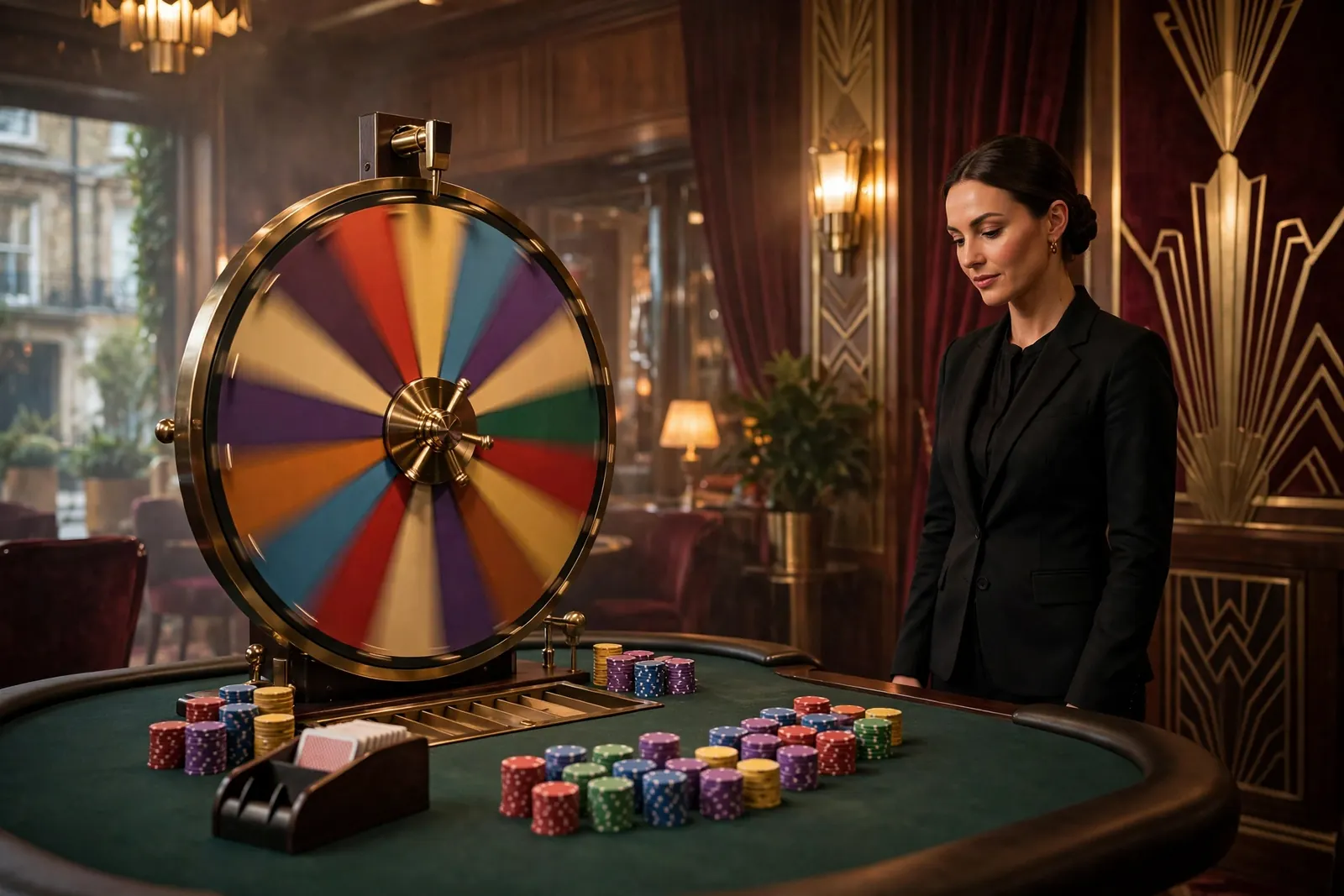
A live Dream Catcher table brings a studio game to an online screen. The gameplay is streamed in real time, with a human dealer present in the studio, while players use an on-screen interface to place bets. The result is a split format: the dealer-led game takes place in the studio, and the player’s participation is handled digitally.
That distinction matters. An online live table is not simply a digital animation presented as a casino game. The stream shows gameplay as it happens in the studio; the interface is where a remote player submits a bet. The screen therefore serves two different purposes at once: it carries the live presentation and provides the means to take part.
For someone looking at Dream Catcher online, the word “live” describes this delivery format. It indicates a real-time studio stream with a human dealer, rather than a wholly computer-generated presentation. It does not, by itself, explain the game’s rules, the shape or operation of its wheel, or how any particular bet is settled. Those details belong to the game itself, not to the general meaning of a live-dealer table.

The online session can be understood as a connection between the studio and the player’s device. The studio supplies the live gameplay; the player sees it through the stream and interacts through the casino’s on-screen betting interface. A physical presence at the table is not part of this arrangement. Participation is remote, and the interface is the route through which bets are entered.
This setup also separates presentation from decision-making. The stream shows the action, but it does not make a choice on the player’s behalf. A bet must be placed through the interface. The exact controls and information displayed can depend on the game and the casino’s implementation, so the general live format should not be mistaken for a description of every screen or button. The central point is narrower: gameplay comes from a live studio, while betting is submitted online.
That is the basic context for a Dream Catcher casino online. The game is accessed as part of a live-dealer offering, not as a claim that the player is sitting at a physical casino table. The studio stream gives the session its live character; the betting interface makes remote participation possible. Neither element alone describes the complete game. A stream without a way to submit bets would be viewing, while an interface alone would not establish that the gameplay is being streamed live from a studio.

The distinction is useful when comparing descriptions of an online casino with Dream Catcher. A reference to a live table concerns how the game is presented and how bets are transmitted. It should not be treated as evidence of a particular wheel design, betting option, outcome pattern, or rule. Those are separate questions. The live-dealer label establishes the setting and channel of participation, not the mechanics of the game.
Likewise, “playing Dream Catcher online” describes access through a digital service, but it does not turn the studio activity into a conventional computer game. The dealer remains part of the live presentation, while the player’s actions are carried out through the on-screen interface. The experience is therefore a combination of streamed gameplay and digital betting, rather than a physical visit or a purely automated display.
This arrangement can make the table feel more immediate than a game whose entire presentation is generated on screen: the action is shown as it unfolds in a studio with a human dealer. That is a description of the format, not a promise about how quickly a particular stream loads or how smoothly it runs. The live element comes from the real-time studio gameplay; a player’s individual experience still depends on the service and connection being used.
For a UK reader considering live Dream Catcher online casinos, the same basic explanation applies across the category. “Live” refers to a studio stream featuring a human dealer, and the player places bets by using an on-screen interface. The casino provides the digital route into the session, while the studio supplies the live game presentation. Any further claim about the game’s rules or wheel needs to be assessed separately rather than inferred from the live format.
The practical takeaway is modest but clear: an online live table joins a real-time studio presentation to remote betting. The stream shows the dealer-led gameplay; the interface accepts the player’s bets. That is what the format establishes. It says how the session reaches an online player, not what every Dream Catcher round contains or how its individual outcomes are determined.
Live Dream Catcher Casino: The UK Conditions
When looking for a UK casino to play live Dream Catcher in 2026, payout timing can be one practical detail to consider. Use these verdicts as a brief reference, and check each operator directly for game availability.
Payout speed: 1-3 business days Britsino lists a payout speed of 1–3 business days.
Payout speed: 1-3 business days NightLuck lists a payout speed of 1–3 business days.
Payout speed: 1-3 business days Chanze lists a payout speed of 1–3 business days.
Payout speed: 1-3 business days SpinFormula lists a payout speed of 1–3 business days.
Payout speed: 1-3 business days Amunbet lists a payout speed of 1–3 business days.
Payout speed: 1-3 business days Zombillion lists a payout speed of 1–3 business days.
Payout speed: 1-3 business days WinBeast lists a payout speed of 1–3 business days.
Payout speed: 1-3 business days BeOnBet lists a payout speed of 1–3 business days.
Payout speed: 1-3 business days EvoSpin lists a payout speed of 1–3 business days.
Payout speed: 1-3 business days Jetsetspins lists a payout speed of 1–3 business days.
The legal status of a live Dream Catcher casino in the UK depends on the operator, not on the game’s name or presentation. A live dealer casino may operate legally for UK customers when the operator holds a licence from the UK Gambling Commission (UKGC). The same condition applies when the live table is presented as Dream Catcher: a game title does not replace the licence required of the business providing access to it.
This distinction matters because a familiar game label is not evidence that a particular casino is authorised to serve customers in the UK. An operator may advertise a live game, but its presence on a site does not establish the site’s regulatory status. The relevant check is whether the company offering real-money gambling to UK customers holds the appropriate UKGC licence. If it does not, the live format does not make the service lawful.
The operator’s licence is the central condition
The UK licensing requirement applies to remote gambling operators selling into the British market, regardless of where the operator is based. In practice, a business cannot avoid the requirement simply by locating its studio or company outside the UK. For a live dealer casino serving Great Britain, the operator needs the relevant UKGC licence.

A licence is an operating condition, not a feature of the game. It does not mean that every game bearing a particular name is available through every licensed casino, nor does the game’s availability prove that the operator is licensed. These are separate questions: whether a site is authorised to offer remote gambling in the market, and whether it actually offers the specific live game being sought.
The Gambling Act 2005 governs gambling in England, Wales and Scotland. Its definition of a casino covers an arrangement that gives people the opportunity to take part in one or more casino games. For a remote casino, the key market-access point remains the operator’s licence. The law does not turn on whether the game is streamed from a studio, shown under a branded title or delivered through a live table interface.
Northern Ireland is outside the scope of the Gambling Act 2005, so the Act should not be described as governing the whole of the UK. That qualification does not alter the stated condition for a live dealer casino to operate legally in the UK: the operator must hold a UK Gambling Commission licence.
Licensing Requirement
A live dealer casino must hold a licence from the UK Gambling Commission (UKGC) to operate legally for UK customers; the game title or format does not replace this legal requirement.
Age verification comes before deposits
Legal online gambling in the UK is for people aged 18 and over, and operators must verify a customer’s age before allowing deposits into a gambling account. Age verification is therefore a pre-deposit requirement, not a check that can be postponed until after real-money play has begun.
For a live Dream Catcher casino, this condition applies at the account level. The live table does not create a separate age threshold, and a game’s branding does not make an age declaration a substitute for verification. A customer must be old enough to gamble and the operator must complete the required check before accepting deposited funds.
This separates eligibility from access to a particular game. Passing an age check does not establish that a site holds the necessary licence, while a licensed site still has to verify age before permitting deposits. Both conditions concern the operator’s provision of gambling services; neither can be inferred from the appearance of a live table.
What the game name does not establish
“Dream Catcher” identifies the subject of a search, but by itself it says nothing about the legal status of a casino offering the game. It does not identify the operator, confirm that the operator serves UK customers under a UKGC licence, or show that the game is available at a specific site. Those points need to be assessed separately.

The same distinction applies to phrases such as “Dream Catcher live casino” or “live Dream Catcher casinos”. They can describe a type of game or a search for sites, but they are not regulatory categories. The licence belongs to the gambling operator. A studio, table or game title is not a substitute for that licence.
A UKGC licence is the baseline legal condition for a live dealer casino serving the market, while age verification must take place before money is deposited. Those requirements do not amount to an endorsement of a game or a particular operator. They define the legal and age conditions for access; they do not establish that any named casino offers Dream Catcher.
This section is for entertainment purposes only and is not gambling advice.
Assessing Casino Terms Without a Ranked Shortlist
A claim that one casino is the best place to play Dream Catcher is not useful unless the conditions behind that claim can be checked. A comparison needs to show what an offer actually permits and how live-game activity is treated under its terms. Without those details, a headline value is packaging, not a measure of what the offer is worth for live play.
The first distinction is between an offer’s stated value and its usability at a live table. A specialist review reports that most UK welcome offers are free spins for slots and cannot be used at live tables. That is a description reported by the review, not a rule applying to every casino or every offer. The applicable offer terms remain decisive: they need to say whether the promotion can be used on live games and whether Dream Catcher is included.
Many UK welcome offers are designed for slots and may not be usable at live tables, meaning the stated value may not apply to Dream Catcher play.
If the offer is limited to slots, its stated value does not become a live-table benefit simply because the casino also provides live games. The two parts of the offer may sit side by side on a promotional page while serving different purposes. For a comparison focused on Dream Catcher, the practical question is whether the terms allow the offer to be used there, rather than whether the casino advertises a welcome promotion at all.
Check the wagering contribution
Where bonus funds or winnings are subject to wagering requirements, game weighting affects how much live play contributes towards satisfying those requirements. A specialist review reports that live games can receive a small weighting, with 10% given as an example. That figure should not be treated as a standard applying across operators: the terms for the specific offer determine the applicable weighting.
A low weighting changes the calculation. If live-game activity counts for only a small share, a substantial amount of play may make limited progress towards the requirement. The advertised bonus amount alone therefore cannot establish the offer’s value for someone intending to play live games. The relevant comparison is between the conditions attached to the promotion and the kind of play that qualifies.
Terms may distinguish between game categories, and a promotion’s general description may not explain every restriction. The weighting for live games should be read directly from the applicable terms, rather than inferred from a general statement that bonus funds can be used in the casino. Permission to place a bet and permission for that bet to contribute meaningfully towards wagering are separate conditions.

This distinction also prevents a misleading comparison between offers. One promotion may permit live play but assign it limited contribution; another may exclude live tables altogether. Neither can be evaluated from its headline value alone. The terms need to identify both eligibility and contribution before the offers can be compared on a like-for-like basis.
Separate access from progress
Two questions should be kept apart. First, can the offer be used at the live table? Second, if the activity is eligible, how much does it count towards any wagering requirement? An answer to the first does not settle the second. A promotion may permit a game while giving that game a restricted contribution; another may not permit live play with the offer at all.
The exact wording matters because a broad reference to casino games does not necessarily establish that live games qualify. Likewise, a statement that live games count does not, by itself, disclose their weighting. A sound comparison records the stated eligibility and the stated contribution separately. If either condition is unclear, the offer’s value for live play cannot be calculated from the promotional headline.
Other conditions attached to an offer also affect whether its stated value is usable. The comparison should rely on the terms that govern the particular promotion, including wagering requirements, game weighting and maximum bet limits, before opting in. A prominent bonus figure cannot replace those conditions; it is only one part of the offer.
- Check if live games are eligible for the offer
- Verify the specific wagering weighting for live play
- Review maximum bet limits before opting in
- Assume a headline bonus applies to live tables
- Rely on general descriptions of “casino games”
- Use a bonus figure as a measure of live-table value
What a useful comparison can establish
A defensible comparison does not need a ranked shortlist. It needs enough specific information to show why one offer may or may not suit live play: whether the offer applies at live tables, whether the game in question is eligible, and how eligible activity contributes towards wagering requirements. Those points can be checked against the promotion’s terms without turning an unverified preference into a claim of superiority.
For a search for the best UK casino for live Dream Catcher, the useful standard is therefore not a label but a set of conditions. An offer that looks generous may have little practical relevance if it is restricted to slots or if live-game activity carries a low weighting. Conversely, eligibility alone does not prove that a promotion delivers meaningful wagering progress.
The calculation is conditional, not universal: the offer’s wording determines whether live play qualifies and what contribution it receives. Where those terms are not clear, a reliable value comparison is not available. This content is for entertainment purposes only and is not gambling advice.
Playing the Live Game: Pace and Connection
A Dream Catcher live casino game runs at a different rhythm from a digital game. Live play is slower, so each round takes place within a pace set by the table rather than by rapid on-screen play. That changes the amount of time spent waiting between decisions and can make a session feel less immediate. It is a practical feature of the format, not a way to improve the value of a bet.

The distinction matters when comparing the experience with a digital version. Digital games can move through their play more quickly; a live table cannot remove the time needed for its round to unfold. Anyone choosing to play the Dream Catcher casino game should therefore account for pauses as part of the experience. A longer session may contain fewer rounds than expected if the comparison is based on faster digital play, although the actual pace can vary by table and session.
Minimum bets are another difference. Live games have higher minimum bets than their digital counterparts. This affects the amount required to take part at the table, not the likelihood of an outcome. A lower stake in a digital version cannot be assumed to translate into the same entry point in a live game. The relevant minimum should be checked at the selected table before play begins; a title alone does not establish what that table will accept.
Connection quality is a condition of live play. The stream needs a stable internet connection, since the game is presented in real time rather than generated entirely on the player’s device. A connection that fluctuates can make the viewing experience less reliable and may interrupt the flow of a round. The practical point is straightforward: a stable connection is part of the requirements for playing, not an optional convenience.
This also affects how a live session fits into its setting. A table that depends on a continuous stream is less suited to an environment where the connection repeatedly drops or competes with other demands on the network. The game’s pace is already slower than that of digital alternatives; interruptions add further delay rather than making the format faster. There is no useful calculation that turns an unstable connection into a predictable playing schedule.
Attention: Live play requires a stable internet connection to maintain the real-time stream and avoid interruptions during a round.
The same limits apply when searching for a way to play Dream Catcher online. The name of the game does not remove the general live-table conditions: a slower pace, higher minimum bets than digital games, and the need for a stable connection. These are separate considerations. A table may be accessible but still be a poor fit if its minimum exceeds the intended stake or the connection cannot sustain the stream.
For a measured comparison, the relevant questions are about operating conditions rather than assumed game mechanics: how long the live format is likely to hold attention, whether the table minimum is acceptable, and whether the connection is steady enough for continuous viewing. Those checks do not predict results. They establish whether the live format is workable before money is placed.
The Wheel: What Can and Cannot Be Verified
A wheel visible in a live casino does not, by itself, make a game roulette. Roulette rules depend on the wheel and betting layout used for that game. Its pockets, available wagers and odds cannot be transferred to Dream Catcher simply because both games involve a wheel.
In roulette, a live dealer spins a physical wheel and the ball settles in a numbered pocket. A player wins by having selected the number on which it lands. Computerised roulette works differently: a Random Number Generator determines the result rather than a physical ball and wheel. These distinctions describe roulette, not the mechanics of a Dream Catcher casino wheel.
The roulette variants also have materially different layouts. American Roulette has green pockets marked 0 and 00; European Roulette has one green pocket, marked 0. The stated odds of winning are 1 in 38 in American Roulette and 1 in 37 in European Roulette. Those figures belong to those roulette layouts. They do not establish the number of outcomes, probability of a result or expected return in Dream Catcher.
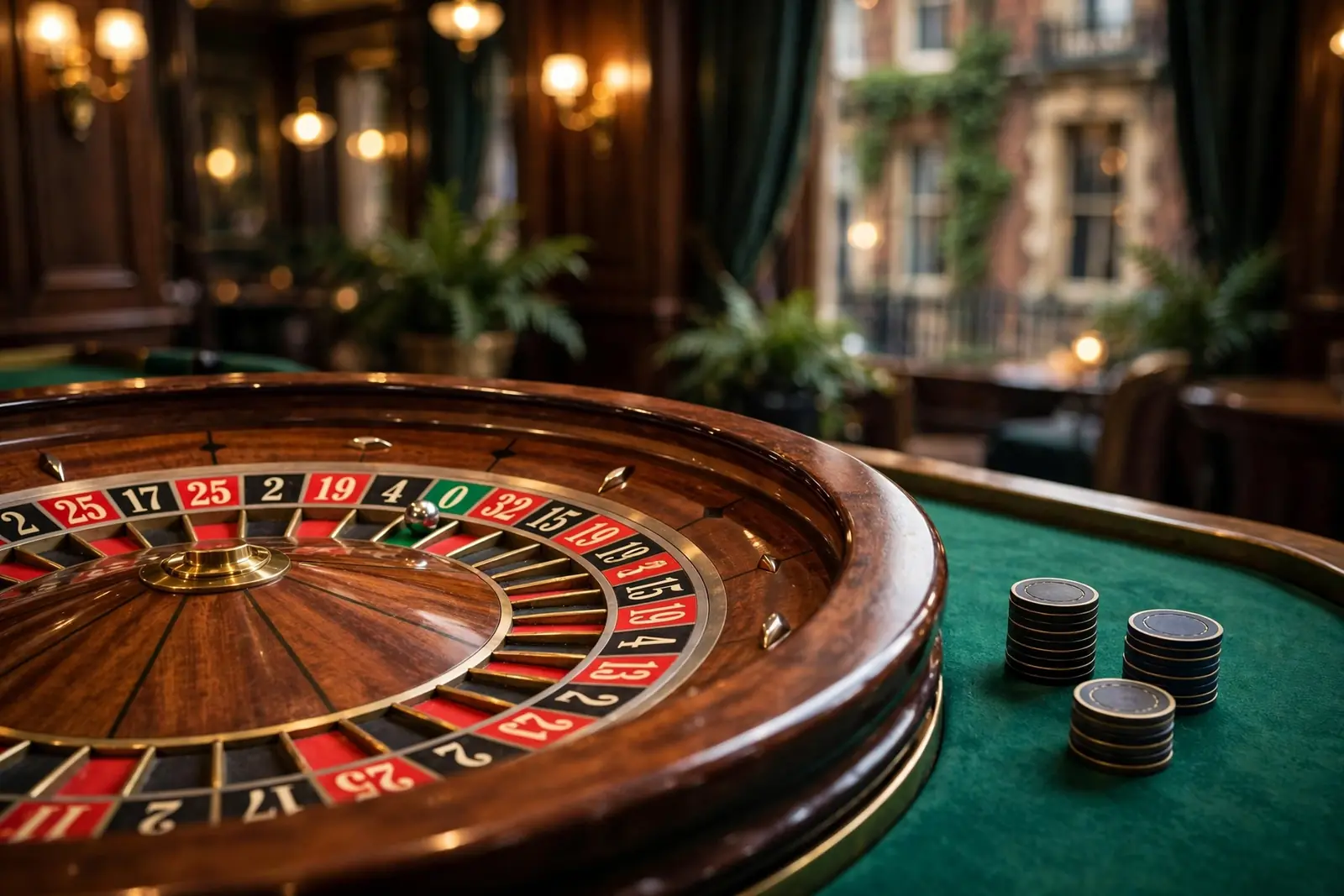
Roulette bet types matter too. A straight-up bet on a single number has a 2.9% house edge, while other roulette bets have a 2.7% edge. In French Roulette, an even-money bet loses only half its stake when the ball lands on zero. These are rule-dependent roulette calculations, not general properties of casino wheels. Applying them to a different game would produce a precise-looking figure with no valid basis.
For anyone comparing the Dream Catcher live casino wheel with roulette, the relevant distinction is the game’s own rules: what outcomes are available, how a result is determined, which selections can be made, and how each selection pays. A roulette racetrack layout, its green pockets and its odds answer none of those questions for Dream Catcher. They should not be used as a substitute for the game’s rules or paytable.
The practical point is narrow. Roulette has documented wheel formats and calculations that can be stated for roulette. Those details do not define Dream Catcher. A responsible description of Dream Catcher therefore needs to stay within its own published rules, rather than borrowing roulette terminology or mathematics. The word “wheel” is not enough to make the games interchangeable; the rules determine what the wheel means for a wager.

Choosing a Live Casino Site on Verifiable Terms
A site offering live casino games needs to be assessed on two separate points: its regulatory status and the way the game is delivered. For customers in the UK, a live dealer casino is legal only when it holds a licence from the UK Gambling Commission. A game name or a polished page does not replace that condition; the licence is the relevant baseline for the operator.
The second check concerns the live format itself. Live dealer games show gameplay streamed in real time from a studio, where a human dealer runs the game. Bets are entered through an on-screen interface. That combination distinguishes a live table from a digital game that generates outcomes without a streamed dealer. The interface is part of the transaction, not merely a display: it is where the player’s selections are submitted while the stream shows the table activity.

For a site presenting Dream Catcher as a live option, the useful distinction is between a named game and an actual live table. The name alone does not establish how play is delivered. The relevant features are a real-time studio stream, a human dealer and an on-screen means of placing bets. These describe the live-dealer format; they do not establish any particular Dream Catcher rules, wheel details or availability at an individual operator.
The site-level assessment therefore does not require a ranking. A sound baseline is a UK Gambling Commission licence for the operator and a live presentation that matches the stated format. If either point is unclear, the site has not yet supplied the information needed for a confident assessment. Branding, promotional language and visual effects add no weight to either condition.
The same standard applies across live casino sites rather than only to one title. Licensing concerns the operator’s right to serve the market; the stream and betting interface concern how the game is conducted online. Keeping those checks separate avoids treating a live-looking screen as proof of regulatory status, or a licence as proof that every advertised game is streamed live.
This is an entertainment format, not a basis for financial planning. Any decision to play should sit within a set budget; site presentation does not change the financial risk.
Demo Play and the Limits of the Available Information
A Dream Catcher demo is relevant only where a casino explicitly offers a free-play version of the game. The name alone does not establish that such an option is available, or what its interface contains. A live casino demo may refer to a practice mode, but that label should not be taken as proof that the live stream, dealer interaction or betting conditions match those of a real-money table.
Funds or results shown in a practice or demo mode are virtual and do not represent real-money winnings that can be withdrawn.
The distinction matters because “demo” describes the terms of access, not necessarily the game’s full operation. A free-play version may let a player explore an interface without staking money, but it should not be treated as a source of real payouts. Any balance or result shown in a practice mode is not evidence of money that can be withdrawn. The only safe financial assumption is that free play does not produce real-money winnings.
Where a site presents a demo option, its own description should make clear whether the game is simulated or streamed, whether a login is required, and whether the mode uses virtual rather than withdrawable funds. Those details affect what the mode can demonstrate. A simulated version might familiarise a player with buttons and menus; it cannot, by itself, establish the conditions of a live table. Conversely, a live stream viewed without a real-money stake would not automatically show that every feature available during paid play is included.
The wording on a casino page also needs to be read literally. “Play for free” is not a promise of cash prizes, and a demo should not be confused with a bonus or a deposit offer. If the page does not explain how the mode works, the label provides little basis for judging its practical value.
For Dream Catcher, the sensible distinction is between an explicitly described practice option and the live game offered for money. The former, if present, may help with basic navigation; it does not establish real-money outcomes or reproduce every condition of paid play. A demo is therefore a limited way to inspect a game, not a substitute for understanding the terms attached to a live session.

Reviewing the Live Format and Its Costs
A review of Dream Catcher in a live casino needs to separate the general format from claims about a particular table. Live play has practical costs even when no fee is displayed: each round takes longer than a digital version, the minimum bet is higher, and the stream depends on a stable internet connection. These conditions affect how long a session takes, how much can be staked per round and whether the game remains usable throughout.
The slower pace is part of the format, not a temporary delay to be removed. A live round follows the dealer’s actions, so decisions and results arrive less quickly than in a digital game. That can suit a player looking for a streamed, human-dealer experience; it is a drawback when the priority is rapid play. The trade-off is measurable in time, though no fixed session length can be inferred from the format alone.
Minimum bets also change the cost comparison. Live games have higher minimums than their digital equivalents, so the same bankroll may cover fewer rounds at a live table. A lower stake available in a digital version should not be assumed to carry over to its live counterpart. The relevant figure is the minimum shown for the specific table, not a general description of live play.
Connection quality is another operating condition. An unstable internet connection can interrupt the stream or make the interface difficult to use at the point a bet is being placed. Live play therefore requires more than access to the game: the connection must remain reliable while the table is in progress. That requirement is a practical cost, particularly where connectivity is inconsistent.
Live Format Costs
- Rounds take longer than digital versions due to the live dealer pace
- Minimum bets are generally higher than in digital counterparts
- A stable internet connection is a mandatory requirement for the stream
- Real-time dealer gameplay is exchanged for speed and lower entry stakes
Taken together, the live format exchanges speed and lower entry stakes for a real-time dealer stream. That is a description of the format, not proof that every Dream Catcher table has identical limits or performance. A sound review distinguishes what live play generally involves from table-specific details that must be checked on the game itself. The format may be appealing, but it does not remove the financial exposure of gambling. This content is for entertainment purposes only, not gambling advice.
Before Starting a Live Session
Preparation for a live Dream Catcher session is mostly about controlling the conditions around play. A stable internet connection matters: interruptions can disrupt the stream and make it harder to follow the live table. If the connection is unreliable, starting a session adds a practical problem before any bet is placed.
The budget should be fixed before opening the game, not adjusted in response to what happens during play. It is the maximum amount set aside for the session, not a target that needs to be spent. Once that amount is reached, the session ends. A loss does not justify raising the limit, and a win does not make the original limit irrelevant. Changing the boundary during play turns a control into a moving figure.
Live games also move more slowly than digital versions. That makes it useful to decide in advance how much time is available, rather than letting the stream determine when play stops. A session can be paused or ended; neither requires another bet.
The practical check is therefore straightforward: the connection is stable, the budget is set, and the stopping point is clear. If any of those conditions changes, continuing is not necessary. These are safeguards for managing a session, not a way to improve its outcome. Past results do not make a future result more predictable.

This content is for entertainment purposes only and is not gambling advice.
Comparing Casinos by Terms, Not by Unsupported Rankings
A casino cannot be called the best place to play Dream Catcher on the strength of the game title alone. A meaningful comparison needs verified information about the operators and the game on offer. Without that, a ranking would suggest differences in quality or value that have not been established.
The first condition is legal status. Live dealer casinos may operate legally in the UK when they hold a UK Gambling Commission licence. That is a checkable requirement, not a measure of how favourable a casino’s other terms are. Licensing and value should therefore be assessed separately.
Promotional terms need the same scrutiny. A welcome offer may be advertised prominently while excluding live tables, or live-game stakes may count for only a small share of wagering requirements. A weighting of 10%, for instance, means that only a fraction of eligible live-game stakes is credited towards the requirement. The headline bonus amount does not show how much qualifying play is needed; the weighting and the offer’s live-game eligibility determine whether it is useful for this format.
The comparison should stay with conditions that can be confirmed: whether the operator holds the relevant UK licence, whether Dream Catcher is actually available, and whether the bonus terms permit play at live tables and specify how that play is counted. These details can vary by operator and offer, so a general claim about the best online casino for Dream Catcher would outrun the evidence unless the same conditions had been checked across the options being compared.
A ranking without that comparison is presentation, not analysis. For a money decision, the licence and the written terms carry more weight than an unsupported label.
How do you play live roulette?
Place your bets through the on-screen interface, then watch the dealer spin a physical wheel. You win if the ball lands on a number you selected.
How can you win live dealer roulette?
You win when the ball lands on a number you selected. The wheel is spun by a live dealer, and your bets are placed online.
Why does the dealer always win in blackjack?
The dealer does not always win: blackjack players aim to beat the dealer by reaching 21 without going over. The game still has a house edge.
Prepared by the Winstler Casino editorial staff.