European Roulette at UK Online Casinos: Rules and Odds
 Available in GB
A practical guide to the single-zero wheel, bets and payouts, game formats, bonus terms, and the differences between European and American roulette.
- The Single-Zero Wheel and Its Built-In Edge
- Reading a Single-Zero Table: Layout, Bets and Payouts
- What the Wheel Format Changes: RNG, Speed and Minimum Stakes
- Playing European Roulette: Outside Bets and Losing Streaks
- European Roulette for Real Money: Bonus Terms and Account Conditions
- Live European Roulette: Dealers, Limits and UK Safeguards
- European and American Roulette: The Cost of an Extra Zero
- Choosing a UK European Roulette Casino by Terms, Not Labels
- Roulette-Themed Slots Are a Different Product
The Single-Zero Wheel and Its Built-In Edge
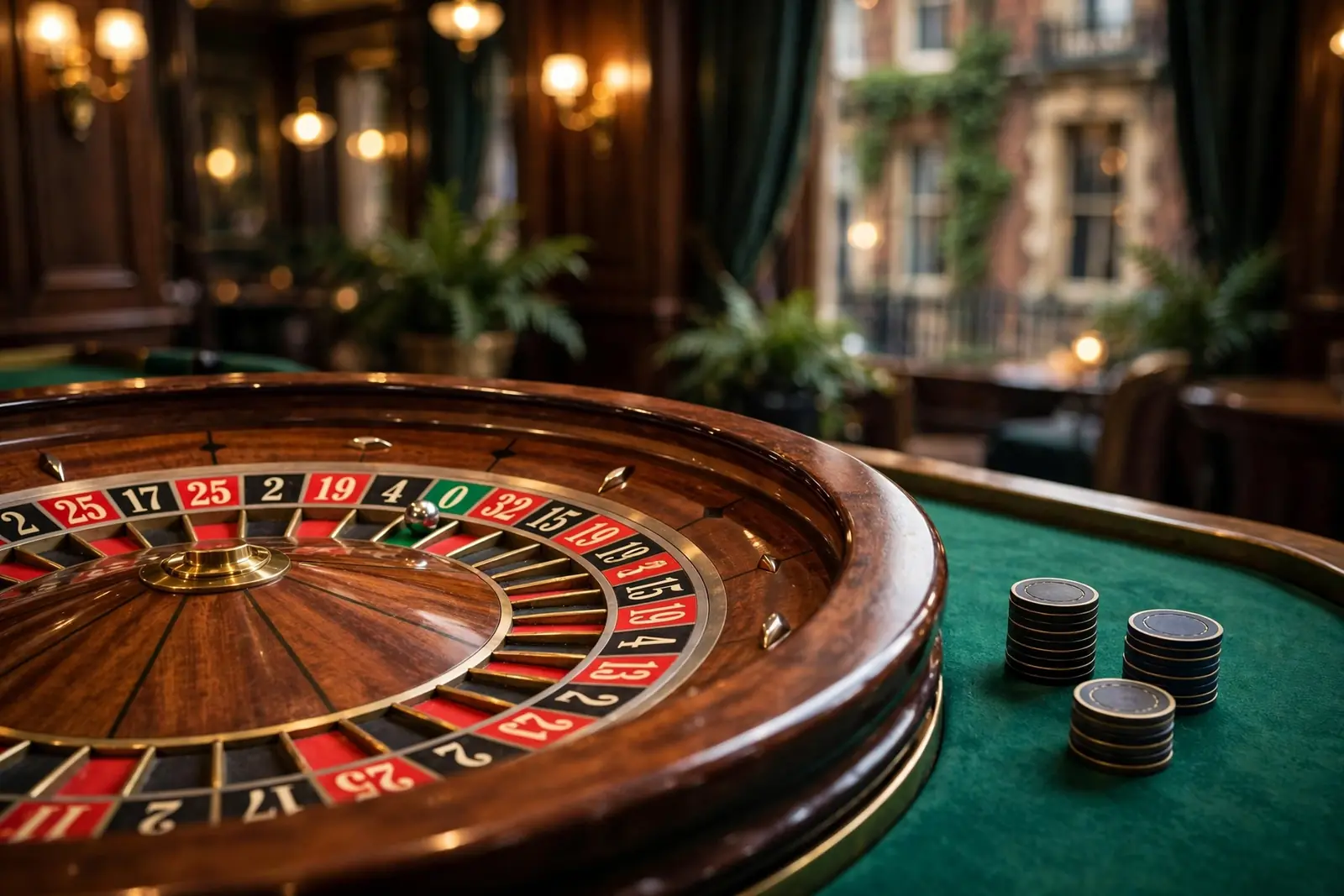
European roulette is built around a wheel with 37 pockets: the numbers from 1 to 36 and one green zero. That pocket count is the starting point for understanding the game’s built-in advantage. The zero is not an extra numbered outcome that can be treated like the others; it is a separate result, and its presence affects the balance between the player’s chances and the casino’s return.
The wheel’s appearance can make the numbered outcomes seem to dominate. There are many of them, arranged around a circular track, while the zero occupies a single pocket. But the relevant question is not how prominent a result looks on the wheel. It is how the available outcomes compare with the terms attached to a wager. In standard European roulette, the relationship between those elements produces a house edge of 2.70%.
The house edge is a statistical measure of the casino’s advantage over repeated play. It does not specify what will happen in any individual spin, nor does it predict the result of a session. A player may win, lose or finish level over a short period. The percentage describes the mathematical expectation across a large volume of play, not a deduction applied identically to every spin.
When choosing a UK online casino for European roulette in 2026, payout timing is one practical detail to check. The verdicts below focus on the payout information available for each operator.
Payout speed: 1-3 business days Britsino lists a payout speed of 1–3 business days, a useful detail to consider when choosing where to play European roulette.
Payout speed: 1-3 business days NightLuck lists a payout speed of 1–3 business days. This gives players a stated timeframe for payouts.
Payout speed: 1-3 business days Chanze lists a payout speed of 1–3 business days, offering a clear payout-time detail for players to weigh.
Payout speed: 1-3 business days SpinFormula lists a payout speed of 1–3 business days. This is the available practical detail to consider for payouts.
Payout speed: 1-3 business days Amunbet lists a payout speed of 1–3 business days, giving players a stated expectation for payout timing.
Payout speed: 1-3 business days Zombillion lists a payout speed of 1–3 business days. Players can use this stated timeframe when considering payout timing.
Payout speed: 1-3 business days WinBeast lists a payout speed of 1–3 business days, a relevant detail for players considering payouts.
Payout speed: 1-3 business days BeOnBet lists a payout speed of 1–3 business days. This provides a stated timeframe for payouts.
Payout speed: 1-3 business days EvoSpin lists a payout speed of 1–3 business days, giving players a clear payout-time detail to consider.
Payout speed: 1-3 business days Jetsetspins lists a payout speed of 1–3 business days. This is the available information about its payout timing.
That distinction matters because a session result and the game’s underlying economics are different things. A win does not show that the wheel has become favourable, just as a loss does not mean a favourable result is due. The wheel does not retain a memory of previous outcomes. Each spin produces a result by chance, and the house edge remains part of the game regardless of what happened before.
The zero is the feature that separates the European wheel from a set of outcomes made up only of numbered pockets. Without it, the balance would be different. With it, there is an outcome that helps create the casino’s advantage while leaving the game’s familiar numbered sequence intact. The edge is therefore not a separate charge added after a result; it is embedded in the structure of the wheel and the game’s settlement mathematics.
For someone comparing European roulette casinos, the wheel format is a more useful starting point than the name or presentation of a game. A polished interface, a themed screen or a busy lobby does not alter the pocket structure of standard European roulette. The defining mechanical facts remain the same: 37 pockets, including one zero, and a house edge of 2.70%. Presentation may change; that basic calculation does not.


The percentage is best read as a long-run average, not a promise about an individual outcome. It does not mean that every player will lose 2.70% of their money, or that a casino takes that share from each stake as soon as it is placed. Actual results vary because each spin is uncertain. Over a limited number of spins, chance can produce outcomes far above or below the mathematical expectation. More play does not make a particular result certain; it gives the underlying probability more opportunities to shape the overall result.
This is also why a winning run cannot remove the house edge, and a losing run cannot prove that a win is imminent. The edge is a property of the game’s design, not a forecast about the next spin. Treating recent results as evidence that the wheel is correcting itself confuses randomness with a schedule. The wheel has no obligation to balance a player’s account.
The same distinction helps when reading claims about roulette. Descriptions such as “single zero” identify a mechanical feature, but they do not imply that the game is free of a casino advantage. A stated edge expresses that advantage in a compact form. It is not a measure of how entertaining the game is, how quickly a session will move, or how much a particular player will win or lose. Those are separate questions.
The house edge of 2.70% is a mathematical expectation across a large volume of play; it is not a deduction applied identically to every individual spin.
In an online casino, European roulette can be presented in different ways, but the standard wheel’s defining structure is unchanged when the game remains European single-zero roulette. The outcome still comes from a set of 37 pockets, with the zero included. Recognising that structure makes the edge easier to interpret: the casino advantage is present before any spin takes place, and no sequence of past results changes it.
For a practical financial reading, the 2.70% figure is neither a session budget nor a maximum possible loss. It is a theoretical measure of the game’s long-term cost under its standard rules. The final result for any individual player can differ sharply from that average, but the underlying terms do not improve merely because a short session ends in profit. The wheel gives chance room to produce variation; the edge defines the direction of the mathematics over time.
Reading a Single-Zero Table: Layout, Bets and Payouts
A European roulette table is a betting surface, not a picture of the wheel. The wheel has a single zero, while the layout groups numbered spaces and marked betting areas so that chips can be placed on one outcome or a set of outcomes. Reading the layout means identifying exactly which spaces a chip covers. That determines whether the wager is an inside bet on numbered positions or an outside bet on a broader category.

The numbered grid is the central area. Each printed number has its own betting space, and the surrounding boundaries allow a chip to cover neighbouring numbers or a complete row. Outside the grid are marked areas for bets such as red or black, odd or even, and low or high numbers. The zero has a separate space and is not included in those even-money categories. The layout therefore makes the distinction visible: a chip inside the grid names specific numbers, while a chip in an outer box covers a group defined by colour, parity or range.
Inside bets: the chip’s position sets the selection
A straight-up bet is placed directly on one numbered space. It is the most specific selection available: the wager wins only if the ball stops on that number. On European and American roulette, a winning straight-up bet pays 35:1. The payout is quoted as winnings relative to the stake; the original stake is also returned with a winning wager. A losing straight-up bet is settled as a loss.

A split bet covers two adjacent numbers. On a printed layout, the chip is placed across the line separating their spaces, rather than wholly inside either one. The position matters: a chip placed fully within a number is straight-up, while one straddling the boundary selects both numbers. A winning split pays 17:1. Since it covers more outcomes than a straight-up bet, its chance of winning is correspondingly different, but the return is also lower.
A street bet selects a horizontal row of three numbers. The chip is placed on the outer boundary at the end of that row, in the position marked for the wager. The row, rather than a single printed number, defines the selection. A winning street bet pays 11:1. These placements are easier to distinguish on a physical felt table, but the same principle applies on a digital table: the selected numbers must be clear before the spin is closed.
Placed on one numbered space. Pays 35:1.
Placed across the line separating two adjacent numbers. Pays 17:1.
Placed on the outer boundary of a horizontal row of three numbers. Pays 11:1.
The layout can support other inside selections by allowing chips to cover boundaries or marked combinations. The practical test is not the name displayed in a menu but the set of numbered spaces the chip covers. A bet that appears close to a line can represent a different selection from one placed in the centre of a number. Digital interfaces generally show the selected numbers or bet label after placement; checking that confirmation avoids treating a mispositioned chip as the intended wager.
Outside bets: marked boxes beyond the grid
Outside bets use the labelled areas surrounding the numbered grid. Red and black cover the corresponding colours; odd and even cover numbers by parity; high and low cover the designated ranges. These are broad selections compared with a single number, split or street. Red/black, odd/even and high/low each pay 1:1 when successful.
The zero is the exception that makes the boundary of these bets important. It is neither red nor black, odd nor even, high nor low. A chip on one of those outside boxes does not cover zero merely because zero sits alongside the numbered grid. When zero wins, ordinary outside bets of these types lose. The layout reflects that separation by placing zero in its own space rather than in any of the marked categories.
Other outer areas may mark column or dozen selections. A column groups numbers aligned in the same vertical track; a dozen groups a range of numbers. These are still outside selections because they cover several numbered spaces through a labelled box rather than a boundary between individual numbers. Their exact payout should be read from the game’s displayed rules, not inferred from the name or location of the box. Layouts can vary in presentation, especially on screens, while the underlying selection is what governs settlement.

Reading the settlement
At the end of a spin, the winning number is compared with each placed wager. A straight-up bet wins only on its selected number; a split wins on either of its two covered numbers; a street wins when the result is one of the three numbers in its row. An outside bet wins if the result belongs to the category printed on its box, subject to the zero exception. Bets that do not cover the result lose.
Payout notation can be misread if the stake is not separated from the winnings. A 35:1 return means the stated odds apply to the winning stake, with that stake returned as well; the same distinction applies to the 17:1 and 11:1 payouts. A losing wager returns nothing. The table’s displayed payout rules are the relevant terms for settlement, while the chip’s location establishes which rule applies.
This makes the single-zero table layout a working map. The grid identifies individual numbers and their boundaries; the outer boxes define broader categories. Before a spin, the useful check is whether each chip is wholly on a number, straddling the intended boundary, at a row edge, or inside the correct outside box. That check concerns the bet actually placed, not a roulette strategy: the placement defines coverage and payout, but it does not change the result the wheel produces.
Confirming Bet Placement
- Check if the chip is wholly on a single number
- Verify if the chip is straddling the intended boundary
- Confirm placement at a row edge for street bets
- Ensure the chip is inside the correct outside box
What the Wheel Format Changes: RNG, Speed and Minimum Stakes
European roulette can be delivered through software or through a physical wheel. The format changes how a result is produced and how quickly another round can begin; it does not turn the game into a different kind of wager.
With RNG roulette, a random number generator simulates each spin. There is no physical ball or wheel determining the result. The software generates the outcome, then displays it on screen. That format supports faster rounds and lower entry stakes: RNG tables can have minimum stakes as low as 10p. “As low as” matters here. It describes an available starting point, not a promise that every table or operator will offer that minimum.
A physical-wheel format uses an actual wheel and ball. Its pace depends on the spin and the steps around each round, rather than on software producing the next result. A streamed table adds a human dealer and studio presentation, but the distinction relevant here is the source of the result: a physical spin rather than an RNG simulation. Those delivery methods should not be confused when comparing the pace shown in a casino.
Speed roulette is a separate format label associated with a quicker sequence of rounds. A specialist review reports that speed roulette can exceed 150 spins per hour, compared with 80–100 spins per hour at a standard table. Those figures describe reported formats, not a fixed rate that every game will maintain. The actual pace can depend on the table and its operation.
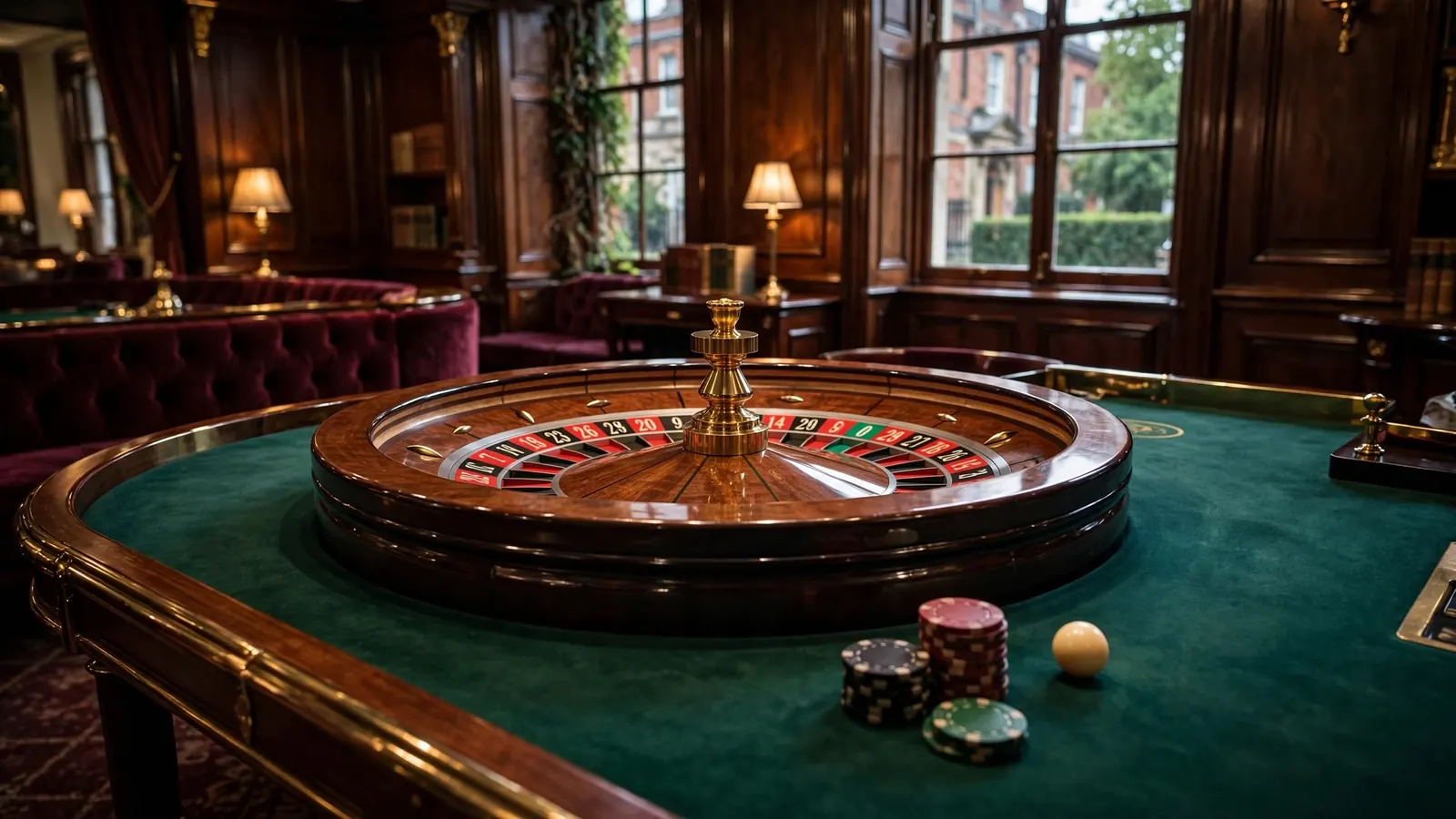
The practical difference is the time available between decisions. At a faster table, rounds arrive sooner; a slower format leaves more time before the next result. Neither pace changes the basic uncertainty of an individual spin. A faster display is not evidence that a result is more predictable, and a slower one does not make it more so.
Minimum stake and pace are separate terms. A low minimum sets the smallest permitted wager; it does not determine how quickly rounds run. An RNG game may combine a low starting stake with rapid play, so the amount risked across a session depends on both the stake selected and the number of rounds played. A physical-wheel table can have a different minimum and a different pace. Comparing formats by one figure alone therefore misses part of the cost.
For an online casino with European roulette, the useful distinction is the game’s delivery method and the table’s stated minimum, rather than the visual appearance of the wheel on screen. A digital wheel graphic can represent an RNG result, while a physical wheel may be shown through a live feed. The display alone does not establish how the outcome was produced. The game information should identify the format, and the minimum stake should be checked on the specific table before play begins.
- Check the game information to identify the delivery method
- Verify the table’s stated minimum stake before play
- Use the game information to distinguish RNG from physical wheels
- Assume a digital wheel graphic indicates a physical wheel
- Rely on visual appearance to determine how the outcome is produced
- Confuse a low minimum stake with the pace of the game
Playing European Roulette: Outside Bets and Losing Streaks
Outside bets cover broad groups of numbers rather than a single number or a small cluster. The main choices are red or black, odd or even, and low or high. Each pays 1:1: a winning stake earns an equal amount in winnings, while a losing stake is lost. The return is straightforward to calculate, but the wider coverage does not turn a spin into a predictable result.
These bets are often used when the aim is to keep decisions simple while playing European roulette online. They do not require selecting an individual pocket, and their settlement is easy to follow from one spin to the next. The payout describes the return conditional on a win; it does not mean that a win is due after several losses. Each result remains a matter of chance.
That distinction matters during a losing streak. A run of red results does not make black more likely on the next spin, and a sequence of losses on even does not make odd overdue. Previous outcomes may be visible in a table history, but a record of what has already happened does not predict the next result. No roulette strategy can forecast the final outcome because the odds are determined by chance.
The Martingale system tries to manage losses by doubling the next stake after each loss. Its appeal is easy to see: one eventual win may appear capable of recovering the accumulated losses and leaving a profit equal to the original stake. The arithmetic is conditional, however. It depends on a win arriving before the required stake grows beyond what the player can afford or the table permits. A losing streak can therefore put pressure on a bankroll quickly. Doubling changes the amount exposed, not the probability of the next result.
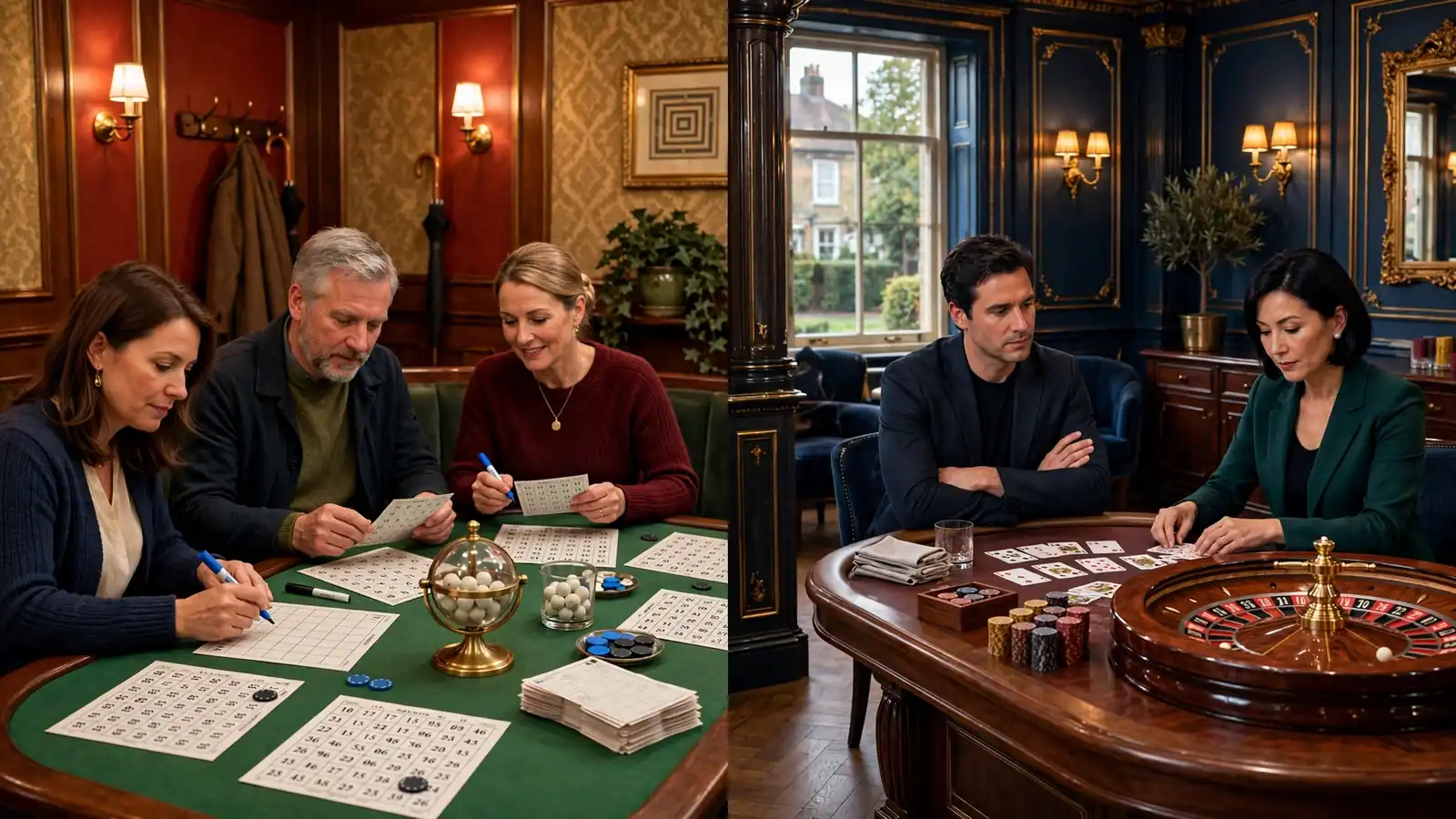
The same limit applies to other betting patterns. Changing colour after a loss, repeating a winning choice, or switching between outside bets cannot alter the wheel’s chance-based outcome. A plan may control how much is staked and when play stops; it cannot make a particular side more likely to land. The useful calculation is therefore the planned exposure, not a forecast dressed up as a system.
For anyone learning how to play European roulette, free play can provide a way to understand how outside bets are selected and settled without wagering real money. It can demonstrate the sequence of a game, but it cannot validate a betting system: a short run of favourable results is not evidence that a pattern predicts future spins. The same caution applies to a European VIP roulette casino label. Status or presentation does not make an outside bet more predictive; the relevant question is how the wager is settled under the game’s rules.
Before a session, the practical distinction is between stake control and outcome control. Stake control is possible: outside bets pay 1:1, so the amount at risk on each decision can be kept clear. Outcome control is not. A losing streak can reduce the bankroll, and increasing stakes in response may increase the size of that loss rather than reverse it. The arithmetic offers no recovery guarantee.
Martingale Risk
A losing streak can quickly deplete a bankroll as doubling stakes increases exposure without altering the probability of the next result.
European Roulette for Real Money: Bonus Terms and Account Conditions
A roulette bonus is not equivalent to cash in the account. Bonus funds are subject to wagering requirements, and the game’s weighting determines how quickly roulette play contributes to meeting them. Most UK operators count roulette wagers at 10% to 20% of the requirement. A £10 qualifying roulette wager at a 10% weighting, for instance, contributes £1 towards it—not £10. The remaining balance must be cleared through eligible play under the offer’s terms.
The percentage is operator-specific and may depend on the format. A specialist review reports that live roulette can be assigned a 10% or 20% weighting, while RNG roulette may receive 100%. Those figures should not be treated as a standard applying across the market: the relevant offer’s terms determine whether a particular European roulette game qualifies, and at what rate. A game excluded from the offer contributes nothing, regardless of the amount staked.
A specialist review also reports that, from January 2026, UK rules cap bonus wagering at a maximum of 10x for licensed operators. That reported ceiling does not establish the value of a bonus or how much play remains necessary. The offer’s stated multiplier, qualifying games, game weighting and any other conditions still determine the calculation. A lower weighting can make roulette a slow route through a requirement even where the game is included.

Demo play is a separate proposition. A free European roulette demo, where offered, does not constitute real-money wagering and should not be counted as progress towards a bonus requirement. A European roulette slot demo is not the same product as a roulette table: the slot format and its bonus eligibility are governed by their own terms. The distinction matters when a promotion names eligible games rather than accepting all casino play.
Real-money access also has account conditions. Operators must verify a customer’s age before allowing a deposit. New customers must be prompted to set a financial limit before their first deposit, and account-level limit controls must remain accessible. These are functional controls, not bonus features: they affect the account even when no promotion is active.
Credit cards cannot be used to fund gambling with UKGC-licensed operators. The restriction also covers credit-card funding routed through a money service business and wallet payments where credit-card funds can be used for gambling. A payment method’s familiar brand does not change the source of its funds.
The useful comparison is therefore the net amount of eligible wagering, not the headline bonus. The weighting tells how much each roulette stake contributes; the multiplier sets the requirement; eligibility rules determine whether the contribution counts at all. A large bonus with a low roulette weighting can leave more qualifying play to complete than its headline value suggests.
Attention: Bonus funds are subject to wagering requirements, and roulette often has a lower weighting (10% to 20%), meaning it contributes less toward clearing the requirement than other games.
Live European Roulette: Dealers, Limits and UK Safeguards
Live European roulette uses a physical wheel rather than software generating a simulated result. A studio stream shows the dealer releasing the ball and the wheel settling; the dealer’s actions and the physical ball drop determine the spin. This differs from an RNG table, where a random number generator produces the result without a streamed wheel or human dealer.
The stream adds a visible sequence to the game, but it does not change the need to assess the table’s terms. Minimum stakes vary by format and operator. A specialist review reports live roulette minimums starting at 10p, while auto-roulette and speed roulette formats sometimes start at 5p. These are reported starting points, not a guarantee that a particular table will offer them. The minimum shown in the live lobby is the amount that applies to that table.
In Great Britain, the UK Gambling Commission (UKGC) regulates online casino activity and is the sole regulator. A platform without a valid UKGC licence cannot legally offer real-money live roulette to British residents. The licence number should be checked on the Commission’s public register before depositing; a studio stream is a presentation format, not evidence of regulatory status.
UKGC-licensed operators must verify a customer’s age before allowing deposits. They must also prompt new customers to set a financial limit before the first deposit and provide accessible account-level controls. For live casino play, required protections include deposit and loss limits, session time reminders, reality checks, cool-off periods and GamStop self-exclusion. These are account safeguards, separate from the table’s stake minimum.

If a dispute arises, a UKGC licensee must provide an internal complaints process and access to an approved Alternative Dispute Resolution service. That gives the player a defined route beyond the live chat attached to the game. Operators are also required to contribute to the Research, Education and Treatment levy. The practical check is therefore broader than confirming that a dealer and wheel are on screen: the operator must hold the relevant licence and make the required protections available.
European and American Roulette: The Cost of an Extra Zero
The difference between European and American roulette is not a cosmetic change to the wheel. It changes the number of losing outcomes while the standard winning payouts remain tied to the bet, so the extra pocket raises the house edge.
A European wheel has 37 pockets: numbers 1 to 36 and one zero. An American wheel has 38, adding a double zero alongside the single zero. That additional green pocket gives the house another outcome on which most bets lose. The standard house edge is 2.70% on European roulette and 5.26% on American roulette.
The effect is especially pronounced on the American basket bet, which covers 0, 00, 1, 2 and 3. Its house edge is 7.89%, higher than the American game’s overall figure. The bet’s broader coverage does not compensate for the way its payout is set against the five covered pockets.
Some American tables have been described as adding a third green pocket, marked 000. A specialist affiliate review reports a 7.69% house edge for that version. This should be treated as a specific table configuration reported by that type of source, not as a settled description of American roulette generally. The double-zero wheel remains the defining comparison; a 000 pocket is an additional variation to identify in the game rules.
American roulette features a higher house edge (5.26%) than European roulette (2.70%) due to the addition of the double zero (00) pocket.
For an online European roulette casino game, the practical comparison is therefore the wheel’s pocket count and the stated rules, rather than the word “roulette” in the title. A single-zero game has fewer pockets than the standard American wheel and a lower house edge. When the table displays 00—or, in a reported variant, 000—the extra green outcome changes the calculation. The game label alone is not enough to establish which wheel is being used.
Choosing a UK European Roulette Casino by Terms, Not Labels
A “best” label does not establish what a European roulette offer contains or what its conditions allow. The useful comparison is between the terms attached to the game: whether the operator is authorised to serve the market, what information is available before play, how account controls work and where a complaint can go.
Start with authorisation
The UK Gambling Commission (UKGC) is the regulator for online casino activity in Great Britain. A casino offering real-money gambling to customers there must hold the relevant UKGC operating licence. A foreign address or familiar brand does not replace that requirement. Platforms without a valid UKGC licence cannot legally offer real-money live roulette to British residents.
Licence status is a condition of access, not a quality rating. Check the operator’s licence number against the UKGC public register before depositing, and make sure the registered business matches the casino being used. A logo or licence claim on a site is not the same as confirming the record. The register check establishes regulatory status; it does not establish that a particular game has suitable terms.

Make game information usable
A European roulette title should come with accessible information about its rules and return to player (RTP). RTP is a theoretical measure of the proportion of stakes returned over extensive play, not a forecast for an individual session. The figure and game rules should be available in the game information or help material before play begins. If they are difficult to locate, the offer is harder to assess, regardless of how prominently the game is displayed.
The comparison should be like for like: the same wheel variant and the same game version, with any special features or altered payouts clearly explained. A European label alone is not enough to establish that every version has identical rules. Nor does an RTP figure describe the operator’s complaint handling, account controls or other conditions. Those are separate parts of the product.
Check controls before funding
UKGC licensees must provide account-level financial controls. New customers must be prompted to set a financial limit before making a first deposit, and the account must provide accessible controls for adjusting limits. Age must also be verified before an operator allows a customer to deposit. These are operating requirements, not optional benefits to be weighed against a promotional label.
Choosing a Casino
- Verify the operator’s licence number on the UKGC public register
- Confirm the availability of RTP and game rule information
- Set financial limits before making the first deposit
- Check for accessible account-level protection controls
- Identify the internal complaints process and ADR service
Credit cards cannot be used to fund gambling with UK-licensed casinos. The restriction also covers credit-card funding routed through a money service business and wallet payments where the wallet permits credit-card funds to be used for gambling. Payment terms should therefore be read alongside the available payment methods; a displayed method does not make a prohibited source of funds acceptable.
Responsible-gambling provisions are part of the account conditions too. UKGC-licensed casinos must provide self-exclusion and other player-protection tools. The required controls include deposit limits, loss limits, session time reminders, reality checks, cool-off periods and GamStop self-exclusion. Their presence is not a prediction of outcomes; it gives the account defined ways to restrict access or spending.
Know where a dispute goes
A UKGC licensee must offer an internal complaints process and access to an approved Alternative Dispute Resolution (ADR) service. The complaint route should be identifiable in the terms or help pages, including how to submit a complaint and how escalation works. A general contact form is not a substitute for a stated process.
Operators are also required to contribute to the Research, Education and Treatment (RET) levy. That obligation forms part of the regulatory framework; it should not be confused with a customer bonus or a payment added to a roulette balance.
A sound comparison therefore separates four questions: Is the operator authorised? Is the game’s RTP and rule information accessible? Are financial and protection controls available before and during account use? Is there a clear route for resolving disputes? An offer that performs well on one point does not cancel a weakness on another. The final assessment comes from the terms that govern the account and game, not the adjective attached to the casino.

Roulette-Themed Slots Are a Different Product
A roulette wheel on the screen does not establish that a game is European roulette. Some casino products borrow the wheel, colours or terminology for their presentation while operating as slots. The distinction is functional: a single-zero roulette game uses a wheel with numbered pockets, while a slot is governed by its own game rules and paytable. The theme is packaging; it does not make the two products interchangeable.
That matters when comparing the odds. European roulette has a defined pocket structure and house edge, but those figures cannot simply be applied to a slot with roulette imagery. A slot’s rules and displayed return information belong to that particular game. Its title, graphics or use of words such as “roulette” do not establish the odds of a single-zero wheel.
Names can add to the confusion. A game described as a three-dimensional roulette slot may use a realistic-looking wheel, while “gold” or “platinum” in a title may suggest a variant or premium edition. Neither label, on its own, confirms the game format or its terms. The game information should identify whether the product is a slot or a roulette table game and set out the applicable rules. If the information describes a slot, roulette betting assumptions do not apply.

The same distinction affects how the game can be played in Britain. Online slot autoplay is prohibited, and each online slot spin must last at least 2.5 seconds. Those requirements apply because the product is a slot, not because its screen happens to show a roulette wheel. A roulette-themed slot therefore cannot be treated as a faster way to play European roulette or assessed by the single-zero wheel’s odds.
Book of Dead, for instance, is a slot title, not a European roulette table. Its name does not change the category of the game. The useful check is the product information: game type, rules and the return information provided for that game. Where the product is classified as a slot, its presentation should not be mistaken for a wheel game, and its terms should not be read through roulette’s betting structure.
How does roulette actually work?
You place a chip on a number or a group of numbers, then a spin determines the winning pocket. In European roulette, the wheel has numbers 1 to 36 and a single zero; each spin is determined by chance.
How does the 10x wagering cap affect roulette bonuses?
Since January 2026, UK-licensed operators cannot set bonus wagering requirements above 10 times the bonus. Roulette may contribute only part of the wagering requirement: live roulette commonly counts at 10% to 20%, while RNG roulette may count at 100%, depending on the operator’s terms.
Should I play American or European roulette if I’m in the UK?
European roulette has the lower house edge: 2.70%, compared with 5.26% for standard American roulette. If you are choosing based on the odds, European roulette is the more favourable option.
What is the difference between European and American roulette wheels?
A European wheel has 37 pockets: numbers 1 to 36 and one zero. An American wheel has 38 pockets, adding a double zero; some UK online tables also have a 000 pocket.
Created by the ”Winstler Casino” editorial team.