Fruit Machine Slots UK: How Online Games Work
 Available in GB
Learn how RNGs determine outcomes and how reels, symbols and paytables shape the results shown on screen.

- How Online Fruit-Machine Slots Work
- Fruit Slots in UK Casinos: Licensing and Player Protections
- Comparing Fruit Slots by RTP and Game Features
- Real-Money Play: Stakes, Bonuses and the Cost of Wagering
- From Pub Machines to Online Fruit Slots
- Free Fruit Slots for Practice
- Fruit-Machine Game Formats
- Fruit-Themed Slots and Their Modern Variations
- Classic Fruit Slots: Holds, Nudges and Reel Layouts
- What a Fruit-Slot Demo Can Tell You
How Online Fruit-Machine Slots Work
Online fruit-machine games carry the familiar visual language of physical fruit machines into software. Reels still display symbols, and winning combinations are still defined by the game’s rules. The difference is that a digital game uses a random number generator, or RNG, to determine each result rather than relying on the moving parts of a cabinet.
A screen may show reels spinning, slowing and stopping in sequence. That animation presents the result; it does not generate it. The RNG produces outcomes independently, so a previous spin does not make a particular symbol or combination more likely on the next one. A run of losses is not a signal that a win is due, and a recent win does not determine what follows.
Reels, rows and symbols
The reels are the vertical columns on which symbols appear. The visible area is commonly arranged as a grid, with several symbols showing on each reel at once. In many modern games, the grid has five reels and three rows. Fruit symbols may sit alongside other icons, but the artwork does not determine how combinations are judged. The paytable explains which symbol groups can pay and what conditions apply.
When looking for fruit machine slots in the UK in 2026, payout timing can be one practical detail to check. This list provides a brief reference to the information available for each operator.
Payout speed: 1-3 business days Britsino lists a payout speed of 1–3 business days.
Payout speed: 1-3 business days NightLuck lists a payout speed of 1–3 business days.
Payout speed: 1-3 business days Chanze lists a payout speed of 1–3 business days.
Payout speed: 1-3 business days SpinFormula lists a payout speed of 1–3 business days.
Payout speed: 1-3 business days Amunbet lists a payout speed of 1–3 business days.
Payout speed: 1-3 business days Zombillion lists a payout speed of 1–3 business days.
Payout speed: 1-3 business days WinBeast lists a payout speed of 1–3 business days.
Payout speed: 1-3 business days BeOnBet lists a payout speed of 1–3 business days.
Payout speed: 1-3 business days EvoSpin lists a payout speed of 1–3 business days.
Payout speed: 1-3 business days Jetsetspins lists a payout speed of 1–3 business days.
Each game has its own rules for reading the grid. A combination may need matching symbols to appear in specified positions, and the game may require them to be counted from a particular reel. The paytable and game information explain these conditions; the screen alone may not make every rule obvious. A line of matching fruit can look promising without meeting the game’s definition of a winning combination.
How paylines define a win
A payline is a route across the reel grid on which symbols are evaluated. In a fixed-payline game, the available lines are set by the game rather than selected spin by spin. Modern fruit machines can have between 10 and 50 fixed paylines, although the exact arrangement depends on the title. Lines may run horizontally, diagonally or along other routes shown in the game rules.
This distinction matters because the same symbols can form a win on one route but not another. A matching group that sits across a visible row is not necessarily a paid combination if that row is not an active line under the game’s rules. The paytable shows the relevant patterns and symbol values, while the game interface indicates which lines are in use.


Some titles use “243 ways to win” instead of conventional paylines. This system evaluates matching symbols across adjacent reels without requiring them to land on one of a set of drawn routes. It changes how positions are counted, not the underlying principle that the game applies defined rules to the result produced by the RNG. The phrase describes a win-evaluation system, not a promise that a particular spin will produce a match.
The outcome and the display
A spin begins with a stake and ends with the game presenting an outcome. The RNG selects that outcome independently of earlier spins. The animation then gives it a visible form by stopping symbols on the reels. Whether the display appears dramatic or uneventful does not alter the result that has already been determined by the game’s random process.
This is why near-misses and repeating patterns should be read as features of the display, not as evidence of a developing sequence. A symbol stopping just above or below a payline does not make it more likely to land on that line next time. Each outcome stands on its own, subject to the rules and randomness of the title.
The role of game information
The game’s paytable and help screen are the working documents for its mechanics. They set out winning combinations, line arrangements and other rules that affect how a result is assessed. They also state the published return to player, or RTP, where that information is provided. RTP is a theoretical figure describing a game’s long-run return across play; it does not forecast the result of an individual spin.
Return to Player (RTP) is a theoretical figure describing a game’s long-run return across play; it does not forecast the result of an individual spin.
Published RTP can differ between versions of the same game. A specialist review notes that the figure should therefore be checked in the paytable for the particular casino version, rather than assumed from another listing. The title on screen may look identical while the published setting differs, making the game information more useful than the name alone.
Fruit-machine design has moved from physical mechanisms to digital systems, but the core sequence remains easy to recognise: a stake is placed, reels display symbols, and the game applies its rules to an independently generated outcome. Understanding that sequence separates what the interface shows from what determines a result.
Fruit Slots in UK Casinos: Licensing and Player Protections
A fruit-themed game offered for real-money play is covered by the same licensing framework as other online casino games. The UK Gambling Commission requires online casino operators targeting UK players to hold a valid Commission licence. The relevant question is therefore not whether a site has fruit slots, but whether the operator holds the licence needed to serve the market legally.
That distinction matters because an offshore casino may be accessible from the UK without being part of the UK regulatory system. A foreign licence is not a substitute for a UK Gambling Commission licence. Sites operating without the local licence do not provide the protections attached to the UK framework, including access to UK-specific complaints and self-exclusion arrangements. Unlicensed operators may also manipulate games or withhold withdrawals, leaving customers without the same routes for resolving a dispute.

For real-money play, the minimum age is 18. Registration also requires identity verification; an account is not meant to be anonymous simply because it is opened online. Verification is part of the regulated process and helps establish that the account holder meets the age requirement. A site that takes real-money play from UK customers without requiring the relevant checks is not offering the same regulated service as a licensed casino.
What the stake rules mean
Online slots in Great Britain have age-based maximum stakes. Players aged 25 or older may stake no more than £5 on a spin, while the maximum for players aged 18 to 24 is £2. The limit applies to each spin, not to an overall session budget. It therefore restricts the amount that can be put at risk on an individual game round, but does not define how much a person should spend across a session.
Operators must apply these caps at account level. A player cannot be permitted to exceed the applicable limit by changing games, increasing a setting or moving between titles. The limit is a binding control, not a suggested setting that can be dismissed. It also does not make a stake affordable: a permitted amount can still be lost, and repeated play can accumulate losses. Gambling remains entertainment, not a method of generating income.
This legal cap should be kept separate from personal budgeting. A lower stake may still produce a total loss that is unsuitable for a particular household budget. A pre-set loss limit gives a separate boundary for the session, while treating any winnings as a bonus rather than expected income avoids building spending plans around an uncertain result.
Licensing Risk
Offshore casinos operating without a UK Gambling Commission licence do not provide UK-specific protections, including complaints and self-exclusion arrangements.
Account tools and self-exclusion
Many licensed operators provide account tools such as deposit limits, session-time reminders and reality checks. These controls address different parts of play. A deposit limit restricts the amount paid into an account under the chosen setting; a session reminder or reality check interrupts play with information about time spent. Some reality checks appear every hour or every 30 minutes. Their presence does not change the game outcome, and a reminder is not a substitute for setting a budget.
For a wider block on gambling, GAMSTOP allows registered users to exclude themselves from every operator participating in the scheme for a selected period: six months, one year or five years. This applies across participating operators rather than only to one casino account. It is distinct from an account-level deposit limit, which controls deposits at an individual operator, and from a time reminder, which does not itself prevent further gambling.
The reach of a protection depends on the system behind it. GAMSTOP applies to operators on its scheme; offshore casinos outside the UK regulatory system do not provide the same access to UK protections. Registering with GAMSTOP therefore cannot be treated as a universal block against every gambling site that may be reachable from the UK. This is one practical reason that an offshore site’s accessibility should not be confused with legal status or equivalent safeguards.

Checking the operator, not the packaging
A familiar fruit-machine theme or a polished site design says nothing by itself about licensing. The operator’s regulatory status is the material check. A casino may present classic fruit slots alongside other games, but the theme does not alter the licensing requirement for real-money play. Nor does a supplier’s presence on a site establish that every version or configuration is authorised for that operator; the licence concerns the operator’s right to serve customers, while a game’s own information identifies the particular title available.
The same distinction applies to customer support and complaints. UK-licensed operators sit within the UK regulatory system; offshore sites do not. A customer considering where to play should not treat a foreign licence, a large game catalogue or a headline offer as evidence of UK oversight. Promotions and presentation are commercial terms. They do not replace the protections attached to a current UK Gambling Commission licence.
For fruit slots in UK casinos, the regulatory position is straightforward: real-money service to UK players requires the relevant local licence, identity verification applies to players aged 18 and over, and per-spin stake limits are enforced by the operator. Deposit controls, reminders and self-exclusion can add further boundaries, but each serves a different purpose. The protections are useful precisely because they are specific; none turns gambling into a source of reliable income or removes the possibility of loss.
Comparing Fruit Slots by RTP and Game Features
A useful comparison starts with two separate questions: what return figure is published for the game, and what does its paytable say must happen for a win or feature? These answer different things. RTP is a long-run theoretical measure; the paytable describes the combinations and mechanics available in a particular title. Neither identifies a game that will pay out on a particular session.
- Check the RTP in the paytable for the specific casino version
- Use the paytable to verify win conditions and features
- Compare games using verified return figures
- Treat RTP as a promise of value for a short session
- Assume RTP is the same across different versions of a title
- Use a general description instead of the game’s help screen
Read RTP as a comparison, not a forecast
The typical published RTP range for UK fruit-machine-style slots is 94% to 97%, although individual titles can sit outside it. RTP expresses the theoretical proportion of stakes returned over an extended volume of play, not a schedule for individual results. A figure near the top of that range does not mean that a player will receive that proportion back during a short session, or that one game is due to pay.
The figure is most useful when the comparison is like for like. Check that the displayed RTP belongs to the exact game and version being considered, rather than relying on a general description of a title. Where a game’s help screen or paytable gives the return information, that is the relevant place to verify it. If the figure is not available there, a comparison based on assumed RTP has no firm basis.
A higher published RTP can be a meaningful difference between two otherwise comparable options, but it does not describe the full experience. It says nothing by itself about the frequency of wins, the size of individual payouts, or how often a feature appears. Those details belong to the game’s mechanics and paytable. Treating RTP as a promise of session value is a category error.


Use the paytable to inspect the mechanics
The paytable shows which symbol combinations pay, how prizes relate to the selected stake, and what conditions apply to special features. It also helps distinguish a straightforward fruit layout from a title with added mechanics. The visible theme may be similar while the rules governing wins are not.
Check whether the game uses fixed paylines or another win system, and whether a feature is triggered by a particular combination or event. Where free spins or a pick-style mini-game are listed, the paytable should explain how they are activated and what rules apply. A feature’s presence is not evidence that it improves the game’s expected return; its value depends on the complete rules and probabilities, not its name or animation.
Some games also offer controls such as autoplay or quick spin, and may be playable on a mobile device. A specialist review may describe these interface options, but their availability should be confirmed in the actual game. They affect how play is presented or paced, not the mathematical meaning of the RTP. Faster spins do not make the underlying outcomes more favourable.
Compare like with like
A practical comparison can be made by recording the published RTP, the main win structure, and any feature conditions for each candidate. If a title has several modes or a variable feature, note which version or setting is active. A polished interface, familiar fruit symbols, or a large feature list cannot substitute for this information.
Bonus Eligibility Check
- Check if the game qualifies for the current promotion
- Verify the game’s contribution rate towards wagering requirements
- Confirm the wagering requirements do not exceed ten times the bonus amount
- Ensure the offer does not combine different gambling product types
Bonus eligibility is a separate check. A game’s appearance in a casino’s library does not establish that it qualifies for a promotion, or that its play contributes fully to any wagering requirement. Check the current promotion terms for eligible games and contribution rates before opting in. Under the UK Gambling Commission’s Social Responsibility Code 5.1.1, wagering requirements attached to bonus funds are capped at ten times the bonus amount. That ceiling does not remove the need to read the offer’s remaining conditions.
Since 19 January 2026, incentive rules also restrict a single offer from combining different gambling product types, including betting, casino, bingo and lottery products. A fruit slot promotion should therefore be assessed by its stated product scope and terms, not by a headline that groups unrelated activity together. The key comparison remains the amount and conditions attached to the offer, rather than the size of its marketing label.
There is no reliable universal winner among fruit slots. One title may publish a higher RTP, while another may have simpler rules or features that are easier to assess in its paytable. The sound comparison is the one based on verified game information and the live terms that apply to the specific play. A ranking without those details would turn a measurable figure into a sales claim.
Real-Money Play: Stakes, Bonuses and the Cost of Wagering
The cost of playing fruit-machine games for real money is determined by the stake on each spin and, where a bonus is accepted, the turnover required by its terms. These are separate calculations: a stake cap limits the amount risked on a spin, while a wagering requirement sets how much must be bet before bonus-derived funds can be withdrawn.

In Great Britain, the maximum online slot stake depends on the player’s age. For adults aged 25 or over, the limit is £5 per game cycle; for those aged 18 to 24, it is £2. Operators must apply the relevant cap at account level, so a player cannot exceed it by changing games or selecting a different stake setting. The limit is a ceiling, not a recommended stake. A lower amount still produces real losses when spins do not return the stake.
A bonus also has a cash cost in the form of required turnover. The basic calculation is the bonus amount multiplied by its wagering multiple. A specialist review’s worked example uses a £50 bonus with a 30x requirement: the resulting turnover is £1,500 in bets before bonus-derived funds can be withdrawn. A second worked example pairs a £100 bonus with a 40x requirement, producing £4,000 in required bets. These figures illustrate the arithmetic, not current permissible bonus terms.
For bonus funds, the UK Gambling Commission’s Social Responsibility Code 5.1.1 limits wagering requirements to no more than 10 times the bonus amount. The wagering and mixed-product incentive rules took effect on 19 January 2026. Accordingly, the 30x and 40x calculations above should not be read as terms that can now be applied to bonus funds under that rule. The difference between a headline bonus and its withdrawal conditions matters: a larger advertised amount does not by itself establish better value.
Bonus Turnover
Determine the bonus value, such as £50 or £100.
Multiply the bonus by the required turnover multiple (e.g., £50 × 30x = £1,500 or £100 × 40x = £4,000).
The resulting figure is the total amount that must be bet before bonus-derived funds can be withdrawn.
The mixed-product rule also restricts an incentive to a single gambling product type. Betting, casino, bingo and lottery are separate product types for this purpose, so one Great Britain-facing incentive cannot combine them. Before opting in, the offer’s live terms determine which games qualify, how much each contributes towards wagering, and whether the bonus applies to the intended casino game. A large game library is not evidence that every title counts.
The amount of turnover is not the same as the amount ultimately lost: bets may return winnings, but each spin still exposes the balance to risk. Nor does meeting a wagering requirement guarantee a profit. The terms set a threshold for withdrawal eligibility, while game outcomes remain uncertain. Any budget should therefore account for the possibility that the full amount set aside for play will be lost; chasing a bonus with money needed for other expenses changes the financial calculation, not the underlying odds.
Real-money play is best treated as paid entertainment rather than a way to generate income. A fixed spending limit makes the maximum planned exposure visible before play begins. Bonus conditions should be assessed alongside that limit, since wagering can require repeated betting before withdrawal is allowed. If the turnover needed to qualify is unacceptable, declining the offer avoids adding that condition to the cost of playing.
From Pub Machines to Online Fruit Slots
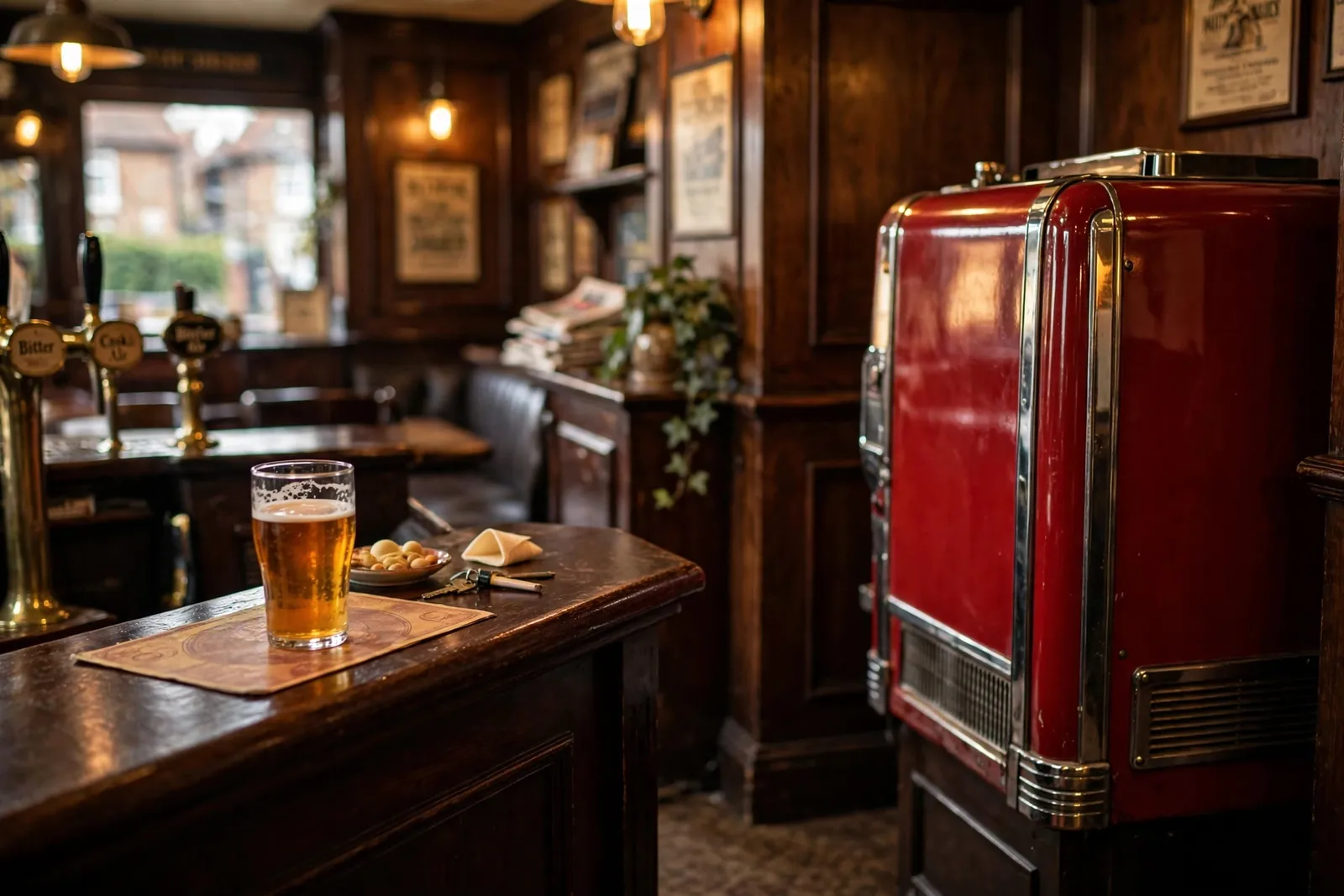
The route from the pub fruity to online play is visible in the history of Rainbow Riches. Barcrest introduced the game on physical cabinets in 2006, placing it in pubs, arcades and betting shops. It reached online play around 2009. That move took a recognisable fruit-machine title out of venues built around cabinets and into a digital format, without requiring the name to be replaced by a new game.

The setting matters because a physical machine and an online game are not simply the same product in different surroundings. The cabinet belongs to a venue and its local machine offer; the online version is supplied as a digital title. The shared identity can make the transition appear seamless, but the commercial terms attached to each version need not match. In this case, the published return gives a concrete point of difference.
The online Rainbow Riches version has an RTP of 95%. Physical Rainbow Riches machines are generally configured with a lower return. That distinction is more useful than treating the online game as a direct copy of a pub machine: the title may carry across, while its return settings do not.
This history also helps explain why fruit slots in the UK occupy more than one cultural category. The older reference point is the machine in a pub, arcade or betting shop; the newer one is a title accessed online. “Pub fruity” still describes the familiar venue-based experience, while online fruit-machine games sit within a digital catalogue. Rainbow Riches makes the connection unusually legible because its move from Barcrest cabinets to online play is tied to a specific release history.
The transfer was not just a matter of putting cabinet artwork on a screen. A digital release exists as its own version, with its own published return, even when it retains the identity of a physical predecessor. For anyone comparing UK fruit slots, that is the relevant historical lesson: a familiar title does not establish that every edition has the same configuration. The name records continuity; the version determines which product is being discussed.
Released on cabinets in 2006 for pubs and arcades, generally configured with a lower return.
Released around 2009 as a digital title with a published RTP of 95%.
The timeline is therefore short but significant: a cabinet release in 2006, followed by an online arrival around 2009. Rainbow Riches links those formats without making them interchangeable. Its physical and online editions share a lineage, but the online version’s 95% RTP and the generally lower return configured on physical machines mark a material difference.
Free Fruit Slots for Practice
Free play can make a fruit-machine-style game easier to inspect before any money is involved. Where a title offers a no-stakes mode, it can be opened to see how its screens are arranged, where the paytable and controls sit, and how the game responds to a spin. That is a practical use of free fruit slots in the UK: learning the interface, not testing a route to profit.
The distinction matters because fruit machines have moved from physical cabinets to digital games, but their online versions still rely on random number generators. Each outcome is independent. A run of wins or losses in free play does not indicate what a later spin will produce, and repeated practice cannot establish a pattern that improves the chance of a particular result. Simulated credits are not a balance that can be converted into cash.
Free play can also show how a title presents its features. A player can observe the sequence of screens, the wording of prompts and the way optional controls are displayed, without placing a real-money stake. In games with holds or nudges, trying those controls may make the interface easier to understand. They add choices and variety, but do not alter the random process behind the outcome.

This makes free fruit machine slots useful for orientation, not for measuring financial value. A no-stakes session cannot show how a real-money balance will change, nor can it prove that a particular approach will produce better results. Wins in a free mode have no cash value; losses do not create a monetary cost. The separation is straightforward, even if the on-screen presentation resembles paid play.
There is also a limit to what free play can establish about the version later encountered elsewhere. The mode is best treated as a view of the game’s controls and presentation, rather than a guarantee that every setting or detail will match a real-money version. The information that governs an actual game should be read within that game’s own help or paytable screens.
For anyone looking to play free fruit slots, the useful outcome is familiarity: knowing how to start a spin, locate instructions and recognise the feature prompts. It is not a forecast of future results or a substitute for setting a budget before real-money play. Practice can reduce uncertainty about the interface; it cannot remove the randomness or make the game a source of income.
Fruit-Machine Game Formats
Fruit-machine games come in several structural formats. The layout determines how symbols are arranged and how a win can be formed; the fruit imagery is a separate design choice.
Fruit Slot Formats
- Classic: Three reels and a single payline with few additional features.
- Modern: Often five reels and three rows, using fixed paylines (10–50) or a ways-to-win system.
- 243 Ways to Win: Evaluates matching symbols across adjacent reels without specific drawn routes.
- Megaways: A dynamic system where the number of symbols per reel changes, creating up to 117,649 ways to win.
The classic format is compact: three reels and a single payline, with few additional features. It offers a direct layout, while modern games often use a wider grid and more routes to a win. A common modern arrangement has five reels and three rows. Some titles use fixed paylines, with the number varying from game to game; others replace conventional lines with a ways-to-win system.
In a 243 ways to win format, matching symbols can count across adjacent reels without having to land on one of a set of drawn paylines. The number describes possible winning combinations, not a guarantee that a spin will produce a win. This structure can make the screen busier than a traditional single-line game, even when the symbols themselves remain familiar.
Megaways is a more variable format. Its reel system changes how many symbols appear on each reel from spin to spin, so the number of available winning routes changes too. The system can create as many as 117,649 ways to win. That figure describes the format’s maximum combination count, not the number of outcomes on every spin.
These structures are not simply a progression from old to new. A fixed-line game presents a stable pattern to follow, while ways-to-win formats and changing reel systems vary how combinations are counted or displayed. The difference is in the game’s architecture, not necessarily its theme or level of complexity.
When comparing fruit-machine games, the useful distinction is therefore between a fixed reel-and-line layout, a ways-to-win arrangement, and a dynamic system such as Megaways. Those labels explain how the game is organised. They do not, by themselves, establish how often it pays or what a particular spin will return.

Fruit-Themed Slots and Their Modern Variations
Fruit imagery is a familiar starting point for a fruit machine, but the theme does not define how a game works. Cherries, lemons and other symbols can sit alongside rainbows, cash imagery or a broader story. The result may still be marketed as a fruit-themed slot even when its presentation has moved well beyond the plain cabinet-style look.
Rainbow Riches, Rainbow Riches Pick’n’Mix, Rainbow Riches Megaways and Rainbow Riches Freespins illustrate how one named series can support several presentations. Their titles signal different identities, but a name or visual theme alone does not establish what happens during play. The game’s paytable and information screen are the places to confirm its rules and features; artwork is packaging, not a specification.
Modern presentation can add animation, sound and extra feature screens without making those elements universal across fruit-themed slot games in the UK. A specialist review describes some online fruit-machine games as offering options such as free spins, pick-based mini-games, autoplay, quick spin or mobile compatibility. That is a description of possible features, not a promise that every title includes them. Availability should be confirmed in the particular game.
This distinction matters when comparing titles. Two games can share fruit symbols yet differ in their visual style, available features and underlying rules. Conversely, a game with a more elaborate theme may retain familiar fruit-machine imagery. The screen can change substantially while the theme remains legible; neither appearance nor a feature label is a reliable substitute for checking the game details.
Practical Comparison
Separate visual theme from game mechanics by recording presentation separately and verifying rules in the game information.
For a practical comparison, separate what is visible from what affects play: record the theme as presentation, then check the game information for its actual rules and options. That keeps a colourful screen from doing the accounting on the game’s behalf.
Classic Fruit Slots: Holds, Nudges and Reel Layouts
Traditional fruit-machine games often use a compact layout: three reels and one payline, with few added features. The small grid makes the line of play easy to read, but it does not make the outcome predictable. Each spin is still determined by the game’s random process.
A hold lets selected reels stay in place while the other reels spin again. The held symbols remain visible; the re-spinning reels can land on different symbols. This creates a decision point about which positions to retain, but it does not change the process that determines the result.
A nudge works differently. After a spin, it moves a reel by one position, bringing a different symbol into line. The aim is to form a winning combination on the payline. A nudge changes the displayed reel position, not the underlying random process. It is a feature of the game, not a method for controlling the odds.
The availability of holds and nudges depends on the individual title and its conditions. Some games may offer more than one, while others make them available only in particular circumstances. The paytable or game information explains how the feature works in that version; the name alone is not enough to establish when it can be used.
These controls give classic fruit slots more interaction than a bare spin-and-stop layout, while keeping the structure straightforward: three reels, one line, and a limited set of features. Their practical effect is on reel positions and player choices. They do not turn a random outcome into a predictable one, or make a near miss evidence that the next spin is due to pay.

What a Fruit-Slot Demo Can Tell You
A demo can show how a fruit-machine game is arranged and where its information is displayed. It can help establish whether the interface is legible, how the controls respond and what features are presented. That is a practical inspection of the game’s design, not a test of its likely return in real-money play.
The distinction matters because online fruit-machine-style games use random number generators to produce independent outcomes. A short demo sequence cannot show what a later real-money session will produce, nor can a run of wins or losses establish a dependable pattern. The demo is a display of play, not evidence that a particular result is due or that a winning sequence can be repeated.
The game’s paytable is more useful for checking its stated rules and published return. A specialist review notes that the published RTP can differ between versions of the same title. For that reason, the figure associated with a game elsewhere should not be treated as confirmation of the version available at a particular casino. The paytable for that specific game build is the relevant reference.
A demo also cannot, by itself, establish the financial terms that apply to real-money play. It does not determine the stake accepted, whether a promotion applies, or how bonus terms treat the game. Those conditions belong to the casino’s live game information and promotion terms, not to the demonstration screen.
The sensible use of a fruit-slot demo in the UK is therefore narrow: inspect the presentation, identify the available features and read the displayed rules. It can reduce uncertainty about how the game is laid out. It cannot forecast outcomes, validate a return through a brief session or substitute for checking the specific casino version before real-money play.
How do holds and nudges work in online fruit machine slots?
A hold keeps selected reels in place while the others spin again; a nudge shifts a reel by one position after a spin. Their availability and conditions vary by game, and neither changes the random process that determines outcomes.
Can I play fruit slots for real money in the UK?
Yes, if you are at least 18 and play with an operator holding a valid UK Gambling Commission licence. You must register with verified identity, and per-spin stake caps apply: £5 for players aged 25 and over and £2 for those aged 18 to 24.
Are fruit machine slots rigged in UK online casinos?
Online fruit-machine slots use RNGs to generate independent outcomes, and operators targeting UK players must hold a UK Gambling Commission licence. Unlicensed offshore sites may manipulate games and do not provide the same UK protections.
Created by the ”Winstler Casino” editorial team.