UK crypto casinos with no KYC: rules and risks
 Available in GB
A practical look at licensing, account checks, crypto payments and the protections available to players in Great Britain.

- The UK Rules Behind Offshore Crypto Casinos
- Crypto Slots and the Limits of UK Protection
- Bonus Terms: Match, Wagering and Cashout
- Where Crypto Deposits Are Accepted
- BCH Withdrawals: Network Speed Is Not Payout Speed
- Bitcoin Cash as an Alternative to Bitcoin
- What a UK Crypto Casino Means in Practice
- No-KYC Accounts and the Limits of Anonymity
- USDT Casinos: What the Available Evidence Does Not Establish
The UK Rules Behind Offshore Crypto Casinos
The key distinction is not whether a website can be opened from Britain, but whether the business holds the licence required to offer gambling to people there. The UK Gambling Commission regulates gambling activity in the United Kingdom, including online casinos. For remote gambling offered to consumers in Great Britain, the operator’s location and the location of its key equipment do not remove the licensing requirement.
That rule places an online crypto casino serving British customers outside the lawful domestic framework if it has no Gambling Commission licence. A licence issued elsewhere may be relevant to the operator’s status in that jurisdiction, but it is not a substitute for a Great Britain licence. The British regulatory question is whether the operator is authorised to provide gambling to consumers in Great Britain.
The Commission is the only regulator responsible for commercial gambling in Great Britain. It grants operating licences to gambling businesses and personal licences to individuals carrying out specified roles in the sector. Those are different permissions: an operating licence authorises a business to provide gambling, while a personal licence relates to an individual working in the regulated industry. Neither should be confused with a licence issued to an offshore casino by another jurisdiction.
The territorial distinction matters. The Gambling Act 2005 governs gambling in England, Wales and Scotland, but not Northern Ireland. The Commission’s stated reach over remote gambling applies to services offered to consumers in Great Britain. A casino’s corporate address, server location or foreign licence does not by itself change the requirement for a Commission licence when the service is directed at that market.
A crypto casino can therefore be accessible to someone in Britain without being a UK-licensed casino. That accessibility does not convert an offshore operator into a British-regulated business. Nor does the presence of an offshore licence establish that the operator meets the standards imposed on businesses holding a Gambling Commission licence. The licence regimes are separate, and the relevant authorisation depends on where the gambling is being offered.

The phrase “offshore crypto casino” describes a service outside the UKGC regulatory system, not a special category of British licence. A specialist review may describe every casino on its own list as operating under a Curaçao or similar offshore licence. That is a description of that review’s selection at the time it was written, not a standing classification of every crypto casino available online. Operators and licensing arrangements can change, so the general regulatory test remains the British one: whether the business holds the relevant Commission permission.
This distinction also clarifies what “UK” means in searches for crypto online casinos. A site may accept customers located in Britain, use cryptocurrency, or present itself as international; none of those details answers whether it has authorisation to serve the British market. Conversely, the label “offshore” does not mean that an individual user is automatically committing a criminal offence by accessing the site. The UK does not criminalise offshore gambling by individuals.


That point should not be confused with the status of the operator. The absence of criminal liability for the individual does not make the gambling offer legal under the British licensing system, and it does not confer a Commission licence on the business. The legal positions are distinct: the licensing obligation concerns the operator offering remote gambling into Great Britain, while the stated position for an individual who plays offshore is that the UK does not criminalise that conduct.
The result is a two-part picture. Great Britain regulates commercial gambling through the Gambling Commission, and remote operators offering gambling to its consumers must hold the appropriate licence regardless of where their equipment is based. Individuals are not criminalised simply for gambling offshore. An online casino accepting cryptocurrency may therefore be reachable from Britain while remaining outside the domestic licensing system; access and authorisation are not the same thing.
Crypto Slots and the Limits of UK Protection
A casino offering real-money crypto slots cannot be a UK-licensed casino: operators licensed in Great Britain are prohibited from accepting cryptocurrency. The distinction is about the operator’s regulatory status, not the appearance of a slot game. A site may display familiar games and accept players from Britain, but that does not put it within the UK Gambling Commission’s system.
UKGC Protection
A crypto casino without a UKGC licence operates outside the British regulatory safety net, meaning UKGC protections and safeguards do not follow the player.
The Commission regulates remote gambling offered to consumers in Great Britain, including where the operator’s key equipment is located. A business serving that market with real-money gambling must hold the relevant licence. Online gambling is legal in Great Britain through licensed and regulated sites; an offshore casino without a UKGC licence is outside that system. The UKGC regulatory safety net therefore does not follow a player to a crypto casino simply because the site is accessible.
That matters because the rules governing online slots are attached to licensed operators. In Britain, a slot spin must last at least 2.5 seconds, and autoplay is banned. The maximum stake per game cycle is £5 for customers aged 25 and over. For customers aged 18 to 24, the maximum is £2. The £5 limit for all adults took effect on 9 April 2025, while the lower limit remains relevant to younger adults. These are rules for the British licensed environment, not assurances about how an offshore crypto site runs its games.
Age controls are another part of the regulated arrangement. Operators must verify a customer’s age before allowing deposits into a gambling account. A site’s own statement that it offers slots to UK players does not establish that it follows this requirement or the other conditions imposed on UKGC licensees.

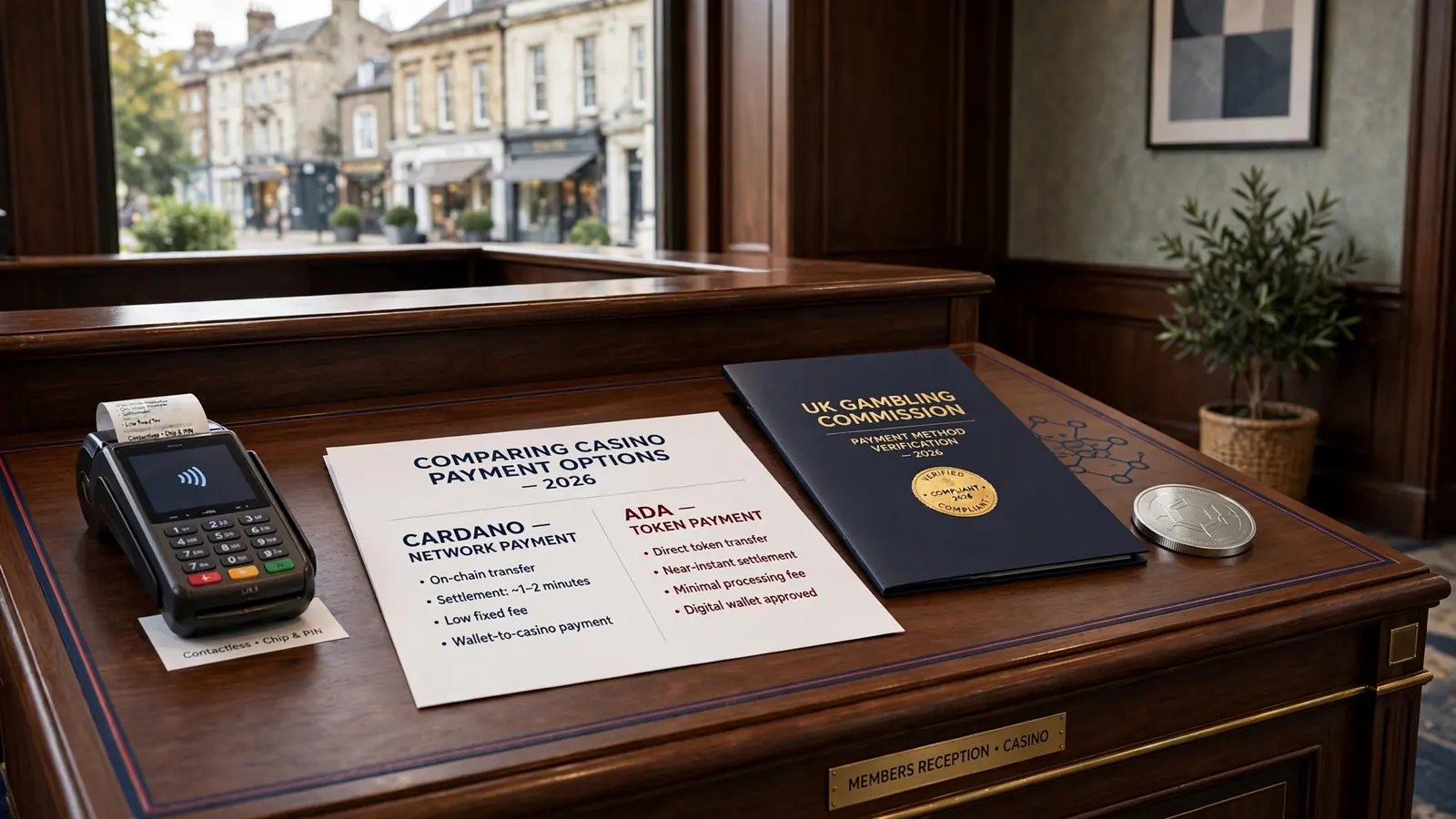

Licensed operators also have duties intended to make account controls usable before losses accumulate. New customers must be prompted to set a financial limit before their first deposit, and account-level limit controls must be accessible. Since 31 October 2025, that prompt has been required before the first deposit. Licensees must also provide responsible gambling tools, including self-exclusion, and contribute to the Research, Education and Treatment levy.
The Commission’s rules include checks on financial risk as well. From 28 February 2025, licensed operators have been required to check public data when a customer’s net deposits pass £150 within a rolling 30-day period. This is a regulatory requirement for licensees; it should not be read as a feature that applies to crypto slot sites operating beyond the UKGC system.
Complaints and dispute routes are part of the same distinction. UKGC-licensed casinos must run an internal complaints process and give access to an approved Alternative Dispute Resolution service. An offshore crypto casino does not provide UKGC dispute resolution, and the Commission’s complaints route is not available for a dispute with an operator it does not license. A site may have its own customer-service process, but that is not the same as access to an approved ADR service under UK rules.
The absence of those safeguards does not mean the games are necessarily different in appearance. It means the UK rules governing their operation and the protections attached to a British licence do not apply in the same way. Terms on an offshore site cannot substitute for the UKGC requirements on age checks, slot speed, stake limits, account controls, complaints or self-exclusion.
- Verify the operator’s status on the Gambling Commission’s public register
- Check for a current UK Gambling Commission operating licence
- Assume a site is UK-licensed because it calls itself a “UK crypto casino”
- Assume a site is licensed just because it is accessible from Britain
For anyone comparing crypto slot sites with licensed casinos, the label “UK” can describe the audience a site seeks rather than the licence it holds. A legitimate UK-licensed casino cannot accept cryptocurrency, so crypto slots and the British licensed framework do not sit together. The practical question is not whether a site calls itself a UK crypto casino, but whether it holds a current UK Gambling Commission operating licence. The Commission’s public register is the place to verify that status before depositing.
Bonus Terms: Match, Wagering and Cashout
A welcome offer has two separate values: the amount credited and the amount of play required before that credit can be converted into withdrawable funds. A deposit match describes the first value; the wagering requirement determines the second. The headline percentage alone does not show how much qualifying play an offer demands.
A specialist review reports that welcome bonuses at BCH casinos are commonly deposit matches of 100% to 200%, with wagering requirements of 20x to 50x the bonus amount. The calculation is based on the bonus, not automatically on the deposit plus bonus. For a bonus of £10, a 20x requirement would mean £200 in wagering; at 50x, it would mean £500. Those are illustrations of the multiplication, not terms attached to any particular offer. The precise basis stated in the offer’s terms matters: a requirement applied to the combined deposit and bonus would produce a different total.

The same review reports that the Gambling Commission has capped wagering requirements on bonuses at 10x since 19 December 2025. That limit is the relevant comparison for a licensed operator serving Great Britain. A higher requirement at an offshore BCH casino is not brought within the Commission’s cap simply because the promotion is available to someone in the UK. Nor does the comparison make an offshore promotion a UK-licensed offer.
The gap between 10x and the 20x–50x range reported for BCH welcome bonuses is material. On a fixed bonus, a higher multiple means more wagering before the bonus value can be released under the stated conditions. A deposit match can therefore look generous while imposing a larger play requirement than the promotional amount suggests. The final cashout value cannot be inferred from the match percentage alone.
The same distinction applies to a crypto casino sign-up bonus or a deposit bonus. “Bonus code” is only a way of identifying an offer; it does not change the calculation. The meaningful figures are the credited bonus, the wagering multiple and the amount to which that multiple applies. Any stated maximum cashout also affects the amount that can ultimately be retained from promotional play. Without those conditions, comparing two offers by their advertised match is incomplete.
No-deposit bonuses require a different reading because no qualifying deposit is needed to receive the promotion. A specialist review describes these as less common at BCH casinos than at traditional UK sites; when available, it reports high wagering requirements and a low maximum cashout. A credit with no initial payment is not necessarily a substantial cash benefit: the wagering condition can delay conversion, while the cashout ceiling can limit what remains payable. The value of the offer is bounded by its conditions, not by the word “free”.
Bonus Wagering
For example, a welcome bonus of £10 is credited to the account.
At a 20x requirement, the total wagering needed is £200 (£10 × 20).
At a 50x requirement, the total wagering increases to £500 (£10 × 50).
These terms also separate an advertised bonus from withdrawable cash. A bonus balance may carry a wagering condition, and a maximum cashout may restrict the amount available after that condition is met. The relevant comparison is therefore not simply which casino advertises the largest match, but how much wagering attaches to the bonus and what limit applies to the resulting cashout. A larger headline offer can require more play and still leave a smaller amount available.
The verified BCH bonus figures come from a specialist review and describe reported offers, not a guarantee that every casino uses the same terms. Promotions can change, and the written terms attached to an offer determine its actual calculation. For a licensed UK operator, the reported 10x cap sets a clear benchmark; for an offshore BCH promotion, the reported multiples are substantially higher. The financial difference is visible before any game is played.
Where Crypto Deposits Are Accepted
A casino accepting cryptocurrency is not necessarily a casino licensed to serve customers in Great Britain. The distinction matters because UK-licensed operators cannot accept cryptocurrency. A site may offer crypto deposits while operating outside the UK Gambling Commission’s licensing system; that does not make it a UK-licensed casino.
Bitcoin Cash (BCH) provides a specific example. No casino currently listed on the Commission’s public register of remote casino licences shows BCH as a deposit method, and no UK-licensed casino accepts BCH as a direct payment method. A casino advertising direct BCH deposits is therefore not offering that payment option under a UK Gambling Commission licence.

This is narrower than saying that every online casino accepting crypto has the same licence or payment arrangements. The relevant point is that crypto acceptance and UK licensing do not go together: a UK-licensed operator is prohibited from taking cryptocurrency. A deposit option labelled Bitcoin Cash, another cryptocurrency or a crypto wallet should not be treated as evidence that the operator is authorised in Great Britain.
The public register is the practical reference for checking whether an operator holds a current remote casino licence. A payment page, promotional banner or account screen is not a substitute for that check. If an operator is absent from the register, it is not a UK-licensed casino, even if its site is available to people in Britain or presents itself as serving a UK audience.
The same distinction applies to searches for online casinos accepting crypto deposits in the UK. The wording can describe two different things: a crypto-accepting offshore casino accessible from Britain, or a casino licensed in Britain that accepts crypto. The second does not exist under the current rules. For BCH specifically, the Commission register contains no licensed remote casino listing it as an accepted deposit method.
That leaves a useful way to read payment claims. “Accepts Bitcoin Cash” describes a payment facility; it does not establish the operator’s regulatory status. “UK casino” can also be used loosely on a site or in an advert, but the term alone does not confer a UK Gambling Commission licence. The register, rather than the payment menu or marketing language, determines whether the operator is licensed.
UK Licensing
UK-licensed operators are prohibited from accepting cryptocurrency, including Bitcoin Cash (BCH).
Before depositing, the licence number should be checked against the Commission’s public register. The key distinction is not whether a crypto casino can be reached from the UK, but whether it holds the licence required to offer remote gambling to customers in Great Britain. A site that accepts BCH without that licence sits outside the UK licensing system. Its crypto payment option does not change that status.
BCH Withdrawals: Network Speed Is Not Payout Speed
A Bitcoin Cash transfer has two separate stages: the casino must approve and send the withdrawal, then the transaction must be processed on the blockchain. A short blockchain confirmation time does not establish how quickly a casino will release funds. The first stage is controlled by the operator; the second depends on the network.
A specialist casino review reported that BCH deposits at the casinos it examined typically received one on-chain confirmation, taking around 10 minutes. That describes a deposit confirmation, not a withdrawal promise. For a cashout, the relevant clock starts when the casino accepts the request for processing. The blockchain cannot speed up a request still waiting in the casino’s queue.
A separate specialist review reported that BC.Game and Stake processed BCH cashouts within 10 minutes of the request, often in less than five. Those are reported results for named operators, not a general service standard. They do not establish that every request will follow the same timing, or that a displayed withdrawal option means funds have already been sent. The distinction is practical: an operator’s internal handling time and the on-chain confirmation time are different parts of the process.

When a request enters review
Some specialist casino reviews report that withdrawals above an operator-set threshold can be placed in a separate “management review” queue. The thresholds described in those reviews range from 0.5 BCH to the equivalent of 2 BCH. This is an operator-side delay; waiting for a management decision is not a blockchain event.
As a result, a claim of fast or instant crypto withdrawals needs a defined starting point. It might refer to the time from request to casino approval, the time until the casino broadcasts a transaction, or the time until the recipient wallet shows the required confirmation. Without that distinction, “instant” is packaging rather than a measurable payout condition. The reported cashout times above concern requests being processed, while the deposit confirmation figure concerns the chain.
An advertised withdrawal limit also does not establish payout speed or guarantee that a larger request will be released without review. The review threshold varies by casino, and a request that crosses it may wait in a separate queue. The available reported range is not a universal limit and does not identify a threshold for every operator.
These timing reports concern offshore BCH casinos, not UK-licensed casino payouts. An offshore casino sits outside the UKGC regulatory safety net: players do not have access to UKGC dispute resolution or an approved alternative dispute resolution route, and the site is not integrated with GamStop. A quick reported transfer does not replace those protections. Speed is one condition; recourse if a withdrawal is delayed or disputed is another.
Payout Speed
Attention: A fast blockchain confirmation time does not guarantee a fast payout, as the casino’s internal approval process and management reviews can still cause delays.
For a meaningful comparison, payout timing should be read alongside the operator’s withdrawal terms and any stated review conditions. Blockchain confirmation can explain the final transfer stage. It cannot explain a casino’s approval queue, internal checks or decision to hold a request.
Bitcoin Cash as an Alternative to Bitcoin
Bitcoin Cash can be considered as a distinct option in a crypto-casino comparison, rather than treated as interchangeable with Bitcoin. The relevant difference is transaction cost and speed: BCH transactions are usually cheaper and faster than Bitcoin transactions. For someone comparing the two currencies, that makes BCH a potentially less costly and quicker network choice, though “usually” is not a guarantee for any individual transaction.
The stated technical basis is BCH’s 32MB block-size limit. That limit is part of the explanation for its cost and speed advantage over Bitcoin. It is a property of Bitcoin Cash, not a general characteristic of every alternative coin. A search for an altcoin casino may surface different currencies, but BCH’s comparison with Bitcoin does not establish how Dogecoin or another coin performs.
This distinction matters because casino comparisons can blur two separate questions: which currencies a site accepts, and how those currencies behave on their respective networks. BCH’s lower typical cost and faster transaction processing describe the currency relative to Bitcoin; they do not establish that a particular casino supports BCH, or that every alternative coin offers the same terms. Nor should the comparison be read as a ranking of operators or an assessment of their broader conditions.


For a Bitcoin-and-crypto casino comparison, BCH therefore has a specific, limited point of difference. Its transactions are usually cheaper and faster than Bitcoin’s, with the 32MB block-size limit identified as the technical reason. That is useful when assessing the currency itself. It does not make the two assets identical, and it does not justify transferring BCH’s characteristics to other altcoins.
The practical financial distinction is straightforward: transaction cost and speed are part of the payment method’s profile, while casino availability and handling are separate matters. A lower typical network cost does not, on its own, determine what a casino accepts or how it processes a transaction. The comparison is most accurate when kept to the supported claim: BCH generally has a cost and speed advantage over Bitcoin, linked to its block-size limit.
That is a narrower conclusion than calling any one currency the best choice for every crypto casino. Bitcoin Cash has a stated technical feature and a relative advantage on these two measures; other coins require their own evidence. A broad label such as “altcoin” is not a technical specification, and no single result for BCH can safely be applied across the category.
What a UK Crypto Casino Means in Practice
For UK readers considering crypto casinos with a no-KYC focus, payout timing is one practical detail to check. The notes below state the only confirmed operator-specific detail available.
Payout speed: 1-3 business days Britsino has a stated payout speed of 1–3 business days.
Payout speed: 1-3 business days NightLuck has a stated payout speed of 1–3 business days.
Payout speed: 1-3 business days Chanze has a stated payout speed of 1–3 business days.
Payout speed: 1-3 business days SpinFormula has a stated payout speed of 1–3 business days.
Payout speed: 1-3 business days Amunbet has a stated payout speed of 1–3 business days.
Payout speed: 1-3 business days Zombillion has a stated payout speed of 1–3 business days.
Payout speed: 1-3 business days WinBeast has a stated payout speed of 1–3 business days.
Payout speed: 1-3 business days BeOnBet has a stated payout speed of 1–3 business days.
Payout speed: 1-3 business days EvoSpin has a stated payout speed of 1–3 business days.
Payout speed: 1-3 business days Jetsetspins has a stated payout speed of 1–3 business days.
A crypto casino may accept players from Britain while operating outside the UK Gambling Commission’s system. The distinction has practical consequences: an offshore operator does not provide the UKGC regulatory safety net, even though an individual does not commit an offence simply by playing there.
The clearest difference appears when a problem cannot be resolved directly with the casino. A UKGC-licensed operator must provide an internal complaints process and access to an approved Alternative Dispute Resolution service. An offshore crypto casino is not subject to those UKGC requirements. Its own terms may describe how complaints are handled, but that does not create access to UKGC dispute resolution or a UK-approved ADR route. If a complaint remains unresolved, the UKGC cannot act as the player’s complaints channel against an operator outside its licensing system.
GAMSTOP is another separate protection. It is a UK self-exclusion scheme linked to participating licensed operators; it is not a general block on gambling websites. A site accepting Bitcoin Cash without a Gambling Commission licence is not part of GAMSTOP. Someone registered with the scheme should therefore not assume that an offshore crypto casino will recognise or apply that exclusion. The separation is operational, not a minor difference in account settings.
Regulatory Gaps
- Offshore crypto casinos do not provide UKGC-required internal complaints processes or ADR access
- These sites are not integrated with the GAMSTOP self-exclusion scheme
- Branding labels like “cashback” or “crash games” do not establish UKGC oversight
The same point applies whether the site is presented as a UK crypto casino, offers cashback or rakeback, or features crash games. Those labels describe branding, promotions or game formats; they do not establish UKGC oversight, create ADR access or connect the account to GAMSTOP. Promotional value cannot replace a complaints route, and a familiar game format does not change who regulates the operator.
This leaves a narrower set of remedies if a dispute arises: the operator’s own stated process and whatever options may exist under the rules governing its offshore licence. Those are not equivalent to UKGC dispute resolution. Nor does a crypto payment method add a consumer-protection mechanism; payment in Bitcoin Cash does not bring an offshore site within the UK regulatory system.
The practical calculation is therefore not only about the balance on the account. It also includes which protections are absent if a withdrawal, account decision or complaint becomes contested. A UK-licensed casino must provide UKGC-required complaints and self-exclusion arrangements. An offshore casino does not provide that same framework, and a site accepting BCH without a Commission licence is outside GAMSTOP. The player is not breaking the law by using it, but the UKGC safety net and its dispute route are not available.

No-KYC Accounts and the Limits of Anonymity
“No KYC” describes an account-opening arrangement, not an anonymous payment system. At a Bitcoin Cash casino operating outside a UK Gambling Commission licence, deposits are generally handled through a crypto wallet, with fewer identity checks than at a licensed operator. The account and the transaction are separate: limited details attached to the account do not make the movement of BCH private.
A specialist review reports that many offshore BCH casinos permit registration using an email address and password, without the traditional identity checks associated with KYC. That is a reported practice, not a guarantee that every casino will use the same process or keep it unchanged. Nor does it establish that an account remains free of checks in every circumstance. The narrow point is that an email-and-password sign-up may involve less information at registration; it does not establish what the operator may request later.
No-KYC Registration
Many offshore BCH casinos allow registration using only an email address and password, bypassing traditional identity checks during the initial sign-up process.
This distinction matters when comparing a no-KYC crypto casino in the UK market with a conventional gambling account. The label can sound like a promise that no identity information will ever be connected to play. The described arrangement supports a more limited reading: account creation may require little personal data, while the BCH used to fund it remains visible on the network. Low-friction registration and financial privacy are not interchangeable.
Bitcoin Cash transactions are recorded on a blockchain that anyone can inspect. The record does not necessarily display a person’s name beside an address, but that is not the same as being untraceable. Chain-analysis firms can often connect a deposit to an exchange account when the coins came from a recognised exchange. The exchange may hold customer details, creating a possible link between a public transaction and an identified account.
For someone assessing a no-KYC crypto casino, the practical question is therefore not only what the sign-up form asks. It is also whether the funding route leaves a traceable path. An email address may be the only detail requested during registration, yet the blockchain record can still reveal the movement of funds between addresses. A casino account with minimal checks does not erase that record or prevent third parties from analysing it.
“Newly launched” does not change this distinction. A new casino may present a short registration process, but age or novelty does not alter the public nature of BCH transactions. Nor does the term “multi-cryptocurrency” establish that every coin has Bitcoin Cash’s characteristics. The account procedure and the transaction record need to be assessed as separate matters; a label alone says little about either.
The UK legal position also needs to be kept separate from the account label. Playing at an offshore casino does not itself make the individual player a criminal, but the site is outside the UKGC regulatory safety net. There is no UKGC dispute resolution or approved alternative dispute resolution route for a complaint against it, and an offshore BCH casino is not part of GAMSTOP. Those limits remain whether registration asks for extensive details or only an email and password.

The commercial trade-off is straightforward: fewer details at sign-up can mean less information supplied directly to the operator at that stage, but it does not amount to guaranteed anonymity. BCH’s public transaction history can sometimes be linked to a known exchange, while the offshore account sits beyond UKGC protections. “No KYC” is therefore a description of an account process, not a statement that the player, funds or activity cannot be identified.
USDT Casinos: What the Available Evidence Does Not Establish
USDT and Bitcoin Cash are separate cryptocurrencies, so a casino’s support for BCH does not demonstrate that it accepts USDT. The distinction matters when checking whether a payment route exists: a wallet address, deposit option or cashout policy for one asset cannot be treated as confirmation for the other.
There is also a separate UK licensing point. UK-licensed operators are prohibited from accepting cryptocurrency, and no UK-licensed casino accepts BCH as a direct payment method. USDT is also cryptocurrency; it should not be presented as a payment method available at a UK-licensed casino. An offshore site’s claimed USDT support, if stated by that operator, would be a separate claim about that site, not evidence of UKGC licensing or protection.
This leaves a narrow but useful distinction for comparing crypto casinos in the UK market: BCH details apply to BCH, while USDT acceptance, fees and processing need to be established independently for the particular operator and payment route. A general label such as “crypto casino” does not specify which currencies are accepted. Nor does a BCH listing verify a USDT option. The currency named at checkout, the stated fee and the operator’s own processing terms determine the actual transaction conditions; transferring assumptions between assets would turn a payment comparison into guesswork.
Can I legally gamble with Bitcoin Cash in the UK?
Yes, individuals are not criminalised for gambling offshore. However, an offshore casino without a UK Gambling Commission licence is not authorised to offer gambling to consumers in Great Britain.
Is Bitcoin Cash gambling legal in the UK?
UK-licensed casinos cannot accept cryptocurrency, so a casino taking Bitcoin Cash is outside the UK-licensed system. Individuals are not criminalised for gambling offshore.
Is a casino accepting Bitcoin Cash automatically unlicensed for British players?
It cannot be UK-licensed: UK-licensed operators are prohibited from accepting cryptocurrency. An offshore licence does not replace the Gambling Commission licence required to offer gambling to consumers in Great Britain.
Do I need to verify my identity to play at a BCH casino?
Often, basic account creation requires only an email and password, with minimal identity checks. That is not guaranteed, and blockchain analysis can sometimes trace BCH deposits to a known exchange.
Are Bitcoin Cash casino winnings taxable in the UK?
Gambling winnings are not subject to UK income tax or capital gains tax, regardless of whether you play with pounds or cryptocurrency. Converting BCH winnings back to pounds is identified as a tax event.
Created by the ”Winstler Casino” editorial team.